Project 1 – Distorting Lens – Exercise 2.1 Zoom

Part 2, Reflection on coursework

Summary:

For this exercise I have;

– Stated the settings used on my camera, the camera and lens type, as well as
– Explaining where the images were shot and how they were taken, including the variety of focal length settings.
– Briefly covered the difficulties faced while shooting in a busy environment and the knowledge I have gained by completing this task, such as the impact zoom has on the depth of an image.
– Analysed the imagery taken, documenting what I found within each shot visually alongside the technical strengths.
– Inserted a slideshow to show the idea of moving through a scene without actually moving.
– Cropped an image to show how zoom can affect the context of an images, before exploring
– The history of pixel art in gaming and the comparison between peoples preference for clearer graphics in games and sharp HD images in digital photography, versus nostalgia and aesthetics.
– Made notes on the power of a pixel within an image and they importance of the detail within an image before
– Reflecting on the exercise as a whole and what I found both difficult, or interesting.

Brief:

Find a scene that has depth. From a fixed position, take a sequence of five or six shots at different focal lengths without changing your viewpoint. (You might like to use the specific focal lengths indicated on the lens barrel.) As you page through the shots on the preview screen it almost feels as though you’re moving through the scene. So the ability to change focal lengths has an obvious use: rather than physically move towards or away from your subject, the lens can do it for you. But zooming is also a move towards abstraction, which, as the word itself tells us, is the process of ‘drawing things away’ from their context.‘ (Bloomfield, 2018)

Before starting this exercise, I made sure that my Sony A57 was set to aperture priority mode as requested at the start of Imaginative Spaces, as well as switching the SONY 18-55 3.5-5.6 SAM lens and camera body to manual focus, to avoid relying on autofocus to sharpen the image correctly.

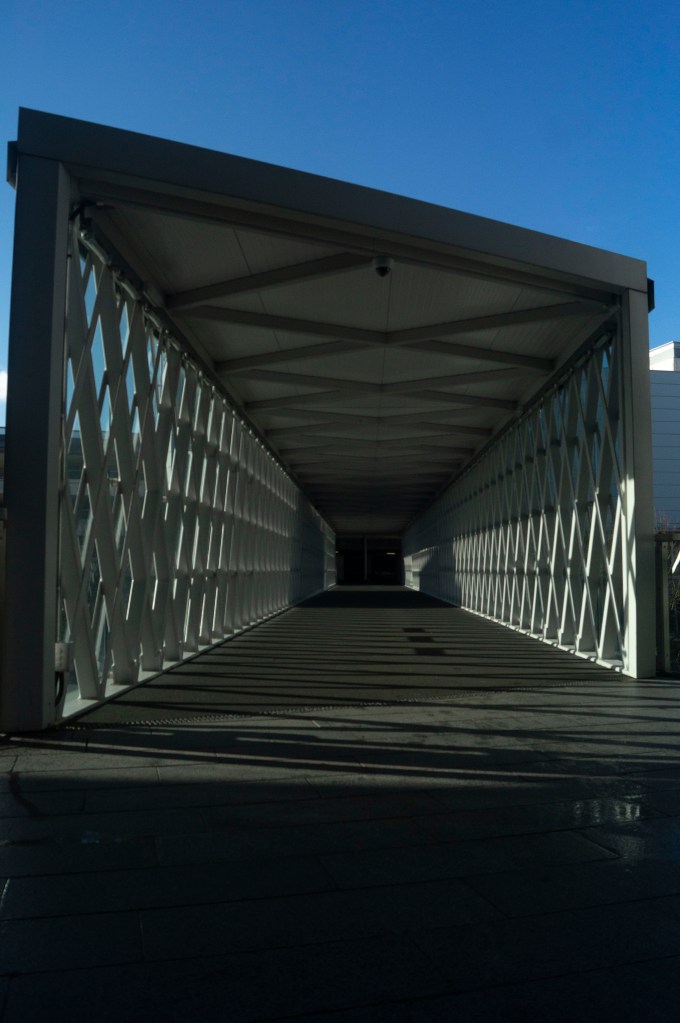
I decided to take these images while out and about in my local town, therefore I didn’t have a tripod with me purely out of convenience. However, to make sure the position was fixed I crouched to keep my feet firmly in one place and used my knees to keep the camera balanced. Due to how busy the environment was, a few attempts had to be made, as members of the public were walking in and out of the frame, blocking the main focal point at the end of the walkway and disturbing the abstraction.

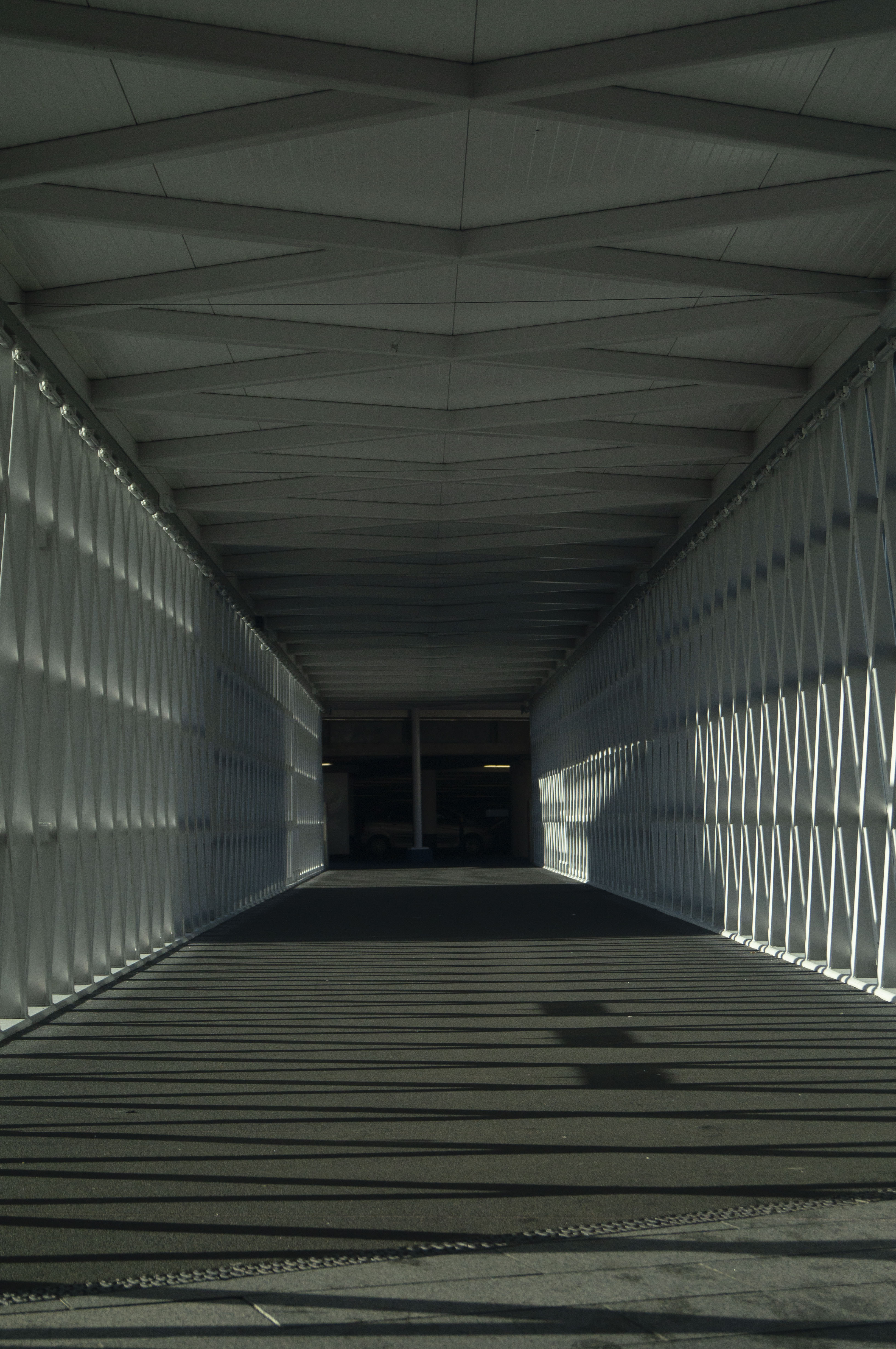
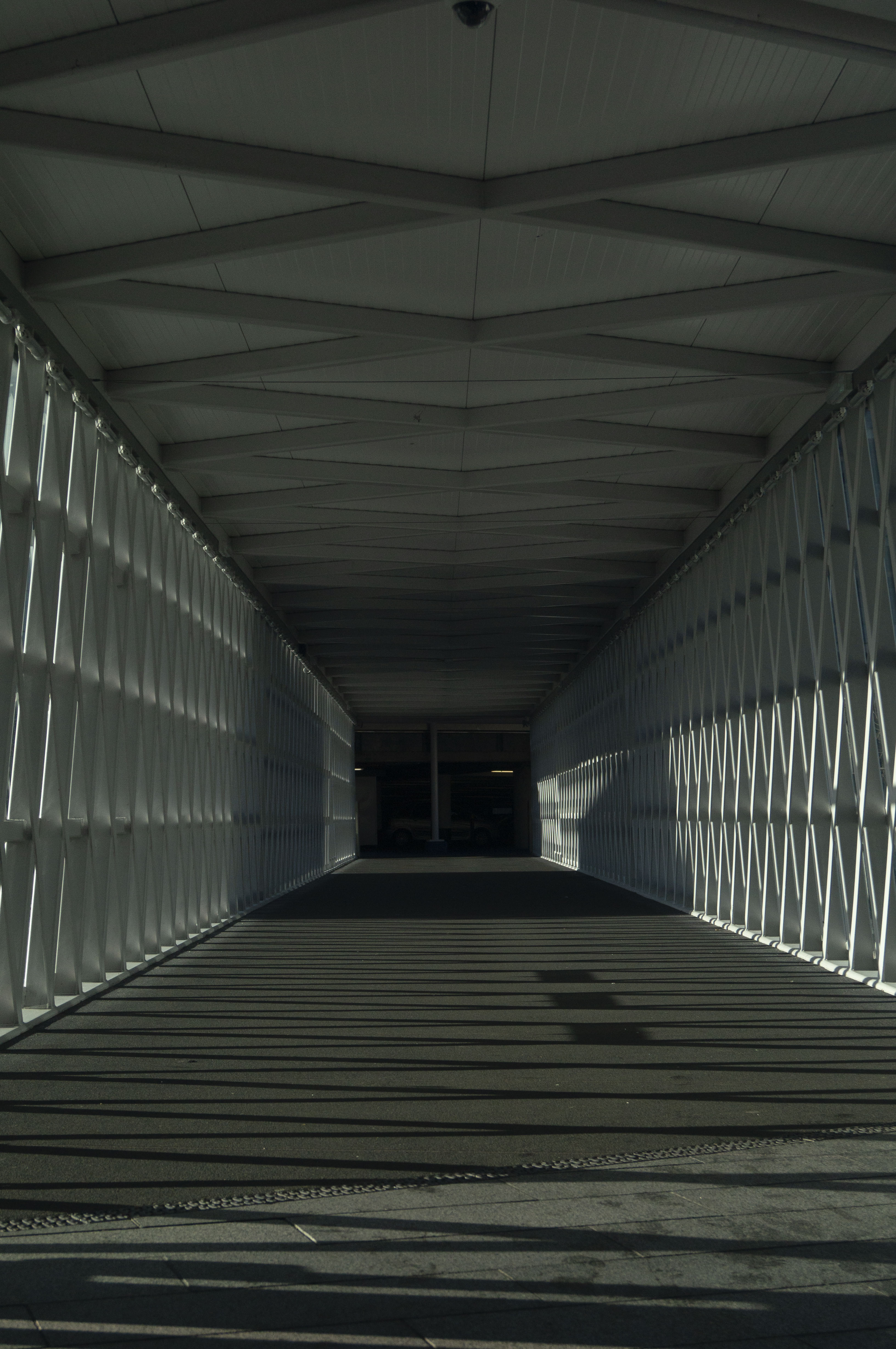
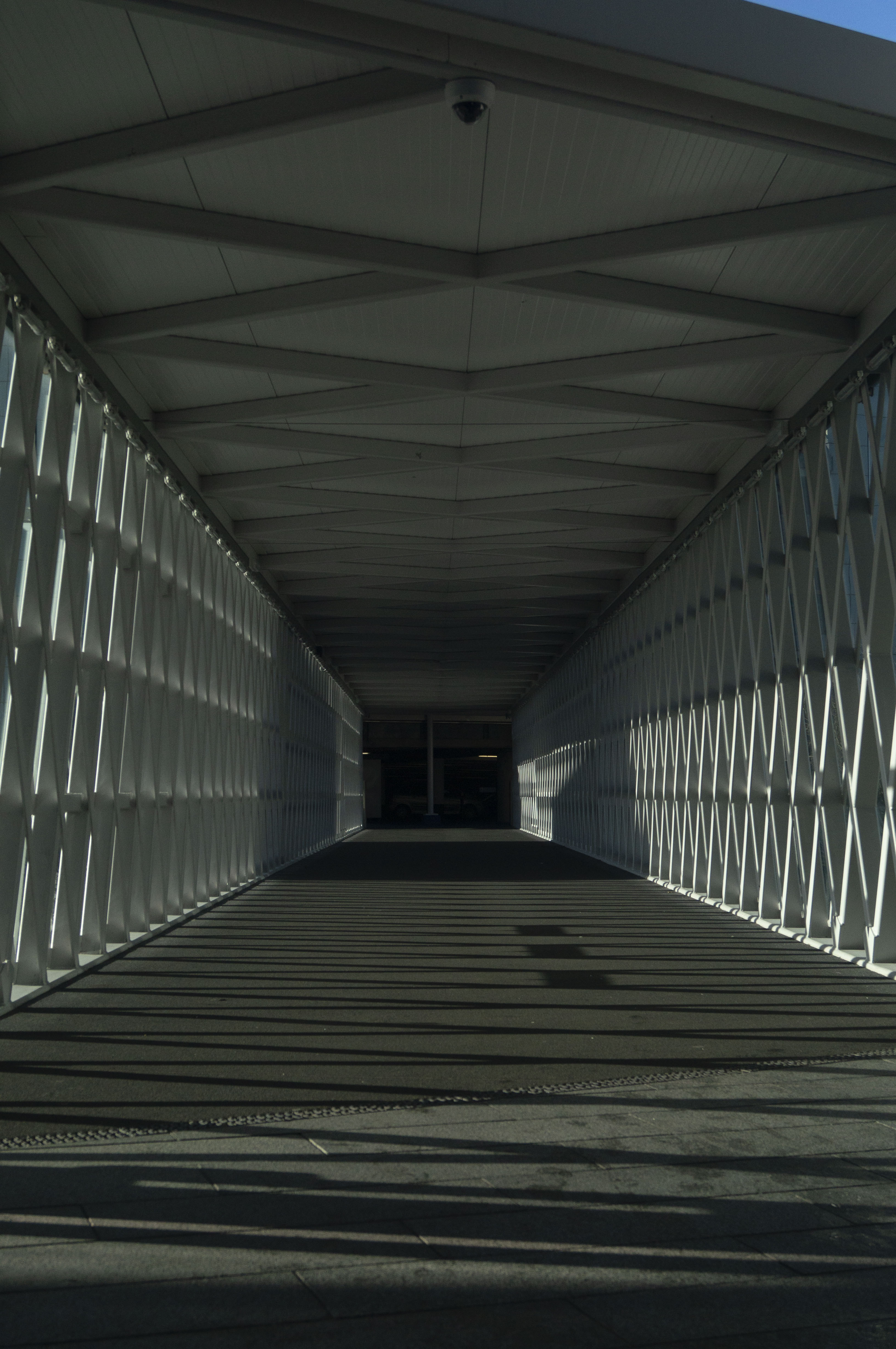
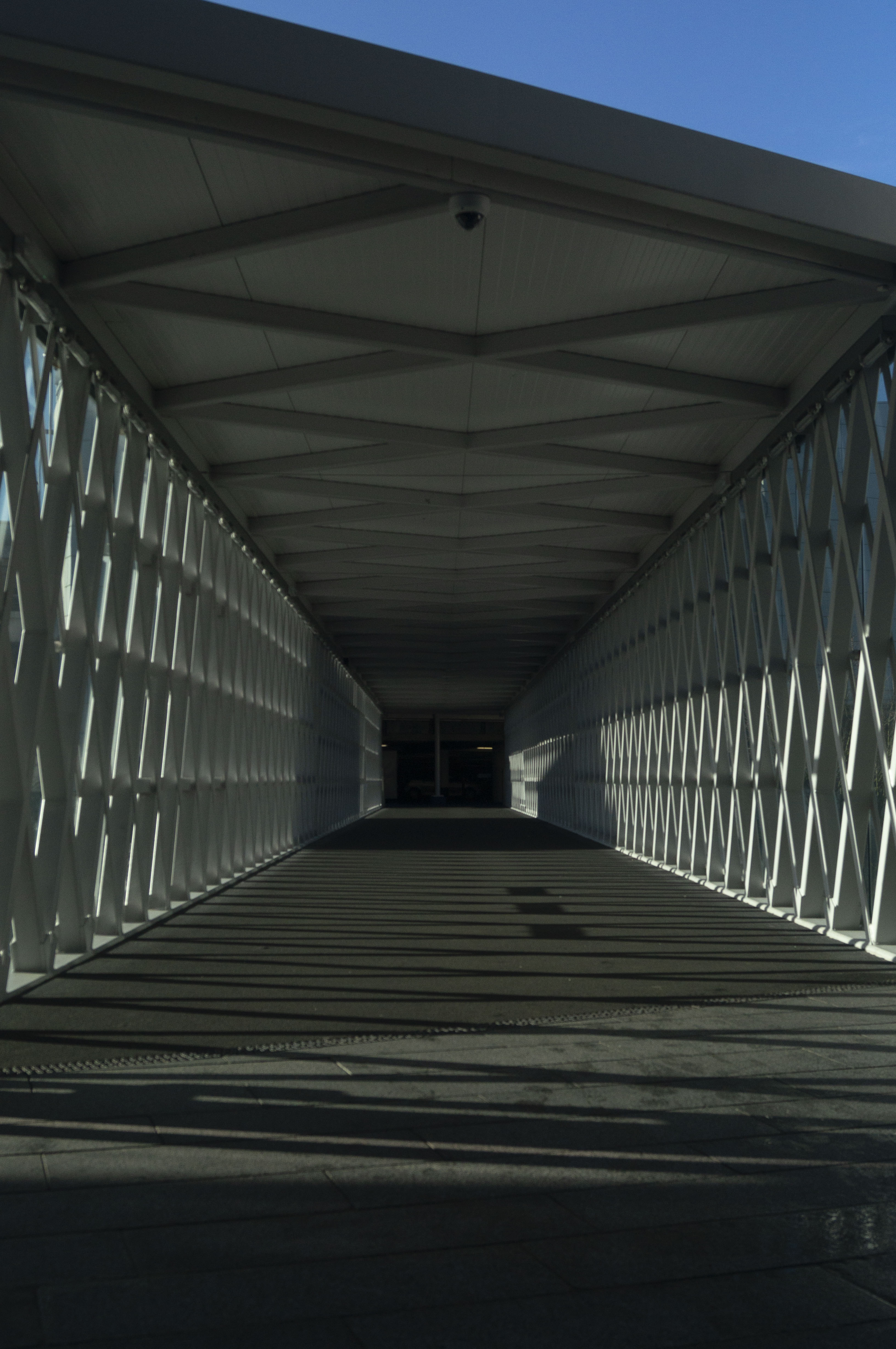
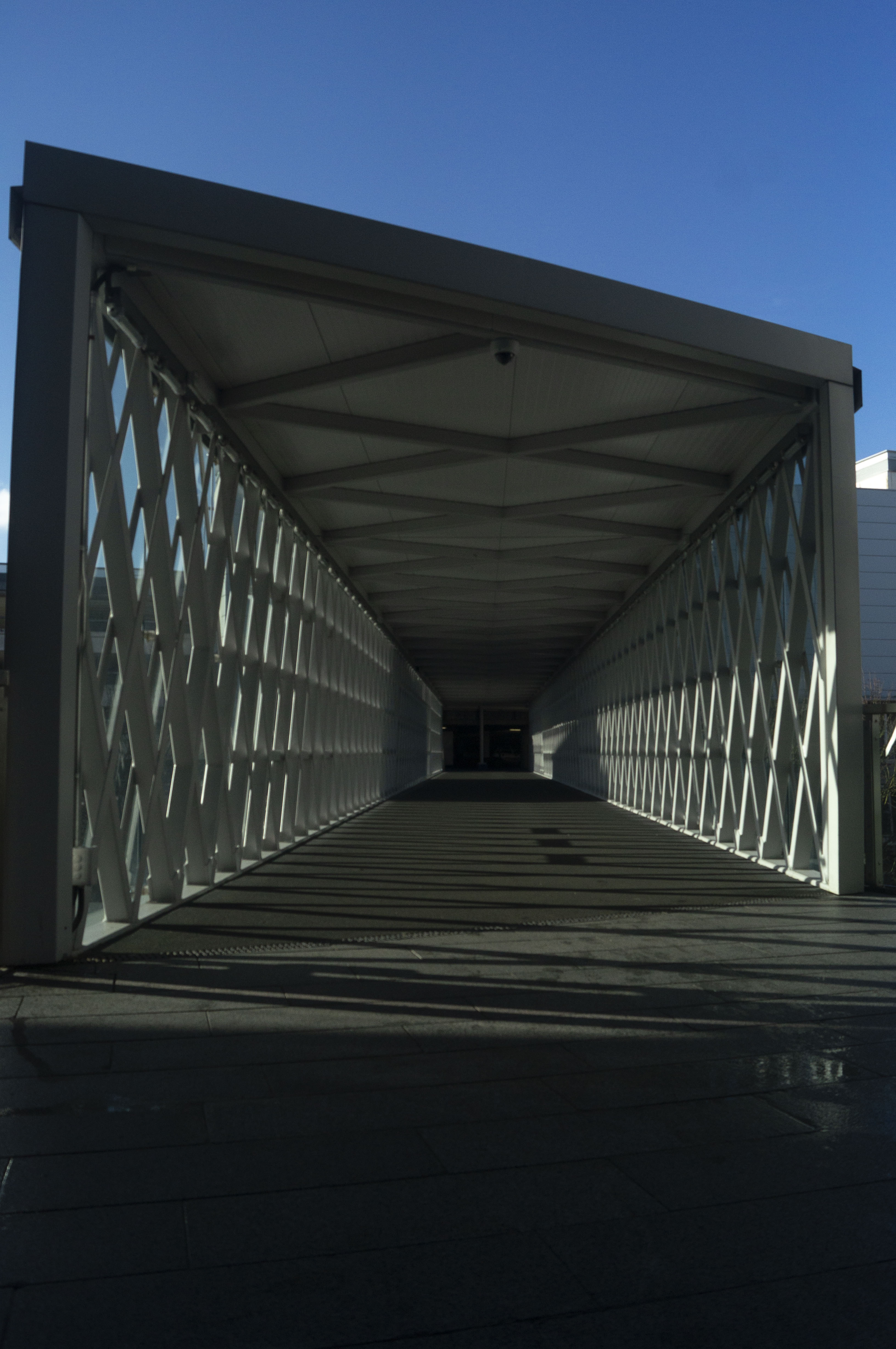
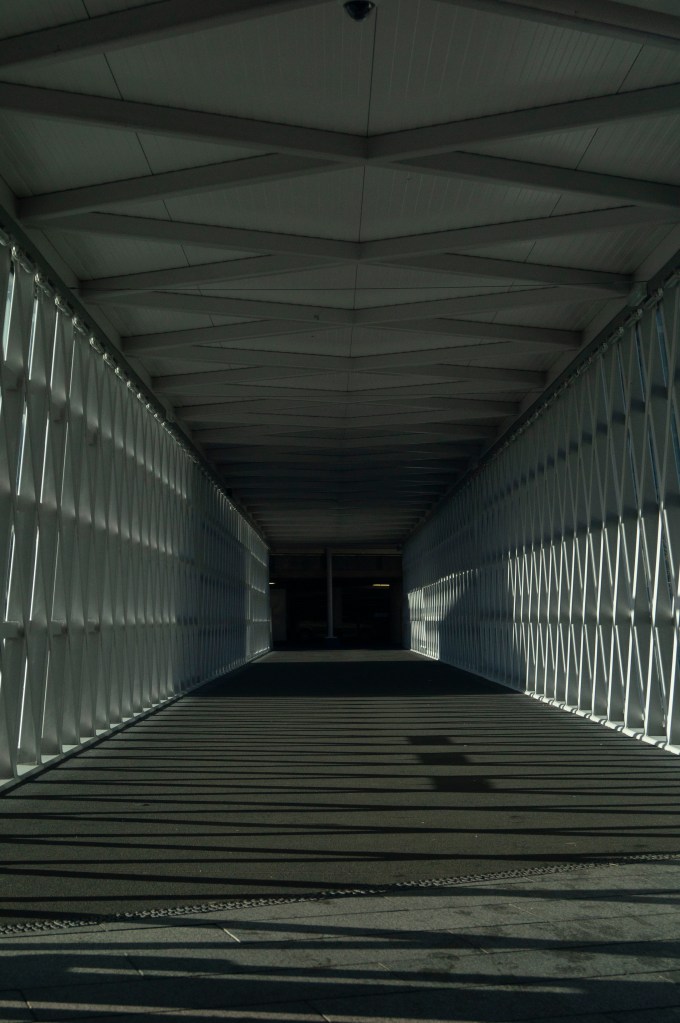
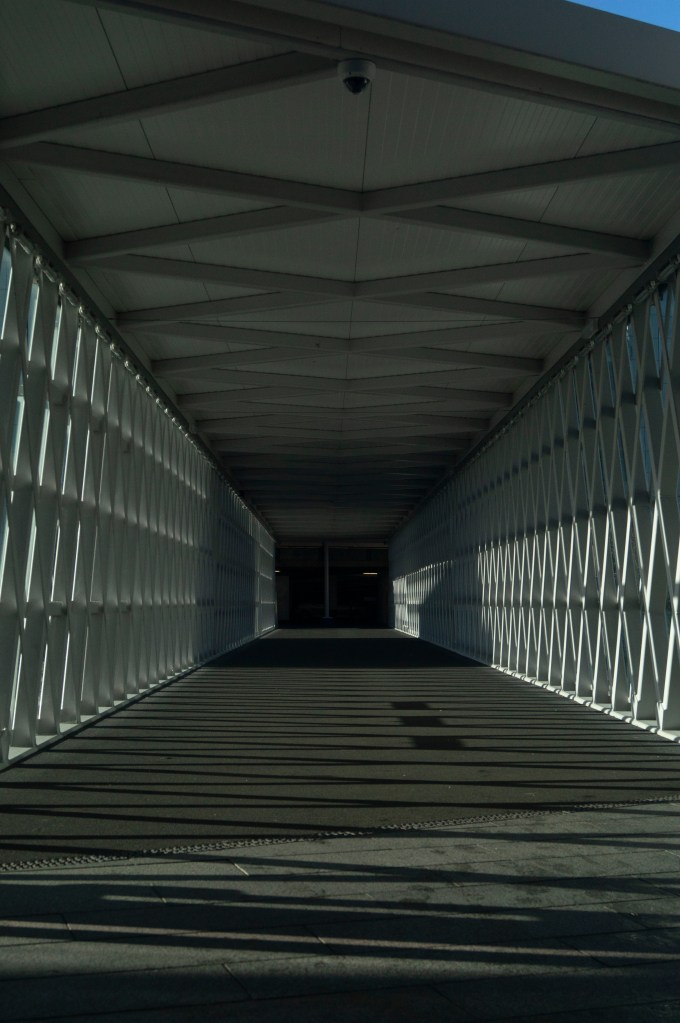
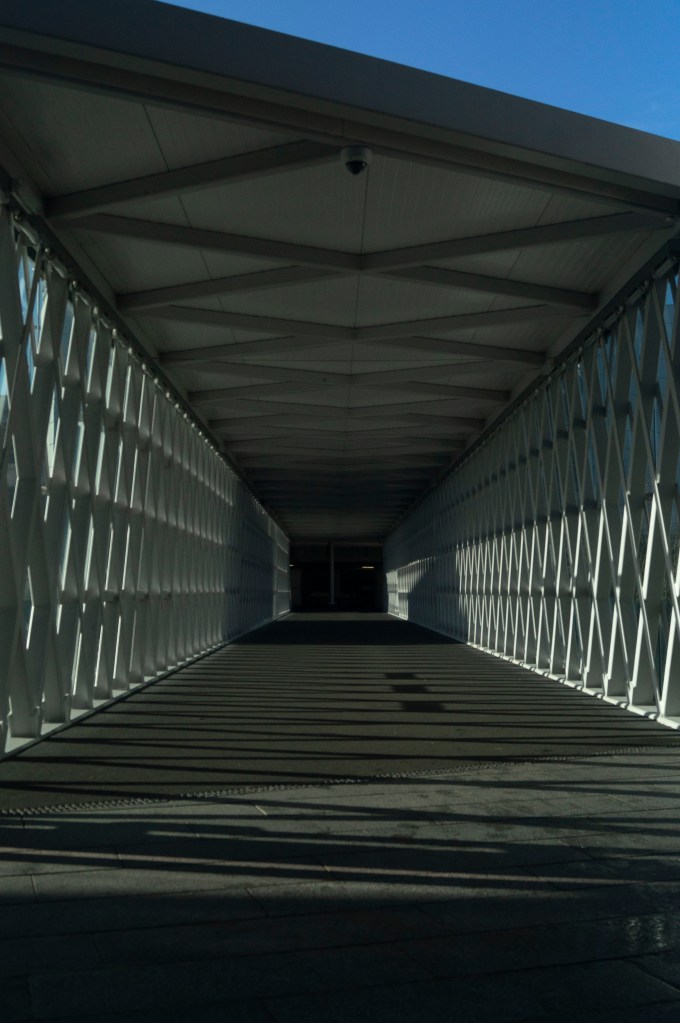
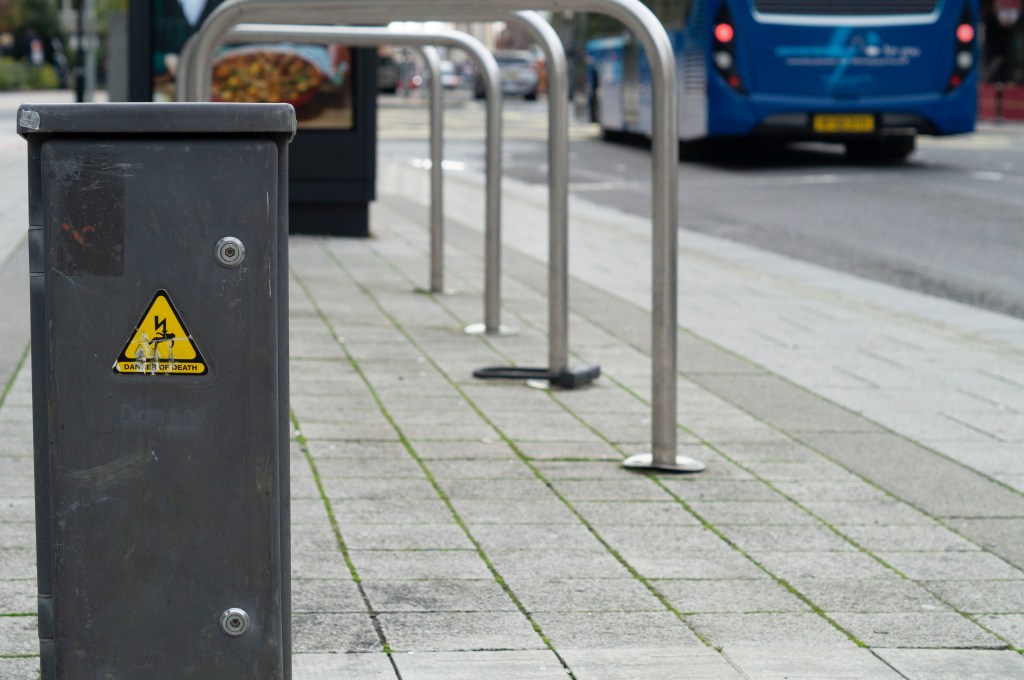
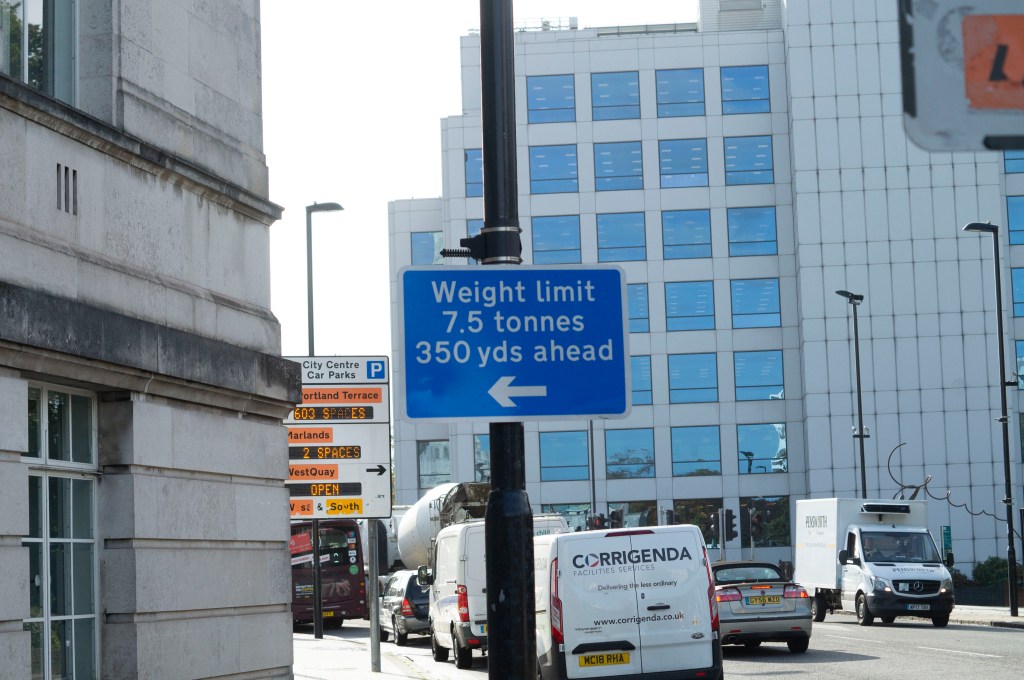
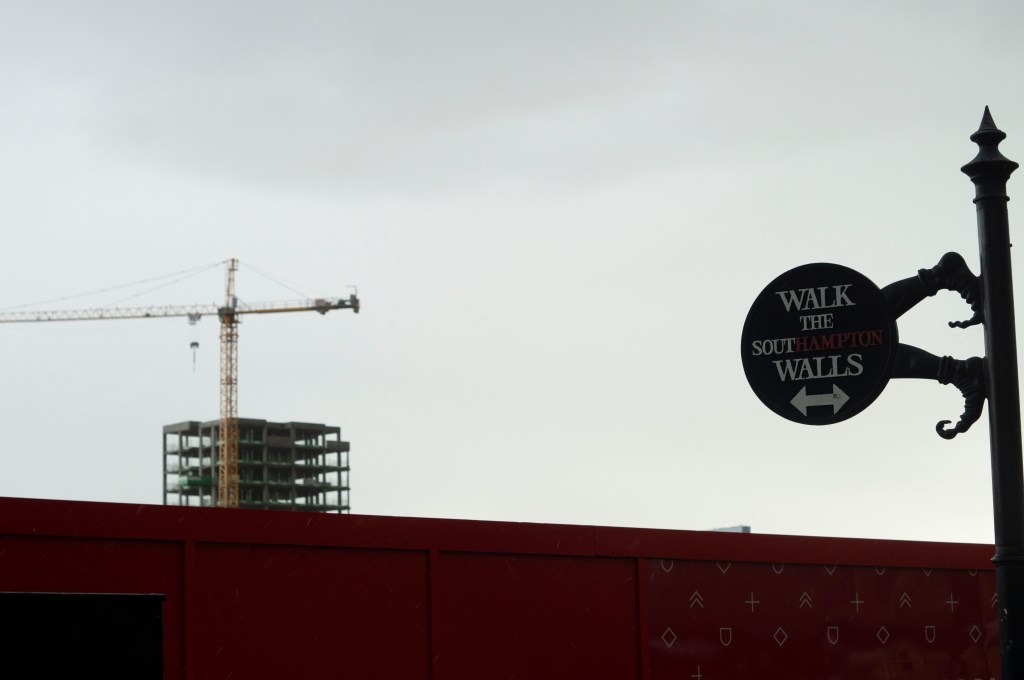
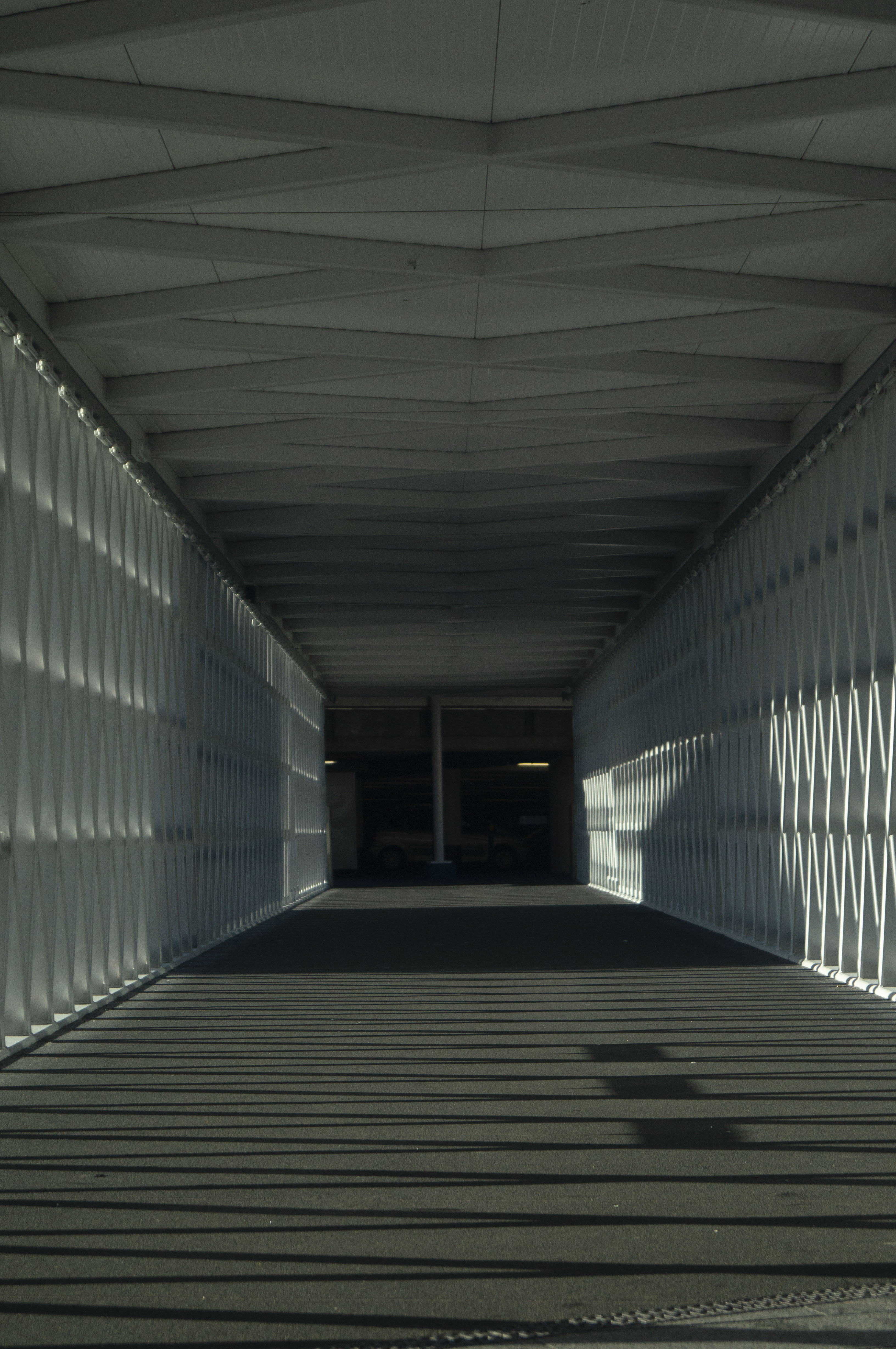
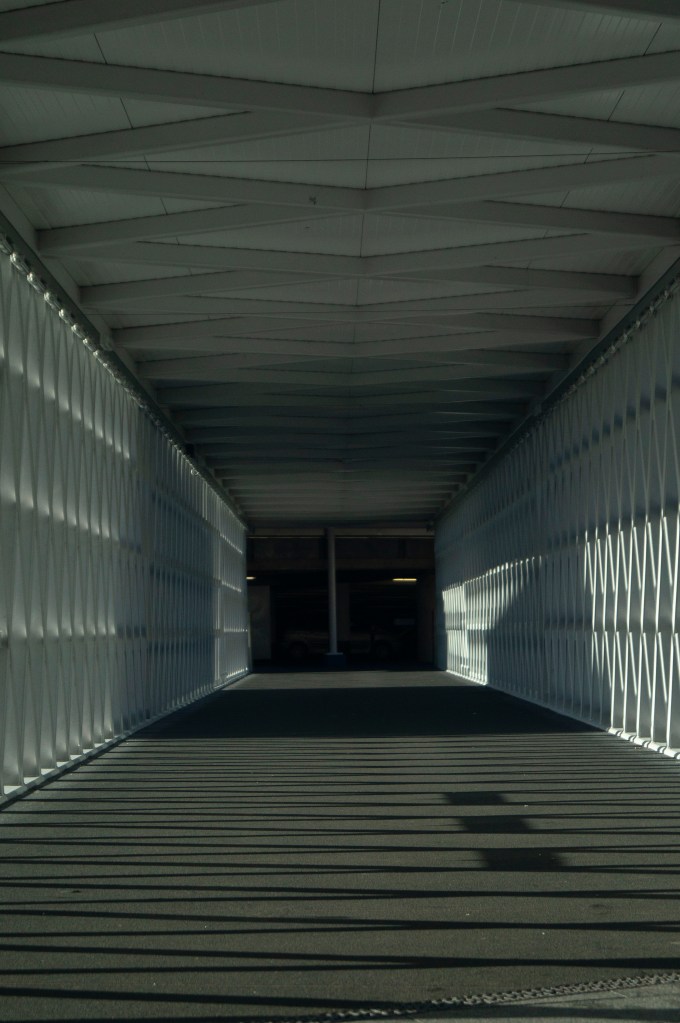
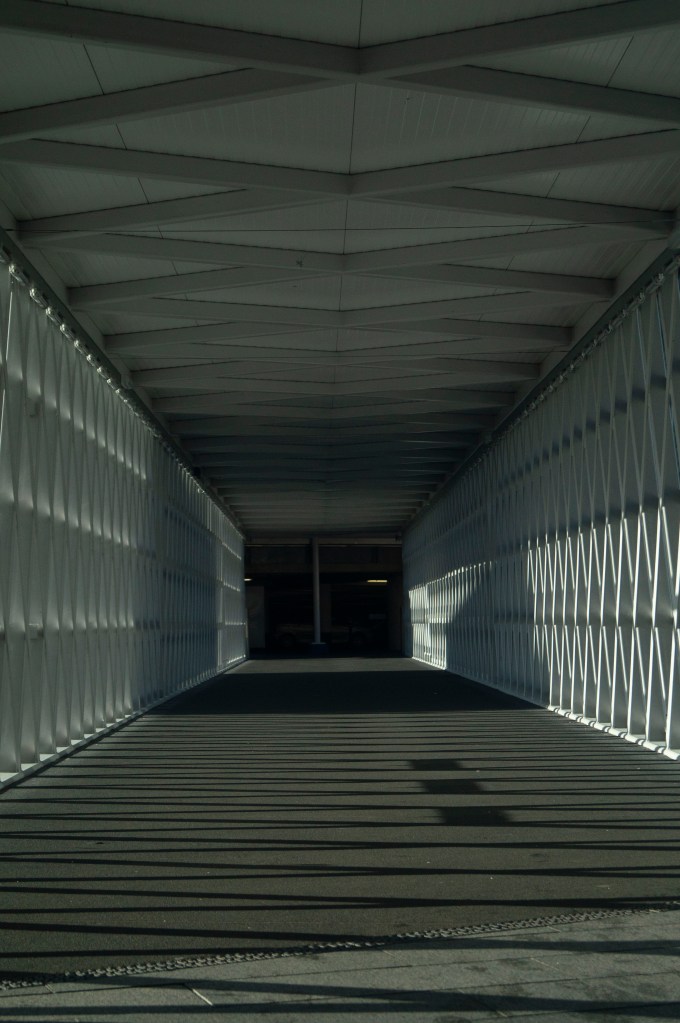
There are 5 focal lengths labelled on the lens ring (55mm, 35mm, 28mm, 24mm, 18mm) however I used these as a rough guide to show a gradual difference in the zoom settings. The focal lengths used were 55mm, 45mm, 35mm, 30mm, 26mm and 18mm, which created a fairly even spread as can be seen below.
For a few years I have been using prime lenses and have learned the importance of being able to move your body to get the image you want, therefore switching back to a zoom lens and being able to ‘move’ through a scene via the lens has reminded me of the difference perspectives you can achieve if you vary the lenses and settings.

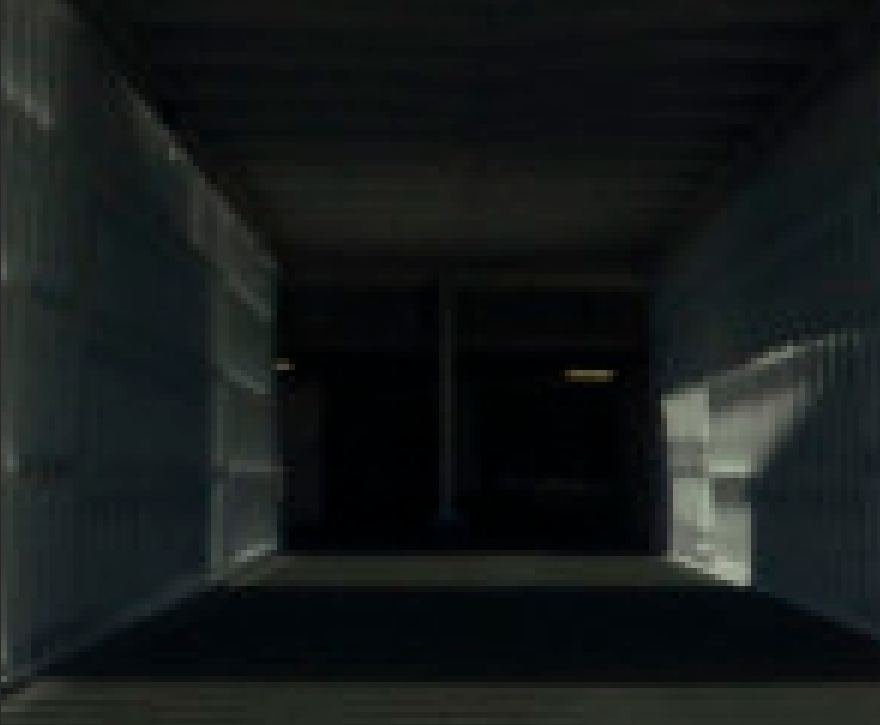
The longer the focal length is, the more cropped and out of context the subject (see Fig. 1.) becomes having eliminated the true length of the walkway. However, you can find much more detail within the scene such as the walls and poles in the car park that you can’t see as clearly with the shorter focal length. As you pan through each image, the shorter the focal length gets the more it creates the sense of backing out of the small box of darkness at the end of the tunnel, into a bright and open space showing the true extent of the path. The shot taken at 26mm (see Fig. 5) is the most accurate portrayal of what I could see in person, a combination of shadows and highlights from the midday sun, a clearer view of the latticed walls, the true length of the path and a small slither of blue sky, therefore looking at how much detail is captured in the 18mm shot shows how powerful zoom can be. The last image (see Fig. 6) is an expanded shot, almost like a vertical panorama showing more of the sky, bringing more colour and light into the frame than could be seen in person, bringing the viewer about 2 metres further back from the position of the camera, providing more height to the image and showing the full framework of the walkway.
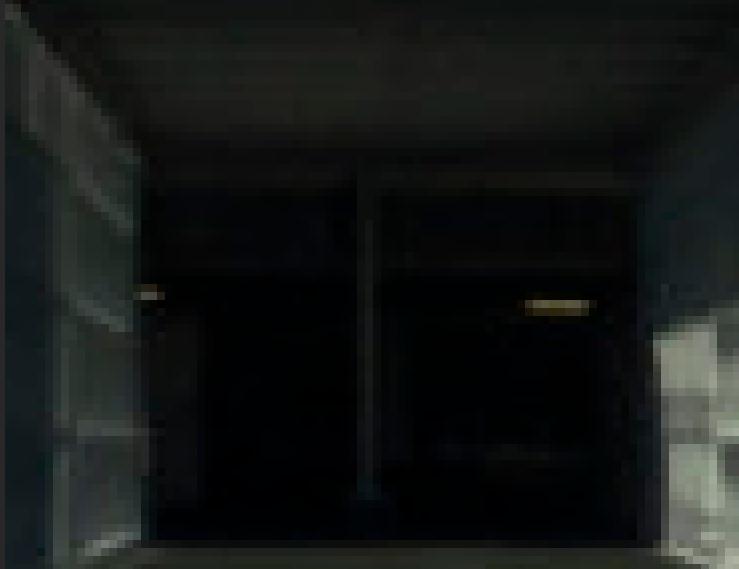
Considering my camera lens couldn’t zoom in any further than 55mm, I created the last image in Photoshop by repeatedly zooming in and cropping the image shot at 18mm, taking screenshots of the process. This created a very abstract final product, focusing more on the details of the images up close than as a whole.
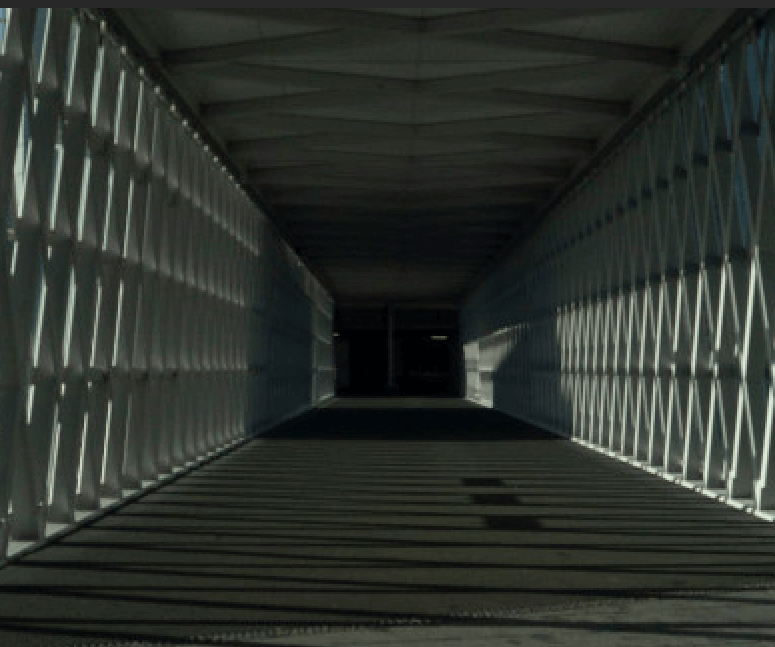
This process reminded me of pixel art and how the early era of game producers, used this style despite the lack of technology and experience, to create simple yet fun games by using simple shapes to represent certain objects or characters, relying on the ‘imagination of players to fill in the blanks’ (Griffiths, 2017).

Over the years the style evolved due to the advance in technology, while they were still restricted, 8-bit games such as Super Mario Bros. 3 (see Fig. 10) explored the idea of turning pixel blocks into more recognisable characters, as well as including backgrounds and inserting cut scenes, ultimately fleshing out the game and making it more interactive and immersive as a whole (Griffiths, 2017).

Fig. 10. Super Mario Bros. 3 (1988) : Level 5-3 (2013)

In modern times, however, pixel art is mostly used for the retro aesthetic and challenging imagination more so than a technical choice, mainly because games with higher graphics and 3D elements seem to be more appealing to most players due to the realism.

This is very similar to the development of digital cameras and lenses, to help capture more high definition imagery via digital pixels, in comparison to pinhole and film cameras which are instead made up of noisy grains. Much like old games, “vintage” cameras are used by a lot of people these days for nostalgic and visual purposes rather than the technical elements.

More and more people are becoming interested in the latest technology and capturing more detailed and crisp photographs, almost as if you were looking at it in person, however at the end of the day no matter how high the resolution may be, the closer you zoom into the details you will see that every image is made up of individual pixels or grains. The final image I have created may not be the most appealing to the eye, but the distorted out of context blocks all add up to create the full photograph in a frame. Not every image has to be clear or aesthetically pleasing, as long as you have the imagination to see the deeper details within a simpler, abstracted piece.

Reflection

Despite the fact this exercise took a few attempts to get right, I’m pleased that it allowed me to re-explore the power of zoom lenses, what details can be captured in the frame, what changes and how the perspective can be altered just by changing the focal length. The position of the camera within a scene, the settings you choose and the lens you pick, can affect the outcome of an image which is something I had forgotten due to the restrictions of fixed focal lengths.

It also helped me look at my images in closer detail, by experimenting with extreme zoom and cropping to discover the tiny details that build the whole image.

References :

Bloomfield, R., 2018. Photography 1: Expressing your Vision. 4th ed. [pdf] Barnsley: OCA, p. 40. Available at: https://www.oca-student.com/course/photography-1-expressing-your-vision [Accessed 3 February 2020].

Griffiths, D. (2017) ‘The History Of Pixel Art – The Factory Times’. [online] Available at : http://www.thefactorytimes.com/factory-times/2018/9/27/the-history-of-pixel-art (Accessed 29 January 2020)

List of Images :

Figure. 1. Powell, L. (2020) Lens 1 [image] In possession of: Lauren Powell: Eastleigh.

Figure. 2. Powell, L. (2020) Lens 2 [image] In possession of: Lauren Powell: Eastleigh.

Figure. 3. Powell, L. (2020) Lens 3 [image] In possession of: Lauren Powell: Eastleigh.

Figure. 4. Powell, L. (2020) Lens 4 [image] In possession of: Lauren Powell: Eastleigh.

Figure. 5. Powell, L. (2020) Lens 5 [image] In possession of: Lauren Powell: Eastleigh.

Figure. 6. Powell, L. (2020) Lens 6 [image] In possession of: Lauren Powell: Eastleigh.

Figure. 7. Powell, L. (2020) Cropped [image] In possession of: Lauren Powell: Eastleigh.

Figure. 8. Powell, L. (2020) Cropped and zoomed [image] In possession of: Lauren Powell: Eastleigh.

Figure. 9. Powell, L. (2020) Cropped, zoomed and cropped again [image] In possession of: Lauren Powell: Eastleigh.

Figure 10. Nintendo. (n.d) ‘Super Mario Bros. 3 (1988): Level 5-3‘. (2013) [Gameological, screenshot] Available at: http://gameological.com/2013/05/super-mario-bros-3-1988-level-5-3/index.html (Accessed 29 January 2020)
Assignment 1 – The Square Mile

Assignment 1

Having finished my Square Mile assignment, the first port of call was to review my initial thoughts on this particular brief which can be found here and here. It is pretty clear to me how the original ideas evolved through each step of the project, just by looking at my final images. Instead of revisiting a town which held significant memories, emotions and specific buildings which meant a lot to me alone, I ended up including family too. 

While I covered most areas I originally wanted to explore, the project was shaped by my grandmother without realising, as I subconsciously retraced our recent visit to Winchester, helping me see the town in a completely different way.

Considering this assignment was somewhat of an introduction to my tutor, I wanted to avoid receiving too much influence from others, to stay true to how I create, hopefully making it easier for my tutor to understand my creative process at current, hence my decision to study one practitioner in depth.

However, having studied Keith Arnatt and his various works, I began to understand how much of an impact your work can have if you create a cohesive series. Choosing to be consistent with your camera settings, lighting and framing can help tell a story, without it being too jarring. 

I took this knowledge and used it in my work, by becoming more aware of what I was shooting, how images linked together through subject matter, composition and lighting which I feel I was successful with. Framing and distance was a struggle due to the available space, as well as the angles subjects were captured at which can hopefully be improved in the future. Examples of this can be found in Nature vs Man Made and Home Sweet Home. While they aren’t bad, I would’ve preferred that I captured the window head-on instead of below and the houses were less tightly framed. 


Despite my struggle with space, the use of depth of field is one of my favourite techniques, which I feel I was reasonably strong at showing throughout, albeit the depth was more obvious in some and subtler in others, such as Work vs Life and Walking in the rain.

Another thing I noticed while analysing my imagery, is my ability to juxtapose. For example, Perspective and Hymns by the bench don’t necessarily pair up at first glance, but the story of my grandparents link them together beautifully.

I’m really happy with how this project turned out as my strengths aren’t found in street photography or architecture, however pushing myself out of my comfort zone and trying a few different techniques, made me realise that my horizons can be broadened and be successful. If I were to develop this in the future, I think I would be a little bit kinder to myself in terms of failed concepts and images. Not everything is going to work, but you will find some gems amongst the dirt.

References :

Powell, L. (2019) ‘Initial thoughts about ‘The Square Mile’ + Mindmap’. [online] Available at: https://laurenpowelloca.photo.blog/2019/08/12/initial-thoughts-about-the-square-mile-mindmap/uare-mile-mindmap/ (Accessed 23 September 2019).

Powell, L. (2019) ‘Plan for ‘The Square Mile’. [online] Available at: https://laurenpowelloca.photo.blog/2019/08/20/plan-for-the-square-mile/ (Accessed 23 September 2019).

Powell, L. (2019) ‘Keith Arnatt Research’. [online] Available at: https://laurenpowelloca.photo.blog/2019/08/13/keith-arnatt-research/ ( Accessed 23 September 2019).

Project 3 – Surface and Depth – Research Point

Notes, Part 1, Reflection on assignments, Thoughts & Ideas

Summary:

– This research point was difficult to complete due to intellectual text overpowering Campany’s review of the work.

– Campany helped me understand how Ruff works and the importance of archives but didn’t get a feel for how they viewed the work as a whole.

– Colberg’s review was much easier to process and got straight to the point.

– Explained what they did and didn’t like, without dismissing other’s opinions on how the work was presented.

– I agree with Colberg’s view that an image can be beautiful on its own, without having a complex concept behind it.

Brief:

Read the reviews by Campany and Colberg and, if you haven’t already done so, use them to begin the Research section of your learning log. Try to pick out the key points made by each writer. Write about 300 words.

If you wish, you could add a screengrab of an image from Ruff’s jpeg series, and one or two of your own compressed jpegs (taken on auto mode of course). You can achieve the effect quite easily by re-sizing a photograph to say, 180 x 270 pixels, and saving at ‘zero quality’ compression. If you use Photoshop’s ‘save for web’ you can see the effect immediately without having to save, close and reopen the file.‘ (Bloomfield, 2018)

Review 1 – David Campany – Thomas Ruff: Aesthetic of the Pixel, IANN MAGAZINE NO. 2, 2008

Campany describes Ruff’s work as being ‘cold and dispassionate’, yet surprisingly beautiful at times. They also state that Ruff’s art can ‘solicit individual and global responses’ that cannot be completely agreed upon (Campany, 2008) .

All photographic images come from archives, which has shaped Photography and how it developed over time. Photographic prints, family albums, computerised image files and gallery work are all forms of archives, all unique in their way but still forms of photography.
We cannot tell which archives Ruff’s JPEGs have come from, simply by looking at them. However Ruff does mention that the images come from the internet, as he searched for images, going from link to link and finding imagery through a route (Campany, 2008).

Campany believes that Ruff has made a great impact on introducing the ‘art of the pixel’, into photographic art, allowing us to view the pixel at a base level, both aesthetically and psychologically (Campany, 2008) .

While analogue photography was created using film and the prints being made up of grains, in the modern-day these grains are now replaced by pixels.
They suggest that Ruff’s JPEGs are not organised or planned like pixels which are evidence that our view of the pixel is changing and may not be as regimented as we first thought (Campany, 2008) .

Review 2 – Joerg Colberg – Review: jpegs by Thomas Ruff

Colberg believes that Thomas Ruff may be one of the most ‘creative and inventive photographers of all time’, however, they also acknowledge the fact that many people may debate whether his work can be classed as photography at all (Colberg, 2009). 

Despite how you view the work and what you believe the art form is, Colberg, realises the importance of what the work does, more so than what the work is.
Colberg states that the images work well in book form, in comparison to the large physical prints at the Zwirner gallery, where they felt it was a ‘tad too pretentious’. While they understand the importance of physical interaction from the viewer, in their opinion the detail in the images weren’t large enough to justify the size of the prints in the gallery (Colberg, 2009) .

Despite all of the positive feedback, Colberg feels slightly uneasy about Ruff’s work as the images are great, but they feel as if the concepts rely too much on the techniques involved (Colberg, 2009) . 

References :

Bloomfield, R., 2018. Photography 1: Expressing your Vision. 4th ed. [pdf] Barnsley: OCA, p.33. Available at: https://www.oca-student.com/course/photography-1-expressing-your-vision [Accessed 7 November 2019].

Campany, D. (2008) ‘Thomas Ruff: Aesthetic of the Pixel, IANN MAGAZINE NO. 2, 2008‘. [online] At : https://davidcampany.com/thomas-ruff-the-aesthetics-of-the-pixel/ ( Accessed 7 November 2019).

Colberg, J. (2009) ‘Review: jpegs by Thomas Ruff’. [online] At: http://jmcolberg.com/weblog/2009/04/review_jpegs_by_thomas_ruff/ (Accessed 7 November 2019).

Exercise 1.4 Frame

Notes, Part 1, Reflection on coursework, Thoughts & Ideas

Summary:

For the final exercise in this project I have;

– Documented my initial thoughts about the exercise.
– Stated how I was out of my comfort zone and the difficulties faced while using the grid, alongside the knowledge gained from it.
– Explored my process for shoot and my lack of a fixed plan to encourage a natural exploration, as well as the steps I took to select my final images.
– For example, I cut out the images and arranged them in a grid to find the best combination.
– Provided a PDF version of the contact sheet for this task, along with the final images for the Gestalt and the technical settings for each.
– Reflected on my recurring theme of city life and the use of different signs, in addition to the visual elements documented throughout, such as colour, texture and signs of life.

Brief:

Take a good number of shots, composing each shot within a single section of the viewfinder grid. Don’t bother about the rest of the frame! Use any combination of grid section, subject and viewpoint you choose.

When you review the shots evaluate the whole frame not just the part you’ve composed. Looking at a frame calmly and without hurry may eventually reveal a visual coalescence, a ‘gestalt’.

Gestalt: an organised whole perceived as more than a sum of its parts. (Google Search using the define: operator)


Select six or eight images that you feel work both individually and as a set and present them as a single composite image. Add to your learning log together with technical information such as camera settings and two or three lines containing your thoughts and observations.‘ (Bloomfield, 2018)

Much like the rest of the exercises, I was challenged when it came to this brief because I rarely use the grid feature on my camera. However, this pushed me out of a comfort zone while shooting and allowed me to think about what was in the particular section.

Capturing these images in a busy city made it rather difficult to ignore the rest of the frame while picking out one area of the grid, mainly due to the fact I have trained myself to be aware of everything that is in the viewfinder to avoid any unwanted objects. Eventually, however, I forced myself to keep my eye on the area I was shooting and ignore the hustle and bustle going on around it which provided me with some really good shots.

In terms of what I wanted to take photographs of, there wasn’t a clear plan, forming a more natural process as I could explore and find things to capture, instead of it being regimented and restrictive. The only plan I had set in place was to start at the top of the city and work my way down.

I used Adobe Bridge to scan through all of the photos and select the best, before creating a contact sheet of 116 images.

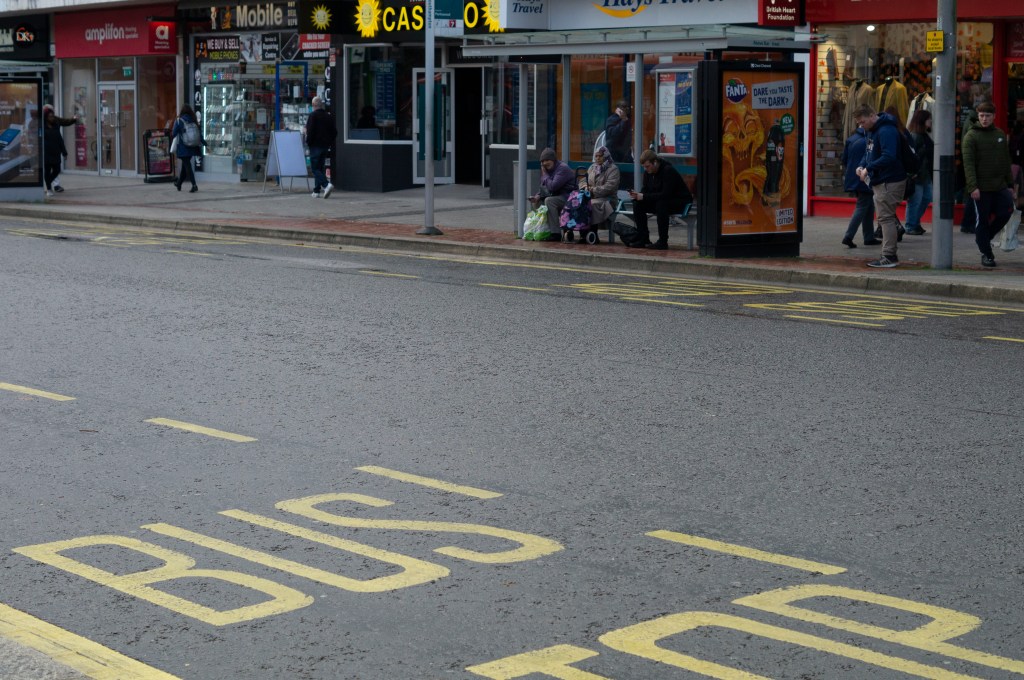
After reviewing the contact sheets once more, I printed a selection of images that featured both city life AND text. This decision was made due to the fact a variety of different signs were placed around the city, therefore it seemed like the most logical subject to create a complementary set from. The selection of images were then cut up and arranged in a grid of 9 to see which layout worked the best. The final arrangement can be seen below.

Reflection:

As briefly mentioned above, a recurring theme I found throughout my shoot was the use of signs, whether that was to provide a warning, an instruction, a direction or a name. Therefore I wanted to form a set of images that explored all of the different kinds found through the city.

The tones within the imagery are very neutral, with the occasional burst of colour to bring life to the frame which is pleasing to the eye, it’s not too much, nor is it too little that the images become flat.
Each image shows the grime and age of the city, caused by footfall, human littering and natural causes, it doesn’t feel or look fresh which gives character.
City life is another constant factor, showing transportation of all forms, buildings of all kinds, the work-life of various sorts and the ongoing business of the place.

While the gestalt isn’t the most appealing or prettiest to look at, it is a cohesive set and captures the life and the effects of it which is what photography is about. Capturing what is there and how it changes, in a short second.

References :

Bloomfield, R., 2018. Photography 1: Expressing your Vision. 4th ed. [pdf] Barnsley: OCA, p.29. Available at: https://www.oca-student.com/course/photography-1-expressing-your-vision [Accessed 12 November 2019].

Powell, L., 2019. frame-contact-sheet [pdf] In possession of: Lauren Powell: Eastleigh.

List of images:

Figure. 1. Powell, L. (2019) Frame 2019 85 [image] In possession of: Lauren Powell: Eastleigh.

Figure. 2. Powell, L. (2019) Frame 2019 149 [image] In possession of: Lauren Powell: Eastleigh.

Figure. 3. Powell, L. (2019) Frame 2019 49 [image] In possession of: Lauren Powell: Eastleigh.

Figure. 4. Powell, L. (2019) Frame 2019 115 [image] In possession of: Lauren Powell: Eastleigh.

Figure. 5. Powell, L. (2019) Frame 2019 39 [image] In possession of: Lauren Powell: Eastleigh.

Figure. 6. Powell, L. (2019) Frame 2019 289 [image] In possession of: Lauren Powell: Eastleigh.

Figure. 7. Powell, L. (2019) Frame 2019 227 [image] In possession of: Lauren Powell: Eastleigh.

Figure. 8. Powell, L. (2019) Frame 2019 28 [image] In possession of: Lauren Powell: Eastleigh.

Figure. 9. Powell, L. (2019) Frame 2019 165 [image] In possession of: Lauren Powell: Eastleigh.

Exercise 1.3 Line

Notes, Part 1, Reflection on coursework, Thoughts & Ideas

Summary:

In this post I;

– Provided a selection of images that explore the use of lines to create depth and the flattening of space, along with technical settings.

– Analysed the images, noting down their visual strengths, the impact of the lines and angles explored as well as textures and colours.

– Stated my initial concerns, what I have learnt from it and the importance of lines in a composition.

Brief:

‘Take a number of shots using lines to create a sense of depth. Shooting with a wide-angle lens (zooming out) strengthens a diagonal line by giving it more length within the frame. The effect is dramatically accentuated if you choose a viewpoint close to the line.‘ (Bloomfield, 2018)

After reading the brief, I headed to my local city to explore the different architecture available and the modern public facilities dotted around the area.

As I don’t have a wide-angle lens, I used my 50mm lens while being aware of my position to get better angles and hopefully create the same effect.

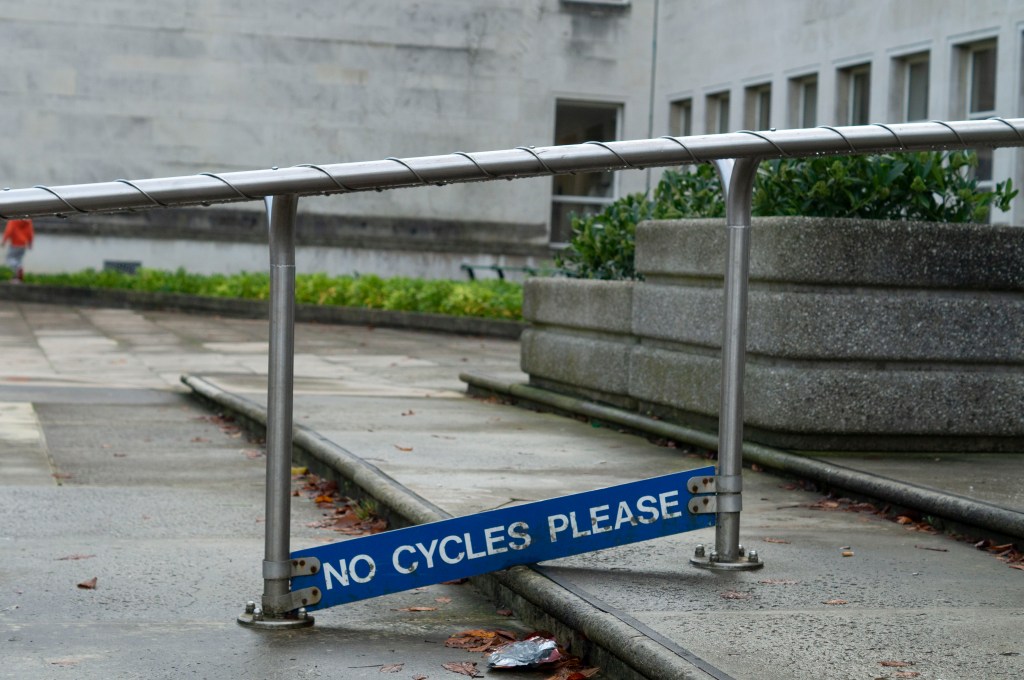
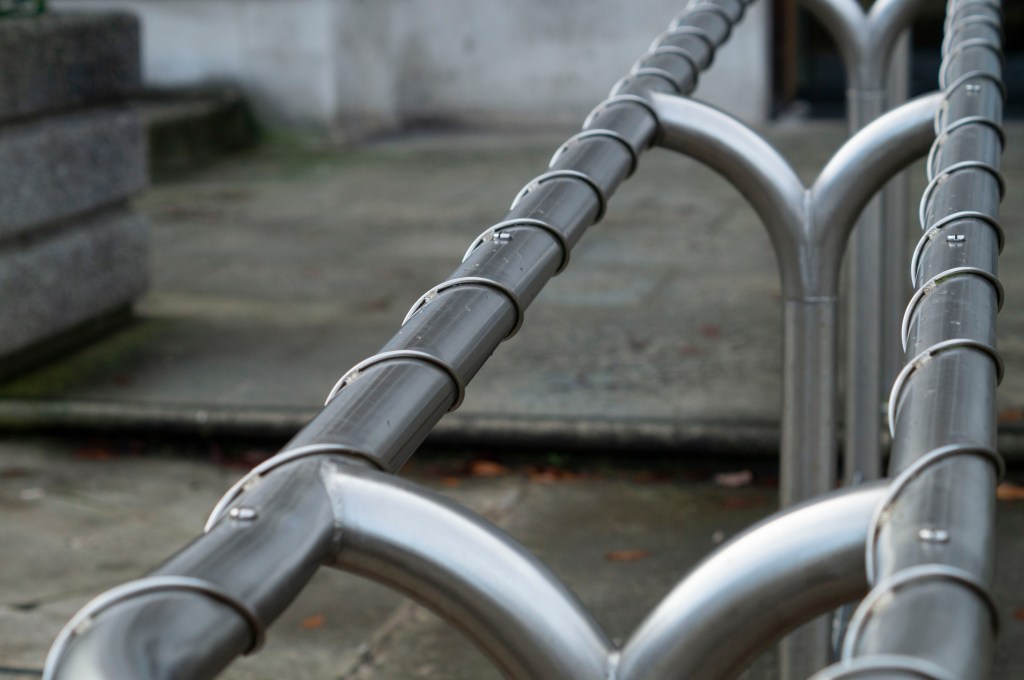
The first image (see Fig. 1) is full of various lines, keeping the eyes busy. The length of the handrail leads the eyes from the bottom left corner to the top right, while the wire and the curved structural pieces throughout the middle of the rail provides a circular motion for the viewer while they travel through the frame. Despite the shallow depth of field, you can still clearly see the straight line of the step and the wall to the left; this stops the eyes from heading straight out of the picture.

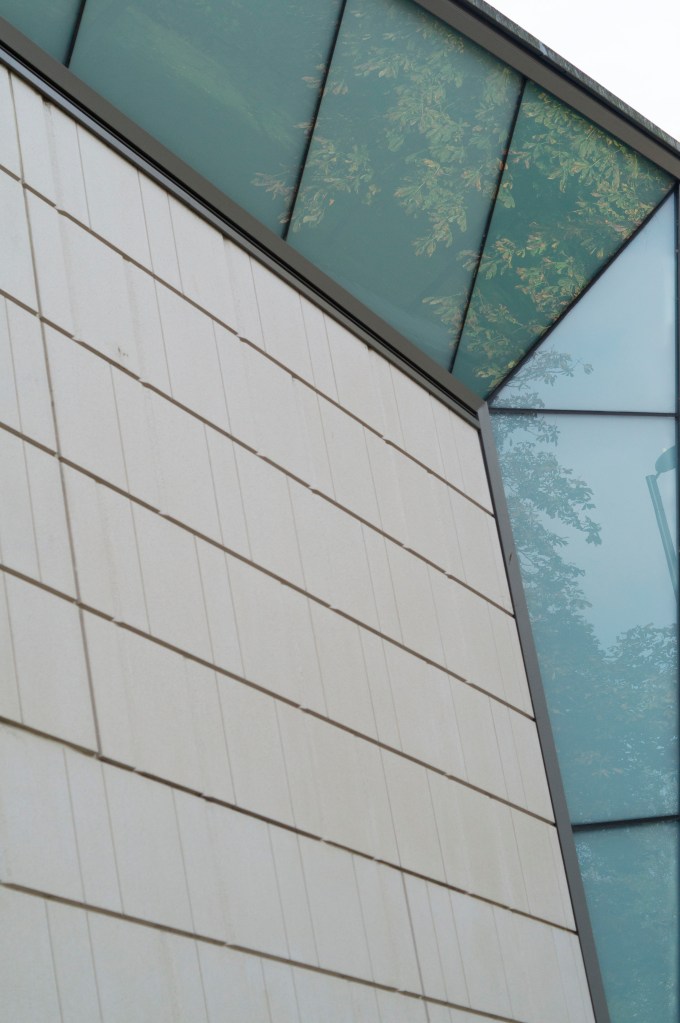
The depth in the second image (see Fig. 2) stands out the most, mainly due to the unique structure of the building. The camera was as close to the wall as possible to show the sharp angles of the architecture; it goes inwards, drawing your eyes directly into the photograph then leading you back out when the glass windows come outwards. Not only do the faint and deep lines cause your eyes to flick up and down throughout, but the reflections in the glass gives that little bit more texture, as well as tonal variants due to the sunlight, feeding the eyes with more detail to explore bringing you back into the image. Depending on how you look at it and how your eyes adjust, it could create an optical illusion, causing the building to come out of the frame rather than go inwards. It’s all about perspective.

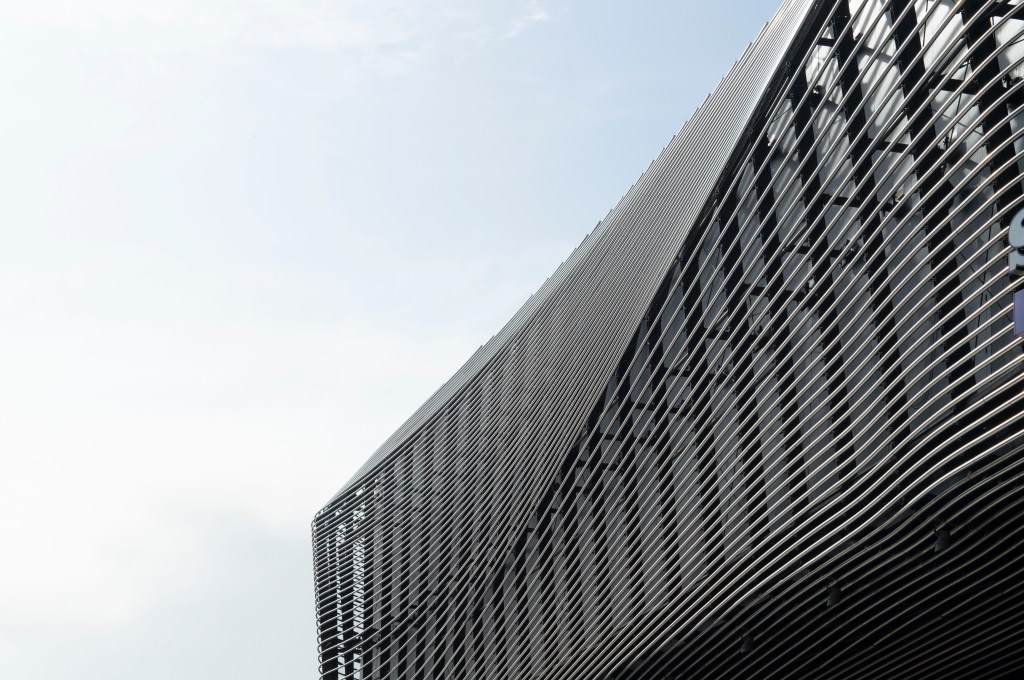
Modern architecture is something to behold, so the third image (see Fig. 3) is an incredible example of this. The curves in this building are beautiful, creating a wave effect for the eyes, very similar to the figure of a whale and its skin details. This composition provides circular motions for the eyes instead of a straight line that draws you from one side of the frame to the next. Not only are there horizontal lines, but much darker vertical lines behind the curved structure too.

Brief continued

‘Now take a number of shots using lines to flatten the pictorial space. To avoid the effects of perspective, the sensor/film plane should be parallel to the subject and you may like to try a high viewpoint (i.e. looking down). Modern architecture offers strong lines and dynamic diagonals, and zooming in can help to create simpler, more abstract compositions.’ (Bloomfield, 2018:25).

Finding a high viewpoint and looking down with a fear of heights didn’t seem appealing, so I had to get creative and find something on the ground level.

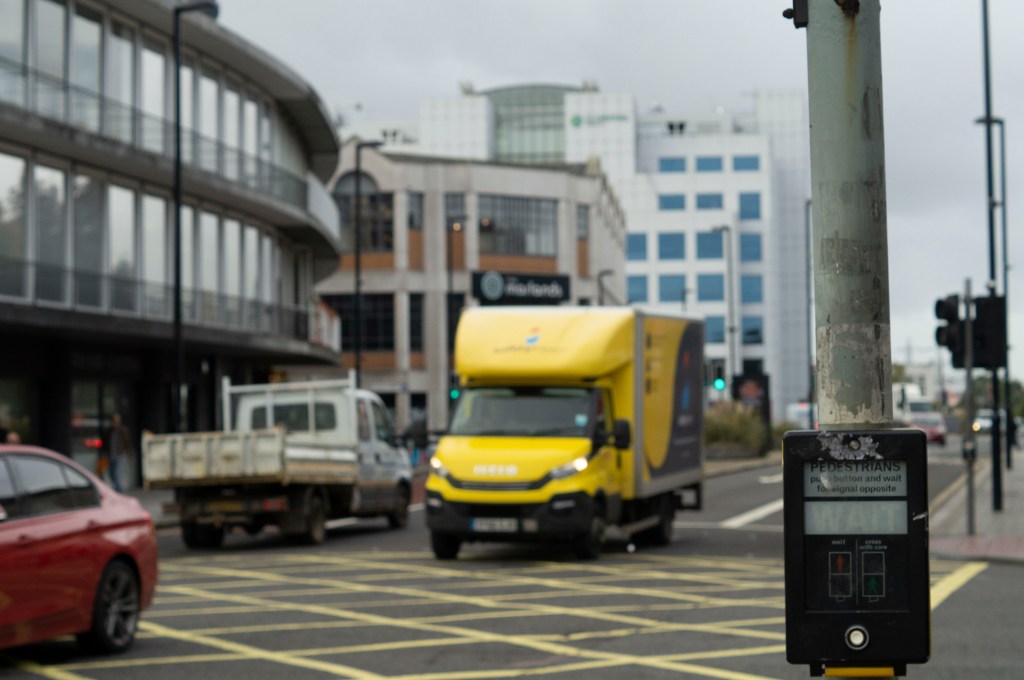
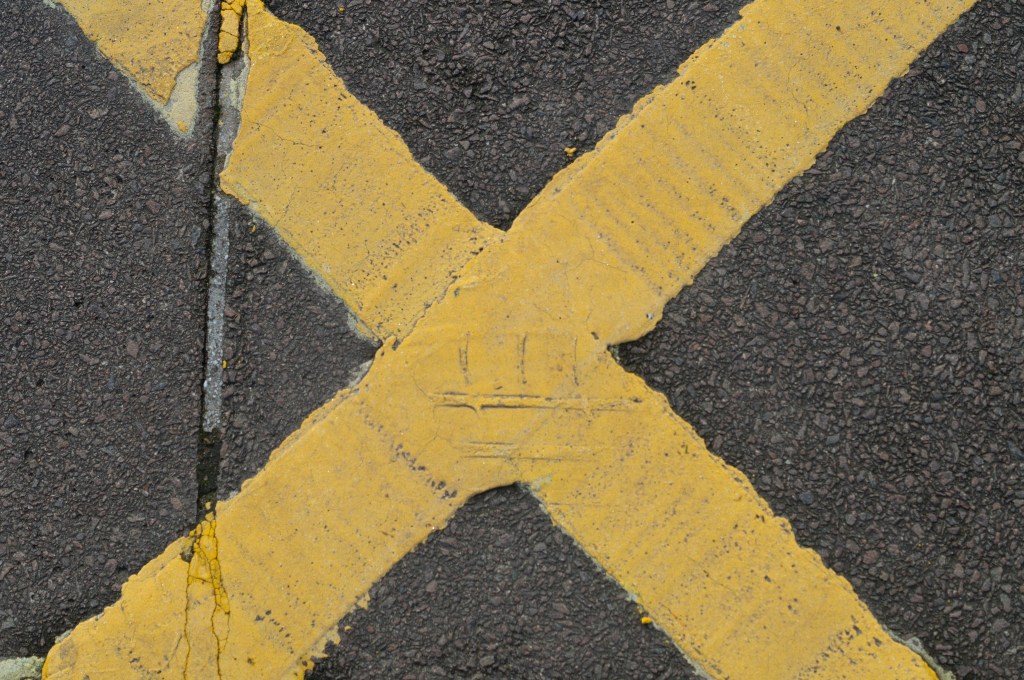
The bright yellow focal point of the first image (see Fig. 4) not only cuts the image into four sections for the audience to explore, but the eyes also travel across multiple diagonals. While there is no physical depth like the previous images, the contrast between the tarmac and yellow paint lifts the cross out of the frame. The lines are sharp and straight, very geometric and make the picture slightly more dynamic than the perspective lines.

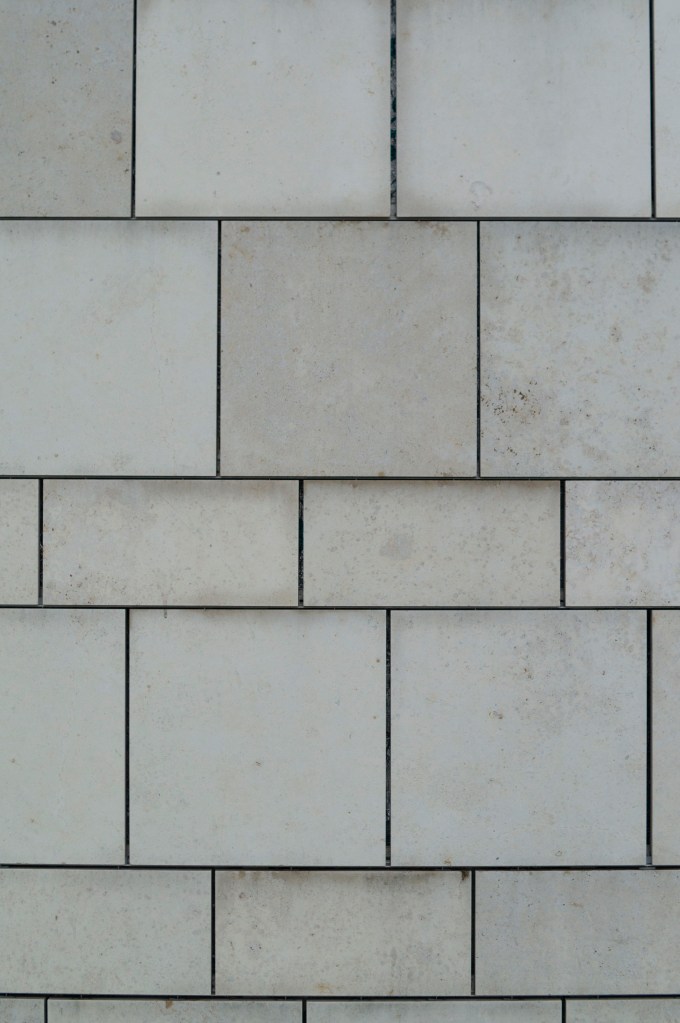
Not only do your eyes go up and down and side to side from exploring the tiles in image Line 5 (see Fig. 5), but the different sizes also expand and shrink the image as the eyes travel through the frame. The dark lines are very sharp and draw the eyes into the frame as it sinks in from the bright white wall, much like a minimalist painting. I like how I shot this wall very closed in and cropped, preventing the composition from being overwhelmed with too many shapes.

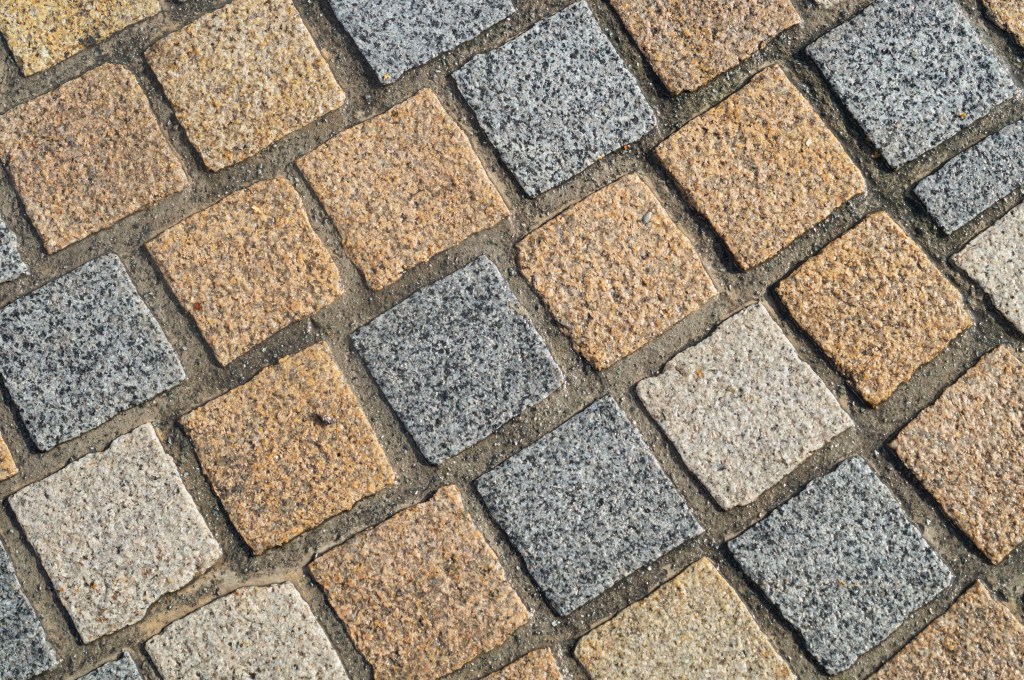
I enjoy shooting images at odd angles and going against the idea of a straight horizon, which I applied in Line 6 (see Fig. 6). Not only do the eyes get to jump around the frame to explore the various coloured brickwork, but they are also guided through the image diagonally and around each brick in a diamond-shaped motion. Once again, the highlights and shadows provide a little bit of depth, but not too much.

Review

Despite being a little nervous about this exercise, I am pleased with the results. It made me aware of what is around me, whether it is natural or built by hand. We very often look forwards, rarely looking up at what’s above us or below us besides our feet or our phone. Not only did this help me understand how lines work in photography, how they can shape a composition, give more depth and the effect these features can have on the viewer, it also helped me find the beauty of shapes and structure in person, not just a snapshot.

References :

Bloomfield, R., 2018. Photography 1: Expressing your Vision. 4th ed. [pdf] Barnsley: OCA, p. 24. Available at: https://www.oca-student.com/course/photography-1-expressing-your-vision [Accessed 12 November 2019].

List of images:

Figure. 1. Powell, L. (2019) Line 1 [image] In possession of: Lauren Powell: Eastleigh.

Figure. 2. Powell, L. (2019) Line 2 [image] In possession of: Lauren Powell: Eastleigh.

Figure. 3. Powell, L. (2019) Line 3 [image] In possession of: Lauren Powell: Eastleigh.

Figure. 4. Powell, L. (2019) Line 4 [image] In possession of: Lauren Powell: Eastleigh.

Figure. 5. Powell, L. (2019) Line 5 [image] In possession of: Lauren Powell: Eastleigh.

Figure. 6. Powell, L. (2019) Line 6 [image] In possession of: Lauren Powell: Eastleigh.


Project 2 – Visual Skills – Exercise 1.2 Point

Notes, Part 1, Reflection on coursework, Thoughts & Ideas

Summary:

For my second exercise I have;

– Provided the brief for this task and my initial worries about how to I was going to shoot as well as
– My decision to explore flat lays and the visual preferences for this exercise.
– Stated the choice of subject and why they helped with the overall balance of the shot.
– Inserted the images taken for this exercise, explaining the different choices made and a short analysis of how I feel they fit the brief along with
– Selecting the strongest example.
– Explored the shots taken without the rules applied and why they aren’t the strongest
– While noting the few strengths they provide and choosing the best image of the two.


Brief:

Take three or four photographs in which a single point is placed in different parts of the frame. When composing the shots use these three rules: the place of the point shouldn’t be too obvious (such as right in the middle), the composition should hold a tension and be balanced (the golden section or rule of thirds) and the point should be easy to see. Evaluate the shots according to these rules and select which one you think works best.

Then take a few more shots without any rules, just being aware of the relationship of the point to the frame. Without the rules, how can you evaluate the shots? That will be a key question throughout the whole degree programme.

Add the photographs to your learning log together with brief observations.
‘ (Bloomfield, 2018)

I must admit, when I first saw this exercise I was slightly nervous and didn’t have a clue as to how I was going to execute it, mainly due to the fact I don’t use the grid when I shoot imagery, nor do I actively think about the rule of thirds.

However, I decided to go with a flat lay shoot, as I like the way they look visually and allowed me to have more control over the negative space.

My subjects of choice we’re a pegboard, a succulent and the point being a pair of rings. I feel as if the balance was created by the different sized objects I decided to use, to avoid crowding the frame with “stuff” making the point difficult to find.

Camera settings:

1/80 sec; f/1.8; ISO 400.

For the first composition (see Fig. 1), I decided to place the point in the bottom corner of the pegboard to draw your eyes throughout the image in a straight diagonal line, whether you start from the middle and then up, then down OR from the top to bottom and vice versa.
It doesn’t take away from the text, nor is the point out of sight and ignored. Instead, it’s subtle and very natural to my eyes.

For the above piece (see Fig. 2), I chose to move the point further into the negative space and closer to the two other objects to create a cosier feel. The placement of the items creates a right-angled triangle when you flick your eyes from each object, which forms an invisible geometric shape to complement the visible geometric shapes within the frame. I found this quite clever in terms of composition, especially as the rings are placed on the 90-degree point which is the most significant part of the triangle. Therefore the point continues to be the most important element of the image without it being obvious.

For my last image (see Fig. 3) following the rules, I moved the rings on to the plant to make it a little harder for the audience to see, without it being lost. The point highlights the middle of the succulent and compliments the natural curves of the plant, however, the contrast between green and gold helps the ring stand out, despite it being small.

I feel as if the tension in this particular image is caused by the fact you have to look a little deeper than you did with the other two, which makes it a fun composition to explore and is the strongest of the three in my opinion.

I then removed the rules and just shot a couple of images (see Fig. 4. and Fig. 5), without really putting much thought into the composition at all, taking it to the opposite extreme.

While these images aren’t awful, as the colours compliment each other, as do the shapes and sizes, the fact there wasn’t much thought put into the framing or placement of the point, it feels slightly sloppy and unbalanced. The best one out of the two for me is the first image as the angle of the frame cuts up the image slightly, forming more geometric shapes.

Whether you consciously apply the rule of thirds, balance or tension or not, I think it’s important to pay attention to what you’re shooting and where things are in the frame to create a stronger image overall.

References:

Bloomfield, R., 2018. Photography 1: Expressing your Vision. 4th ed. [pdf] Barnsley: OCA, p. 23. Available at: https://www.oca-student.com/course/photography-1-expressing-your-vision [Accessed 9 November 2019].

List of images:

Figure. 1. Powell, L Flatlay 1 [image] In possession of: Lauren Powell: Eastleigh.

Figure. 2. Powell, L Flatlay 2 [image] In possession of: Lauren Powell: Eastleigh.

Figure. 3. Powell, L Flatlay 3 [image] In possession of: Lauren Powell: Eastleigh.

Figure. 4. Powell, L Flatlay 4 [image] In possession of: Lauren Powell: Eastleigh.

Figure. 5. Powell, L Flatlay 5 [image] In possession of: Lauren Powell: Eastleigh.

Exercise 1.1 The Instrument

Notes, Part 1, Reflection on coursework

Summary :

In this post I have;

– Stated the brief for this exercise.
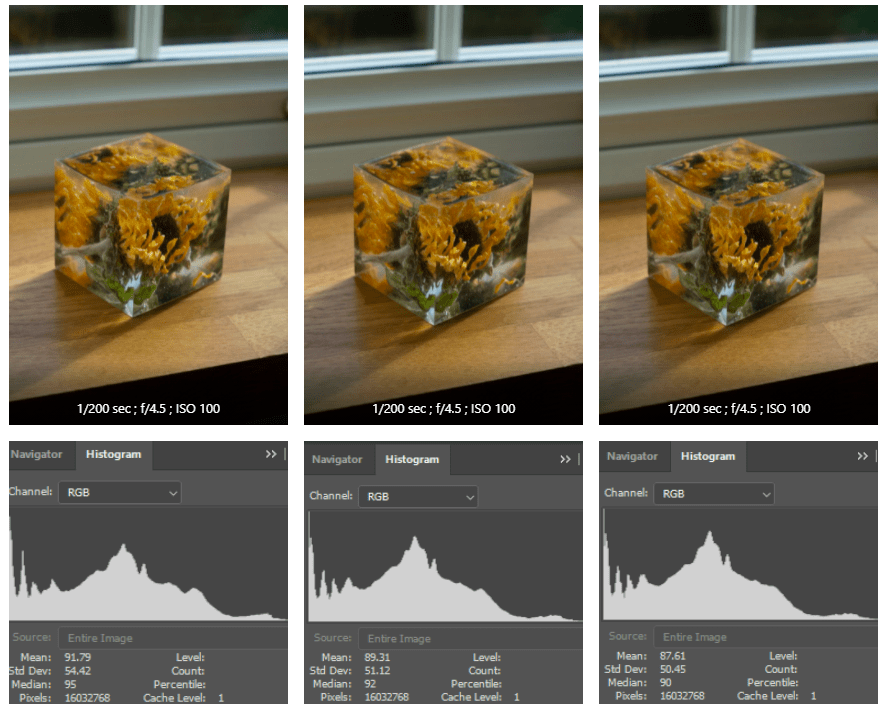
– Provided the images taken, along with the technical settings and histogram screenshots.
– Documented the camera I used, as well as the settings and
– Briefly covered how I executed the exercise, my choice of a static transparent subject and the changes I saw with the naked eye and the histograms for both the indoor and outdoor shoots.

Brief:

Take three or four exposures of the same scene. Don’t change anything on the camera and keep the framing the same.

Preview the shots on the LCD screen. At first glance they look the same, but are they? Perhaps a leaf moved with the wind, the light changed subtly, or the framing changed almost imperceptibly to include one seemingly insignificant object and exclude another. Time flows, the moment of each frame is different, and, as the saying has it, ‘you can’t step into the same river twice’.

Now bring up the histogram on the preview screen. The histogram is a graphical representation of exposure – the camera’s sensitivity to light. As you page through the images you can see small variations in the histograms. Even though the pictures look the same, the histogram data shows that in a matter of seconds the world changes, and these subtle differences are recorded by the camera. If you refine the test conditions – shooting on a tripod to fix the framing, moving indoors and closing the curtains to exclude daylight – still the histogram changes. Probably some of the changes are within the camera mechanism itself; still, the camera is a sensitive enough instrument to record them.

Add the sequence to your learning log with the time info from your camera’s shooting data as your first images for Part One.
‘ (Bloomfield, 2018)

Fig. 1. Set 1 (2019)

Before shooting anything, I made sure my SONY SLT-A57 was set to auto as requested in the OCA Expressing Your Vision Course Handbook, as well as making sure my 50mm lens was switched to auto-focus.

Instead of using a solid object, or a ready-made set up, I decided to use a resin art piece as my subject, due to the fact light can pass through it which seemed like an interesting idea to play with.

For the first set of images, I decided to begin in a more ‘controlled’ area by placing the piece on the window ledge in my kitchen during mid-morning when the sun was shining through.

While the changes in the images are very slight (see Fig. 1), you can see that the framing shifts slightly where I wasn’t using a tripod to steady the camera.
As shown in the histograms, the shadows in the first image peak slightly higher than the other two, while the mid-tones in the third image peaks significantly in comparison to the first image.

With the naked eye, these light changes are very difficult to see, if not impossible so it’s really interesting to analyse what the camera can detect.

Fig. 2. Set 2 (2019)

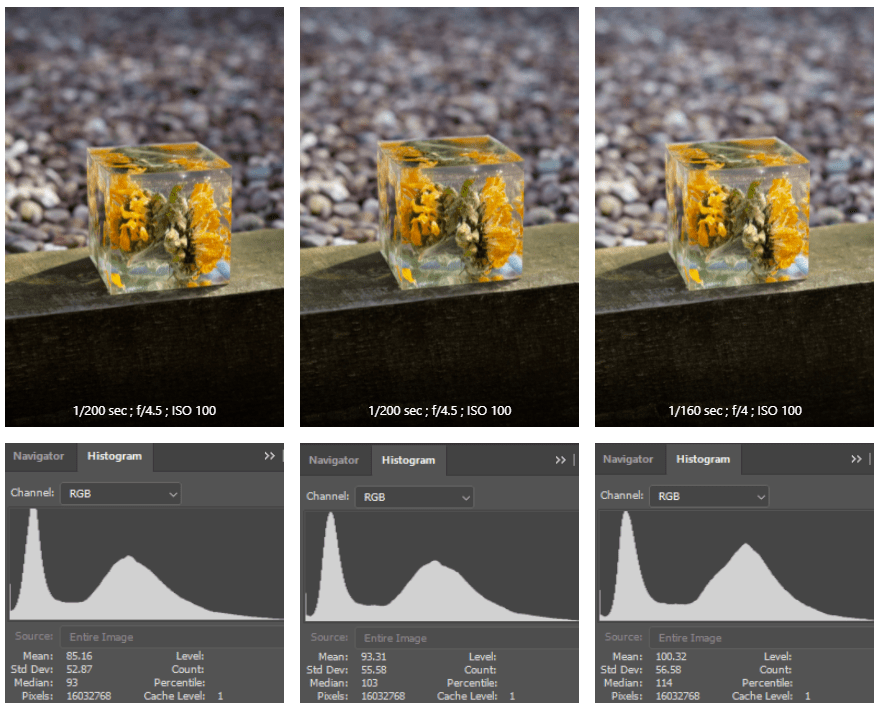
For the second set of images, I decided to head outside with the same piece and place it in direct sunlight to see how the results would differ.

Unlike the first set, I can see the changes in light levels (see Fig. 2). The left is the best of the three (in my opinion) with just enough shadow to define the details within the frame, without being blown out by the highlights. The third picture, however, is significantly brighter and takes away the depth presented in the first.

Once again there are slight differences in the framing due to the lack of tripod for support.

What I’ve found most interesting is the histograms for the images taken outside are much more smooth, with less peaking than the images taken indoors, as well as the fact the shadows are almost if not already clipped off on the histogram.

I would have to do further research on histograms if I wanted to understand why this was the case in much more depth, so I may do this in the future. But what I have taken from this small exercise is the slightest of changes can be picked up, even if you can’t notice it with the naked eye and despite where you capture your imagery.

References :

Bloomfield, R., 2018. Photography 1: Expressing your Vision. 4th ed. [pdf] Barnsley: OCA, p.21. Available at: https://www.oca-student.com/course/photography-1-expressing-your-vision [Accessed 9 November 2019].

List of images:

Figure. 1. Powell, L. (2019) Set 1 [pdf, screenshot] In possession of: Lauren Powell: Eastleigh.

Figure. 2. Powell, L. (2019) Set 2 [pdf, screenshot] In possession of: Lauren Powell: Eastleigh.

Selection process for final images.

Assignment 1, Notes, Reflection on assignments, Thoughts & Ideas

Summary:

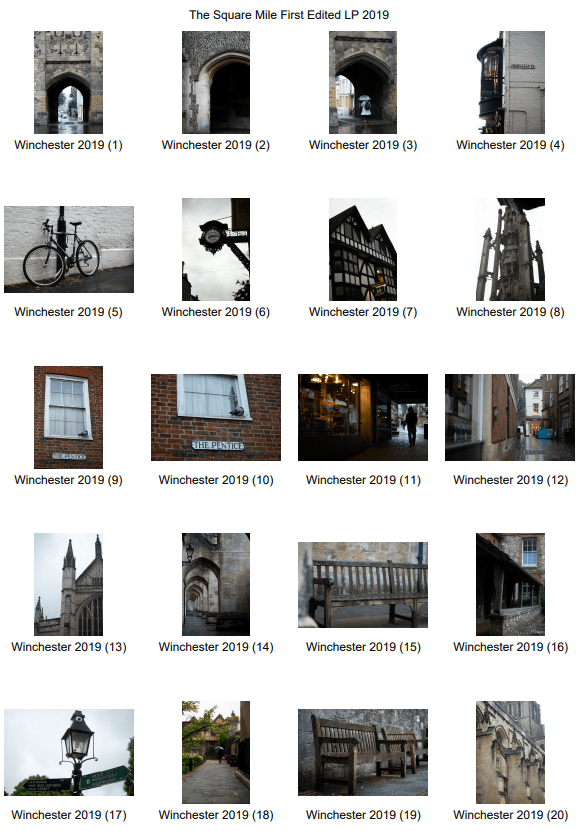
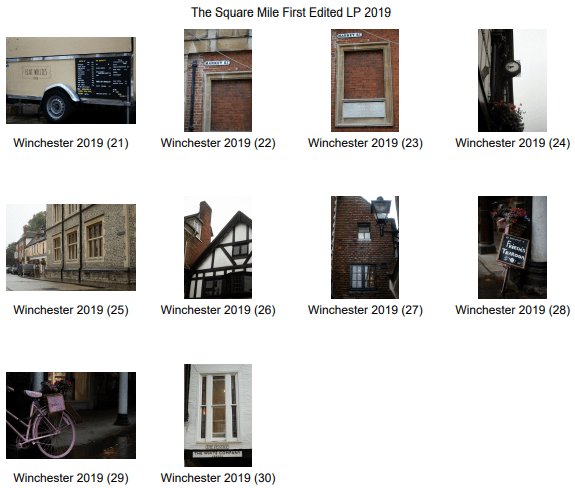
– I have analysed the contact sheets provided in the previous post, selected the strongest images and edited them slightly by adjusting the highlights/shadows, cropping and straightening.
– The edited images are provided below in a gallery
– Before the selection was cut down once more to help with the final selection process
– Stating why some images weren’t included, for instance, they weren’t strong enough conceptually or technically
– Unlike the photographs shown in the scanned document, that is highlighted and numbered to show the two attempts at image pairing, the numbers being the final choice.
– Brief bullet points have been listed to cover the strong variety of elements within the final collection and why they were paired together.


I decided to select what I feel we’re the best images from the shoot and edited them very slightly. The only photo manipulation that took place was correcting the highlights and shadows, cropping them down and straightening a few of them out where needed, without completely changing what was captured in the camera which was requested in the ‘Expressing Your Vision’ course material.

The edited images are as follows :

After editing these images, I cut down the selection once more to make it easier to choose my final images for the ‘Square Mile’ assignment.
While there were quite a few images that I liked, some of them just didn’t ‘fit’ or have a strong enough link to the project plan, where I stated that ‘I would like to explore various childhood memories, see how the areas may have changed throughout the years and if they are as I remember them’ (Powell, 2019).

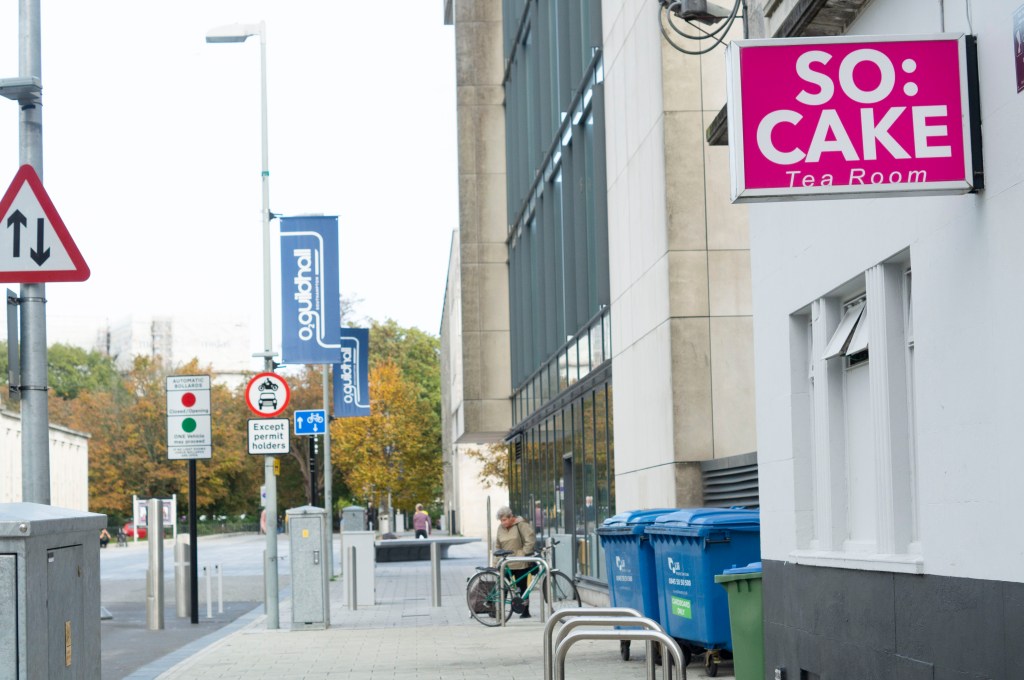
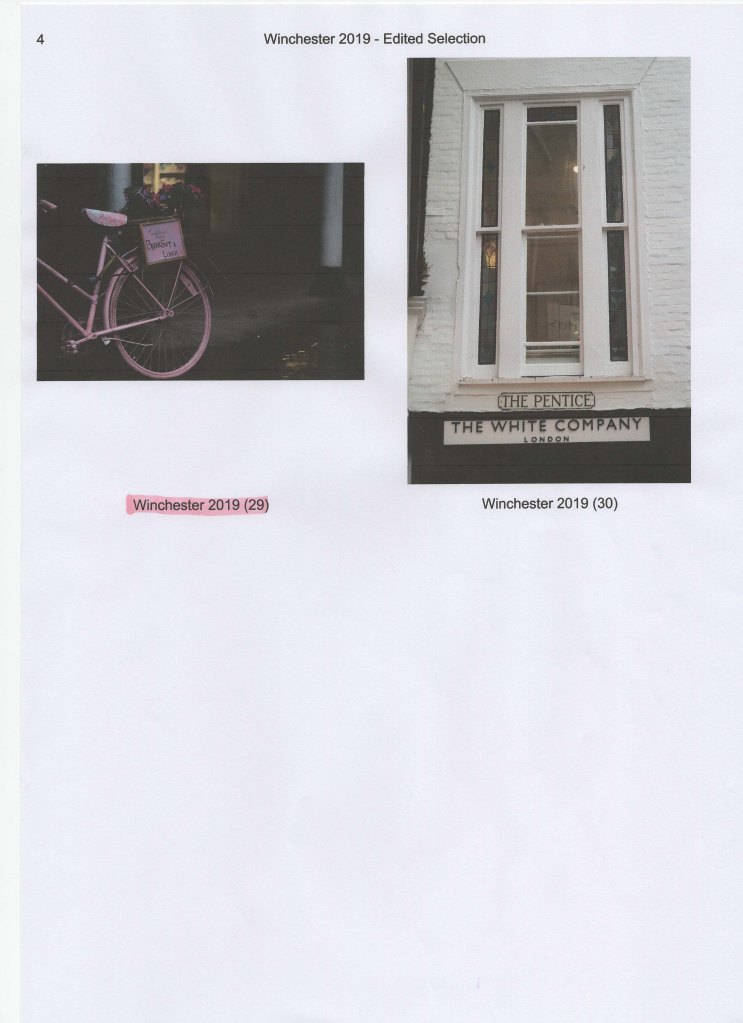
For example, ‘Winchester 2019 28′ (see Fig. 2.) is strong due to composition, the relaxed position of the bike, the highlights and shadows, as well as the shallow depth of field, however, it didn’t compliment the collection. Considering the majority of the images explored architecture, the differences between each building and the effects time has had on them, it became an odd one out.

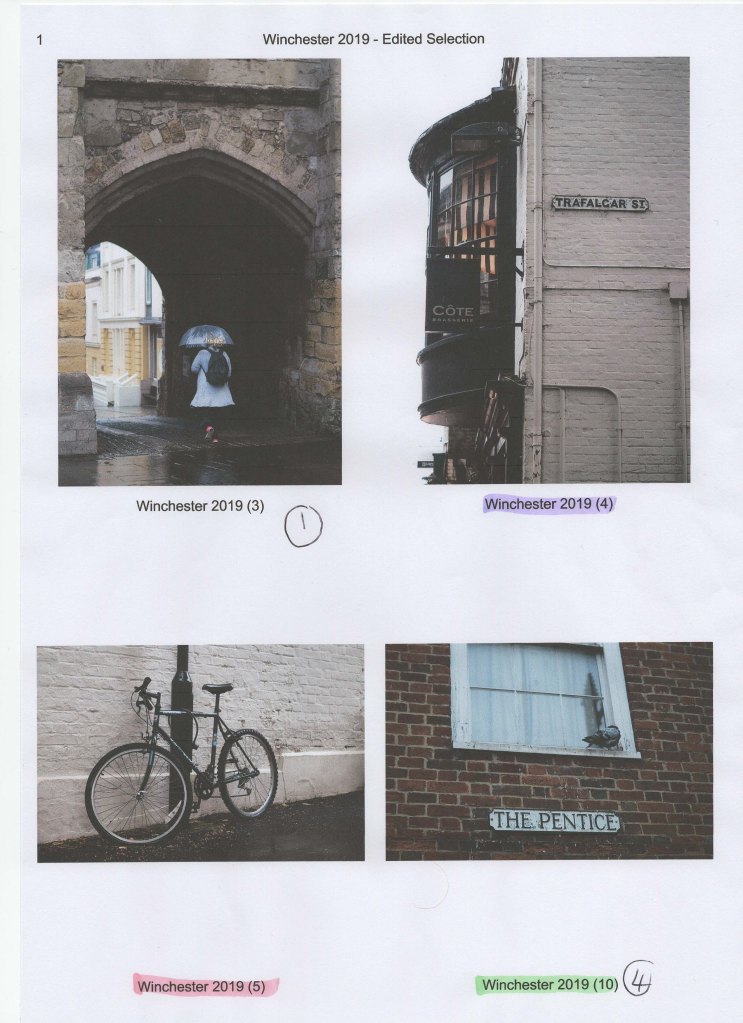
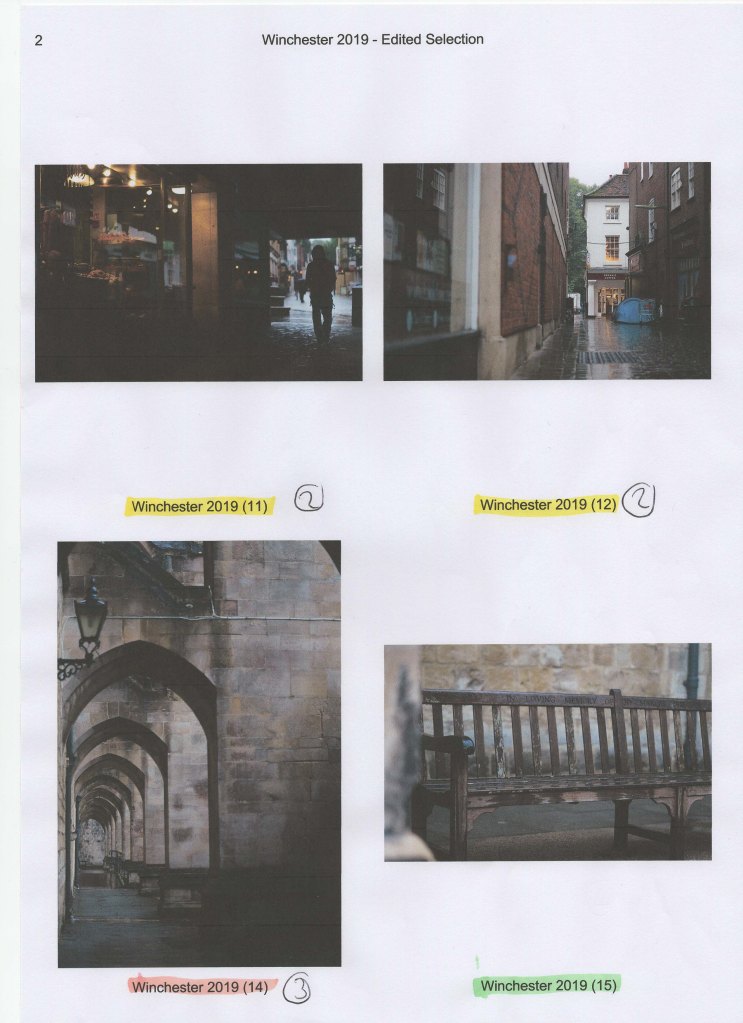
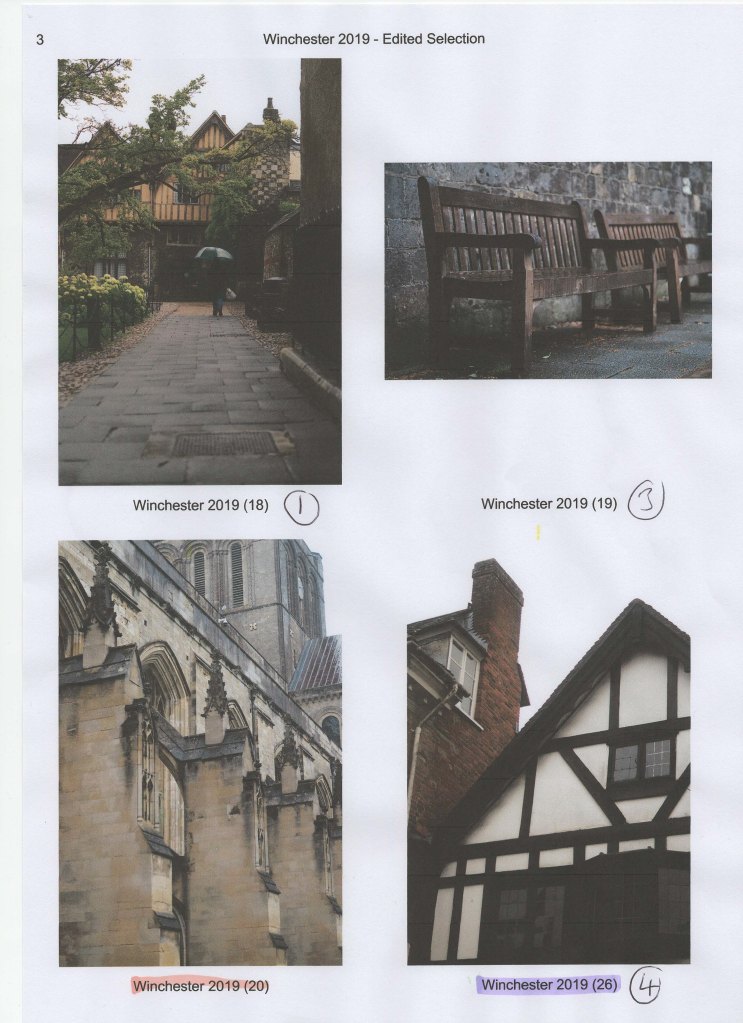
The following images are a part of my second selection process. The scans below show my initial pairings in colour and the final image pairings with numbers. I will provide a brief list as to why I decided to pair up these specific images, to refer back to in my image analysis.

Reasons for pairing up:

While I am aware I didn’t have to pair these images up, to create a cohesive series I felt that it was the best option for me to make sure I achieved what I set out to do, which was to explore Winchester by retracing steps, capturing what had changed, the similarities and presenting a personal view in a different way to which I’m used to. Pairing the photos up has helped me form a short journey through the town, as well as a complementary collection.

Winchester 11 and 12

– Similar compositions.
– Contrasts between light and dark.
– Contrasts between natural and artificial light.
– References to work and daily life.
– Shows human interaction.
– Both significant places I visited with family.

Winchester 14 and 19

– Similar tones.
– Repetition.
– The juxtaposition between architecture and public seating.
– Both in the same area and have a significant connection.

Winchester 3 and 18

– Person framed by architecture and nature.
– Umbrellas.
– Shows daily life.
– Monochrome.
– Pathways.
– Start and end of my journey.
– Special areas vs new.

Winchester 10 and 26

– Similar brickwork.
– Nature vs man-made.
– Similar tones.
– Contrasts in colour.
– Reflection of a significant statue.
– Depth.
– Dirty buildings.
– Buildings are behind one another.
– Family links.


References :

Powell, L. (2019) Plan for ‘The Square Mile’. [online] Available at: https://laurenpowelloca.photo.blog/2019/08/20/plan-for-the-square-mile/ [Accessed 12 September 2019].

List of images:

Figure 1. Powell, L. (2019) Page 1 [PDF, Screenshot] In possession of: Lauren Powell: Eastleigh.

Figure 2. Powell, L. (2019) Page 2 [PDF, Screenshot] In possession of: Lauren Powell: Eastleigh.

Figure 3. Powell, L. (2019) Contact sheet 1 [Scanned Document] In possession of: Lauren Powell: Eastleigh.

Figure 4. Powell, L. (2019) Contact sheet 2 [Scanned Document] In possession of: Lauren Powell: Eastleigh.

Figure 5. Powell, L. (2019) Contact sheet 3 [Scanned Document] In possession of: Lauren Powell: Eastleigh.

Figure 6. Powell, L. (2019) Contact sheet 4 [Scanned Document] In possession of: Lauren Powell: Eastleigh.


Contact Sheets for ‘The Square Mile’ + reflection.

Assignment 1, Notes, Reflection on assignments, Thoughts & Ideas

Summary:

In this post I have;

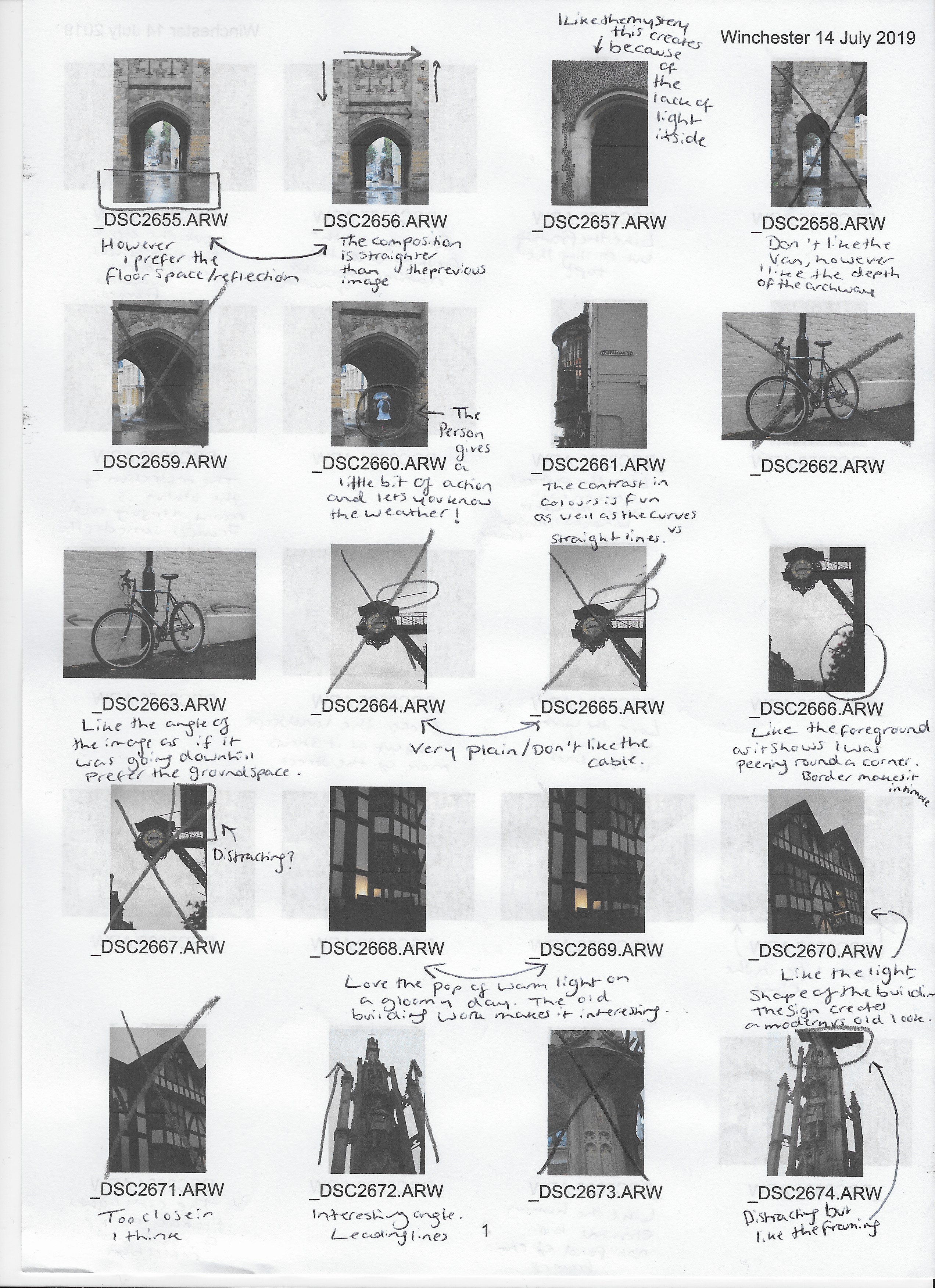
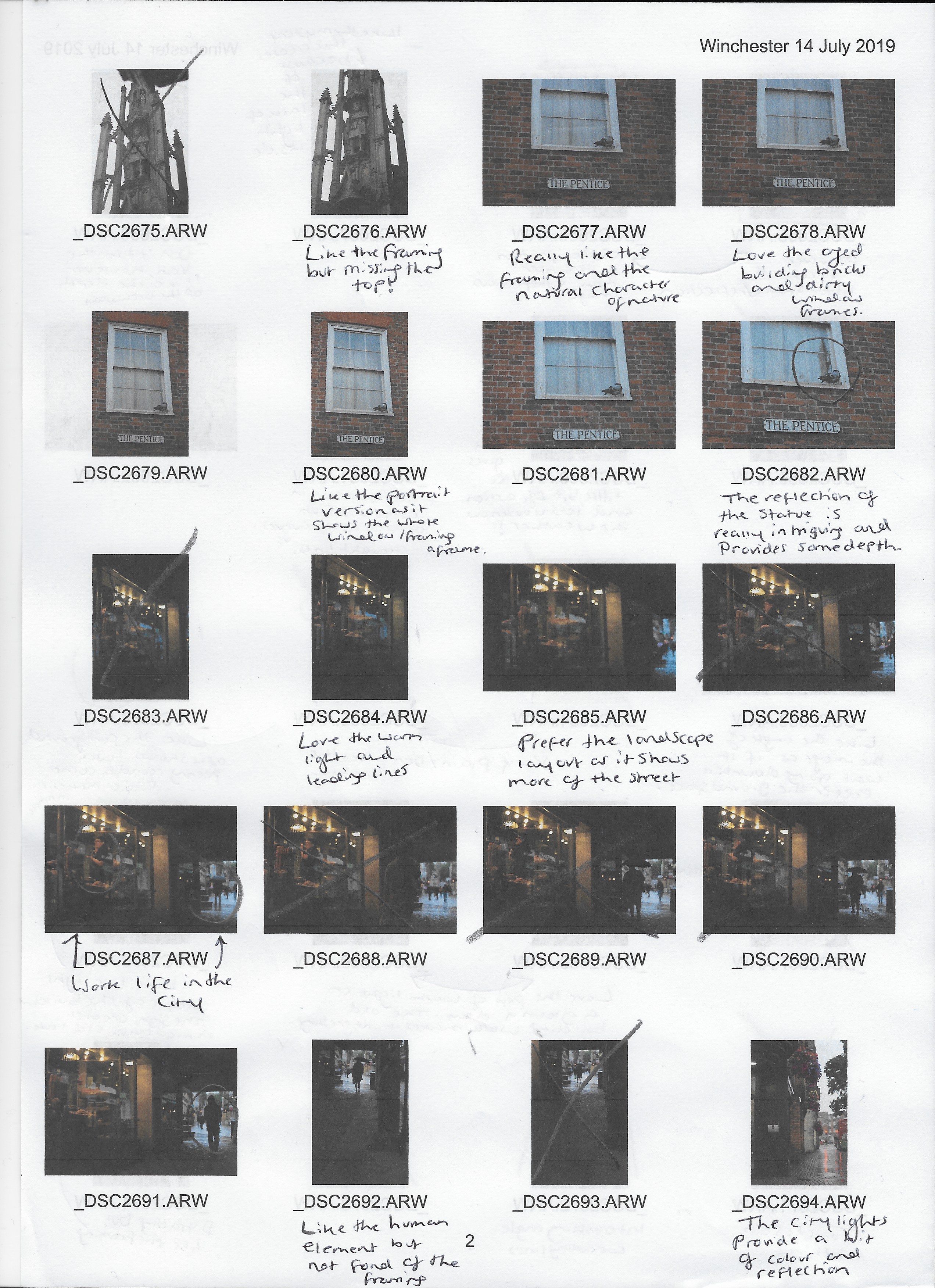
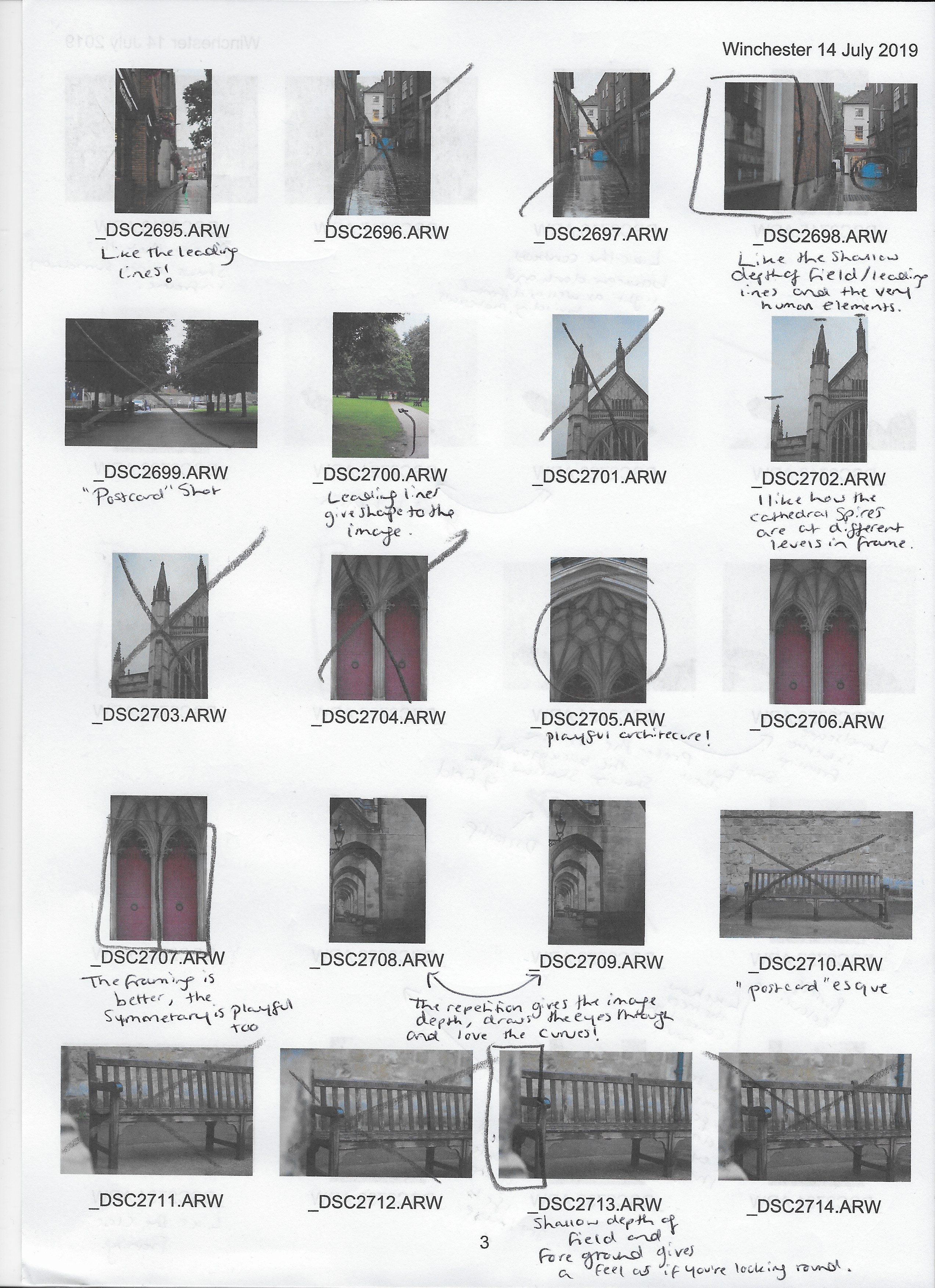
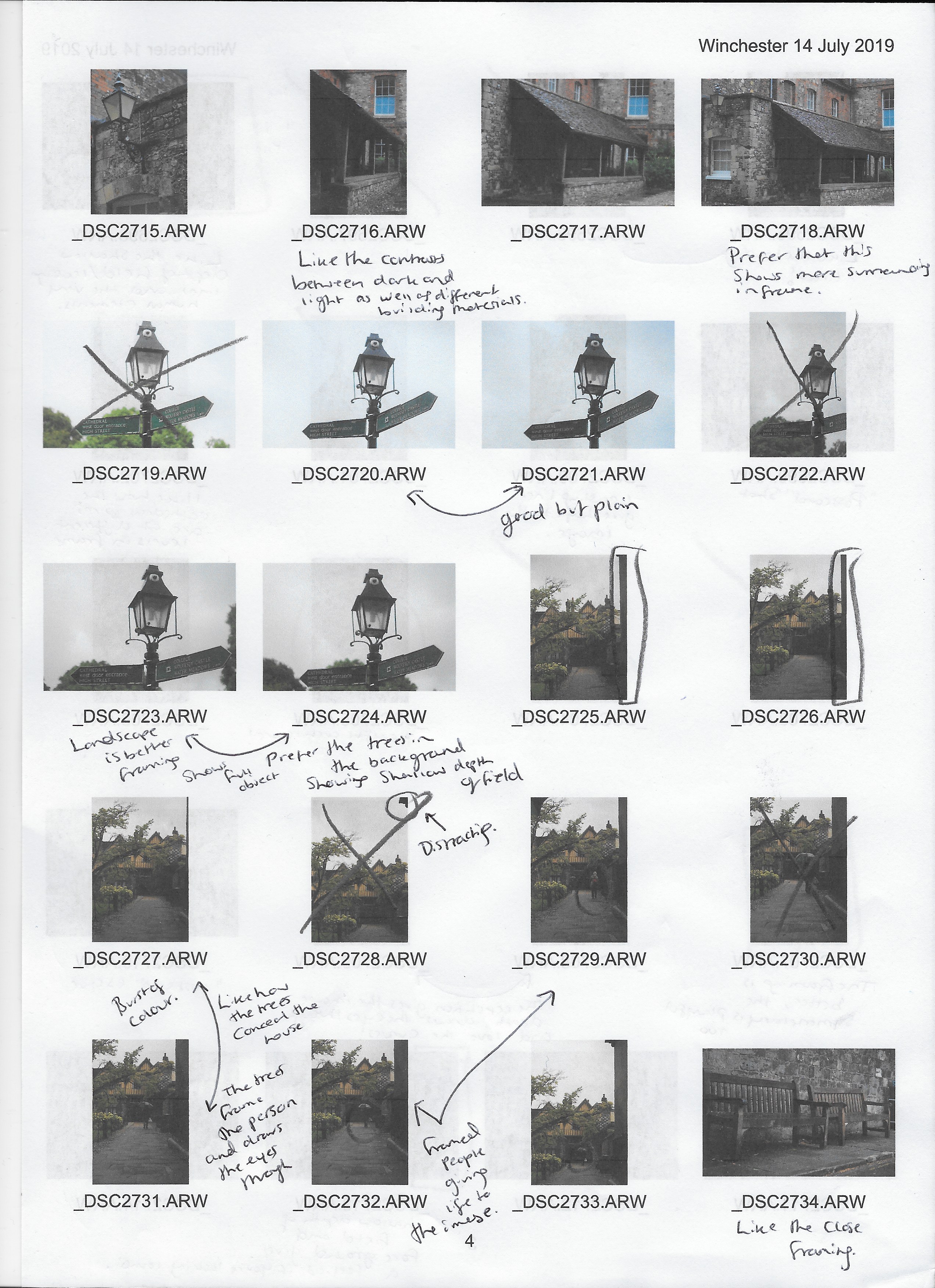
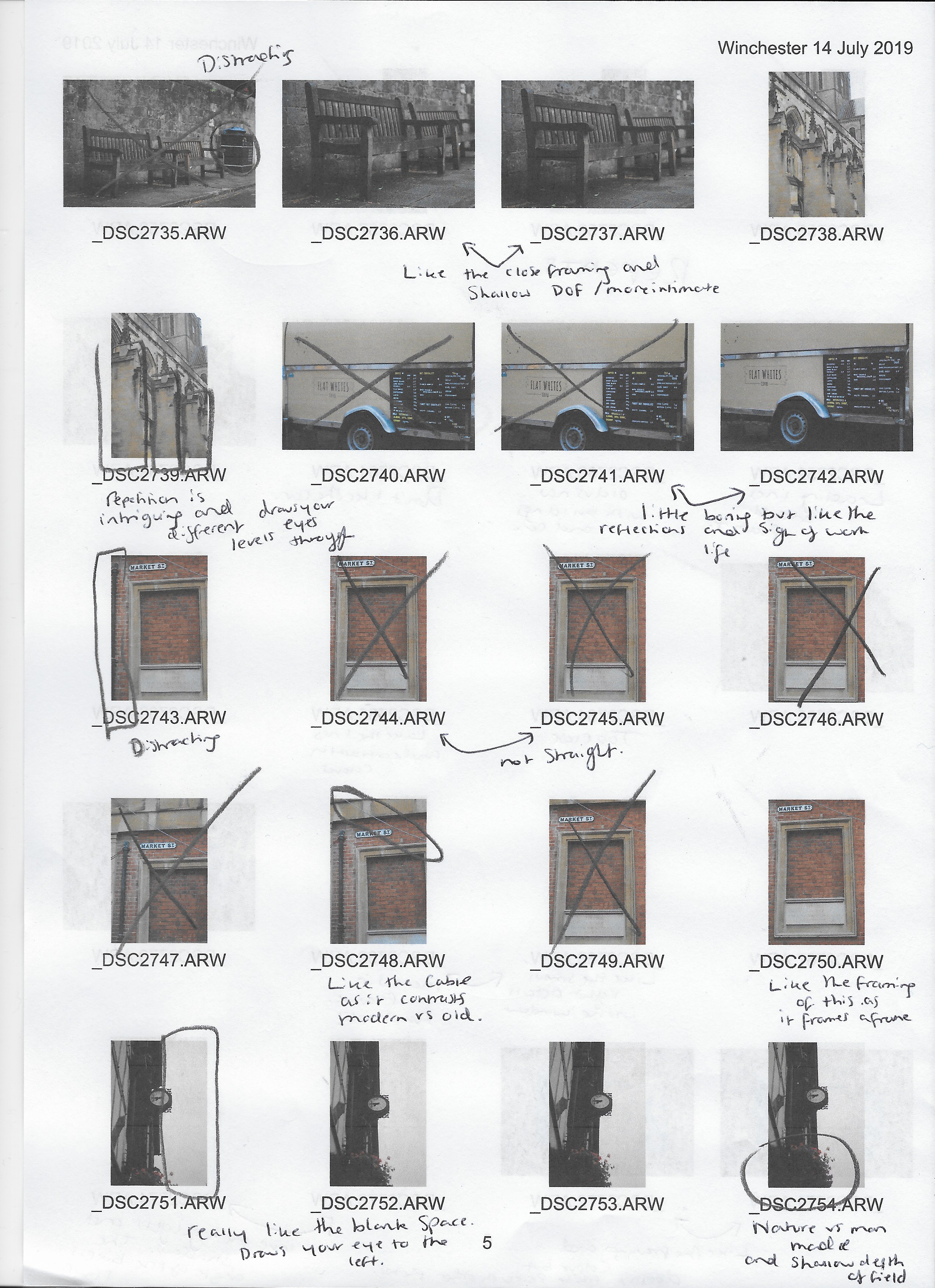
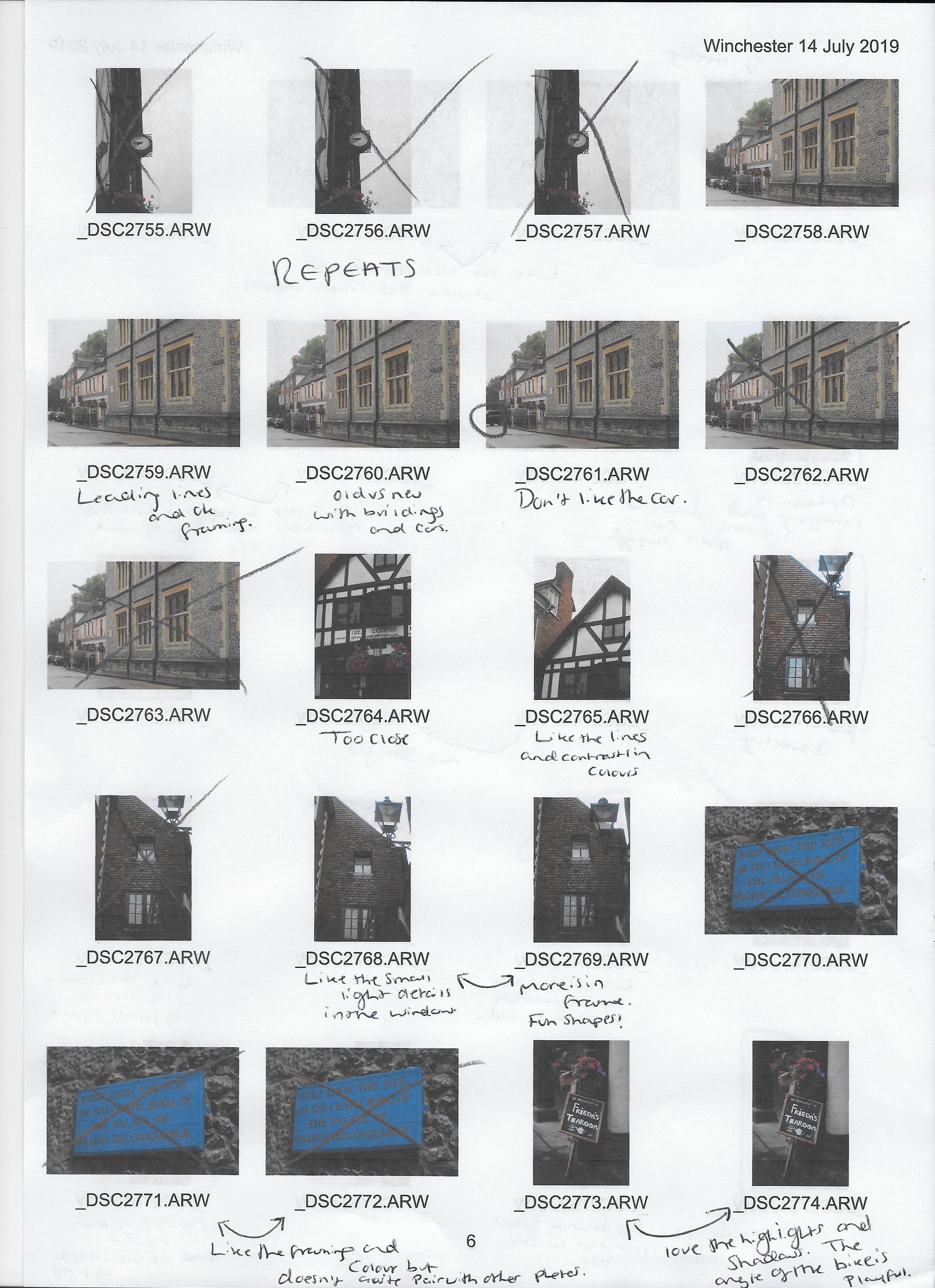
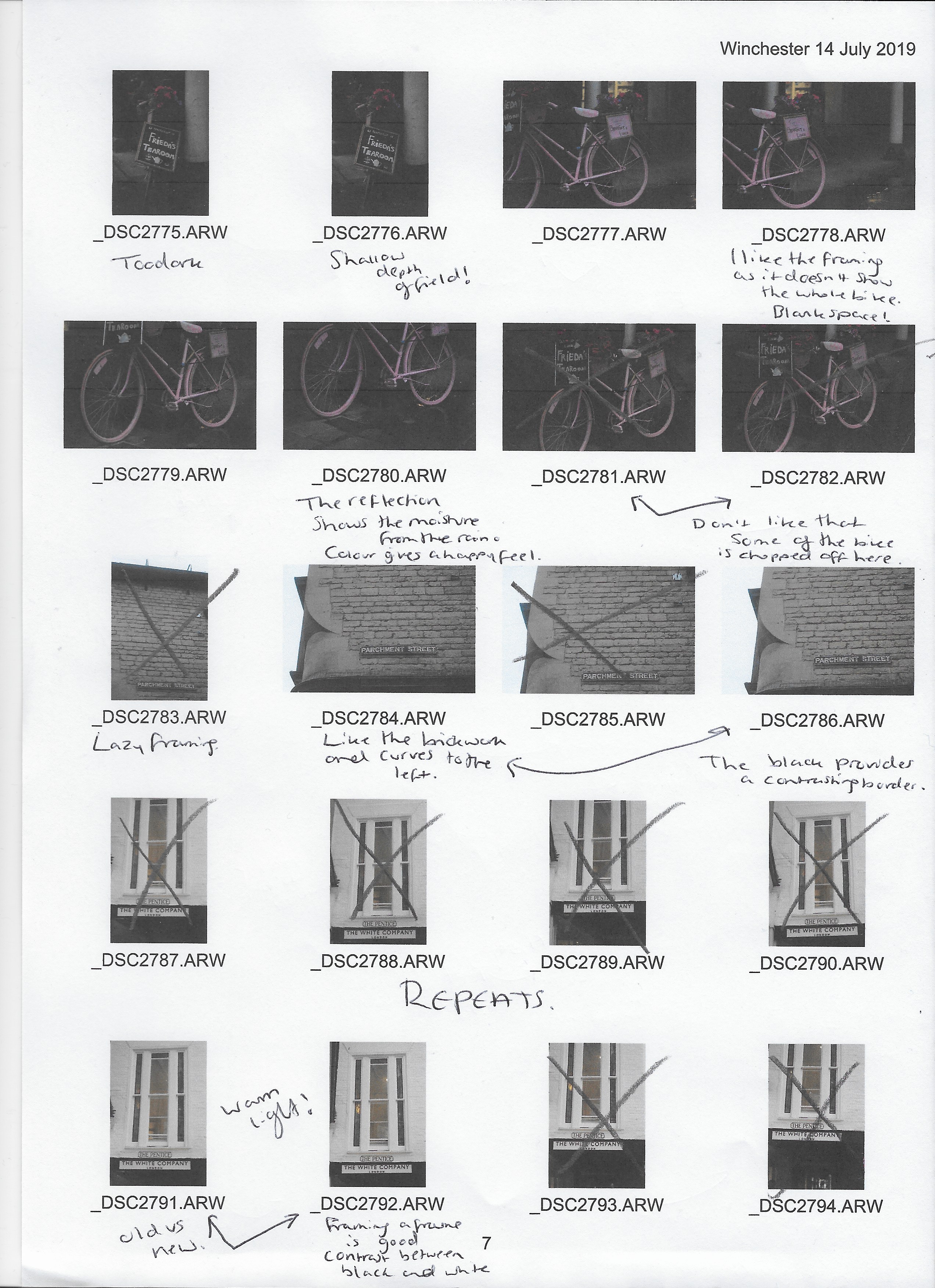
– Provided annotated contact sheets of my shoot around Winchester, noting the strengths and weaknesses of a variety of shots
– As well as a PDF version for a clearer view of the sheets.
– Noted what images worked well and drew on the techniques used, such as consistent framing, natural lighting and such.
– Covered what went well during the shoot, for instance my ability to think about my surroundings to gather a cohesive series much like Keith Arnatt, reflecting on his influence.
– Explored how the shoot went despite an unexpected burst of bad weather, enabling me to achieve the ’empty’ town shots I was looking for and supplying an added interesting atmosphere, as well as
– Stating what could be improved in the future, for example being aware of the angles images are shot at and reducing the amount of duplicate images I capture, in turn being more selective.

Contact sheets:

The following contact sheets include all of the images shot during the ‘Square Mile’ photo-shoot in Winchester, Hampshire. They’ve been annotated and scanned onto my computer, providing suggestions of how the images could’ve been stronger and/or the various elements I enjoyed.

All images were shot in RAW on my Sony A57, so I could then make the basic corrections in post-production without losing too much detail.

Notes :

What do I think of my images?

I’m pleased with how my images turned out, considering that street photography isn’t my usual area of focus and isn’t something I have explored very much. I tried my best to consider similar framing techniques and be aware of the light in my surroundings, to take inspiration from Keith Arnatt who has been part of my practitioner research. Summaries of Arnatt’s work suggest that he ‘may have planned his approach, due to the way he composed the series and stayed consistent with his choice of natural lighting and fixed camera distance’ (Powell, 2019).

What are some of my favourite images?

One of my favourite technical elements from the images shot in the high street (see Fig. 2.) is the contrast between cool, natural light from the gloomy, rainy weather and warm artificial light from the shops and cafes.
Another shot that stands out is the pigeon resting on the window ledge (see Fig. 2.), with the reflection in the glass, very subtly adding tension to the image as you don’t know at first glance what that silhouette may be.

What went well?

The variation of subjects I shot and being able to form a cohesive series purely from my surroundings, successfully achieving my aim to be flexible with what I captured in-camera while keeping the final selection process in mind so I’m not going to be left with a group of random ‘snapshots’ that don’t compliment each other.

What could be improved?

I need to work on my framing and angles a little bit more when shooting. Sometimes my photographs are intentionally taken at an unusual angle, but I also understand that some subjects are better suited with a straight horizon line, which creates more work in post-production if I don’t think about it or can’t get it right the first time round in camera.
Also, I have a habit of taking multiple images which aren’t necessarily an issue, but a few duplicates would be better than half a dozen especially when it comes to producing contact sheets. This is something I will discuss with my tutor to get their opinion on whether I need to work on this or not.

How did the shoot go?

When the shoot was planned, I stated that ‘I would like to go early in the morning so that it isn’t too crowded. This way it’ll allow me to focus on what is around me, what is happening and how I feel about it as a whole’ (Powell, 2019). However, one element not considered was unexpected weather conditions. Thankfully the rain worked in my favour as it was even quieter than expected while creating a moody, dark atmosphere which challenged me to work in conditions that I wouldn’t usually choose to shoot in, due to the inconsistency of light levels, much like direct sunlight at midday.
It was interesting to see how I worked with what I had and how the quality of the images wasn’t necessarily hindered by the weather.

What am I going to do with these images now?

After going through my images as a whole on my computer, I am going to select a few of my best images and apply very basic corrections to them, such as highlight/shadows alterations e.t.c. They will then be cut down again and paired together for the final series of photographs needed for the assignment.

References :

Powell, L. (2019) Keith Arnatt Research. [online] Available at: https://laurenpowelloca.photo.blog/2019/08/13/keith-arnatt-research/ [Accessed 20 July 2019].

Powell, L. (2019) Plan for ‘The Square Mile’. [online] Available at: https://laurenpowelloca.photo.blog/2019/08/20/plan-for-the-square-mile/ [Accessed on 20 July 2019].

List of images:

Powell, L. (2019) Page 1 (Scanned document) In possession of: Lauren Powell: Eastleigh.

Powell, L. (2019) Page 2 (Scanned document) In possession of: Lauren Powell: Eastleigh.

Powell, L. (2019) Page 3 (Scanned document) In possession of: Lauren Powell: Eastleigh.

Powell, L. (2019) Page 4 (Scanned document) In possession of: Lauren Powell: Eastleigh.

Powell, L. (2019) Page 5 (Scanned document) In possession of: Lauren Powell: Eastleigh.

Powell, L. (2019) Page 6 (Scanned document) In possession of: Lauren Powell: Eastleigh.

Powell, L. (2019) Page 7 (Scanned document) In possession of: Lauren Powell: Eastleigh.

Plan for ‘The Square Mile’

Assignment 1, Notes, Thoughts & Ideas

Summary:

In this post I
– Explained how I planned my shoot using the 5 W’s, H and why
– Listed my plan in bullet points

Plan

I planned my shoot using the 5W’s and H so I could think about my goals and ideas properly, instead of just formulating a list of various aims that were inspired by the mind-map I created.

Area of choice – Where? : Winchester High Street and the surrounding areas

Why? : It holds significant memories with my grandparents, cousins and direct family, so I would like to explore various childhood memories, see how the areas may have changed throughout the years and if they are as I remember them. For example, new buildings vs old architecture, as well as modern-day life within an aging town.

When? I would like to go early in the morning so that it isn’t too crowded. This way it’ll allow me to focus on what is around me, what is happening and how I feel about it as a whole. We also used to go to town fairly early in the day to avoid the rush of people, so it is quite fitting with the routine I followed as a child.

Who? : Depending on whether Winchester is as quiet as I am expecting it to be in the morning, I may include members of the public in my imagery to give a bit of life and action to my photographs. For example, people going about their day, unaware of what significance the town holds for me and vice versa if the town means anything to them. We all share the same space, but we’re not always aware of what people are doing there, how it makes them feel or where they’re headed.

What? : As noted in my post ‘Initial Thoughts About ‘The Square Mile’ + Mindmap’ (Powell, 2019), I will be revisiting some areas I visited or spent significant time with close family. That way I can capture what they look like now, the people/objects surrounding them that may have changed, are consistent or may only be temporary.

How? :

– Go to town early in the morning via train.
– Start from the top of town from the station and work your way down.
– Notice and capture whatever captures your eye as you observe, while keeping original ideas in mind.
– Set the aperture and keep it constant, only change the shutter speed to fit the light settings on the day. SET CAMERA TO MANUAL.
– Have the chosen ideas in mind, but be flexible too. E.G. If something doesn’t work, it’s fine. If you notice something you didn’t think about beforehand, then work with it.
– Think about making a cohesive series – can images/areas be paired up in your final selection process?
– Have fun and go out of your comfort zone.
– Shoot multiple images so you have a reasonable selection.

References :

Powell, L. (2019) Initial Thoughts About ‘The Square Mile’ + Mindmap. [online] Available at : https://laurenpowelloca.photo.blog/2019/08/15/initial-thoughts-about-the-square-mile-mindmap/ [Accessed 20 August 2019].