– Included the assignment brief for the (in)decisive moment. – Explained briefly that I have researched both moments in further details and considered the ability to shoot during lockdown. – Discussed why I am heading more towards the (in)decisive moment and working in a domestic environment. – Included photocopies of my mind maps for both in decisive and (in)decisive moment. – Written bullet points for each map, covering what I would achieve or find difficult with this particular approach. – Briefly touched upon my test shoot, including a contact sheet of the images and explored where I’m headed with my final shoot plan.
‘The (in)decisive moment’:
‘The decisive moment is not a dramatic climax but a visual one: the result is not a story but a picture.’ (Swarkowski, 2007, p.5) ‘You know it’s funny. You come to someplace new, and everything looks just the same.’(Eddie in Stranger Than Paradise, Dir. Jim Jarmusch, 1984)
Brief
Create a set of between six and ten finished images on the theme of the decisive moment. You may choose to create imagery that supports the tradition of the ‘decisive moment’ or you may choose to question or invert the concept by presenting a series of ‘indecisive’ moments. Your aim isn’t to tell a story, but in order to work naturally as a series there should be a linking theme, whether it’s a location, event or particular period of time. (Bloomfield, 2018)
Thoughts
Having researched further about both the decisive and (in)decisive moment, test shoots and taking into consideration that we have gone into another lockdown, I am heading more towards the (in)decisive moment, due to the fact street photography doesn’t feel like the safest option currently. The (in)decisive moment will allow me to capture imagery from a domestic environment, without feeling too restricted in terms of where I can go, what I can document, as well as who.
After completing a mind-map for both routes, there are clearer ideas for the (in)decisive one in comparison to the decisive, this, in turn, helps me understand what I am more comfortable with in regards to concepts, subjects, approaches and results.
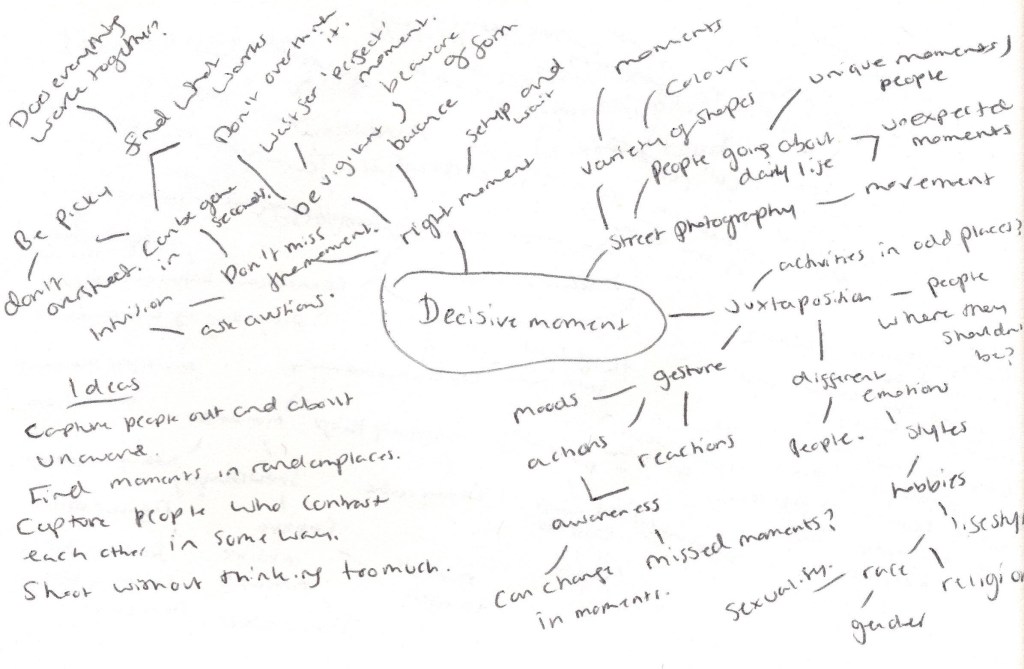
Fig. 1. Decisive Moment (2020)
Reflection on decisive moment mind map (see Fig. 1).
– Would be out of my comfort zone as street photography isn’t something I do often. – Would have a variety of people and locations to work with and look out for. – More opportunities to capture something unique or unexpected. – It would push me to be more selective and intuitive about my shooting process. – Could play around with expressions, movement and context surrounding them. – Decisive moments would allow me to be more patient and aware of my surroundings, subjects, timing etc. – Perhaps more flexibility regarding the ability to create or capture juxtapositions. – Wouldn’t be safe to do so currently with the global pandemic. – Restricted on where I can go, travel or enter. – May not be as many people around due to the pandemic.
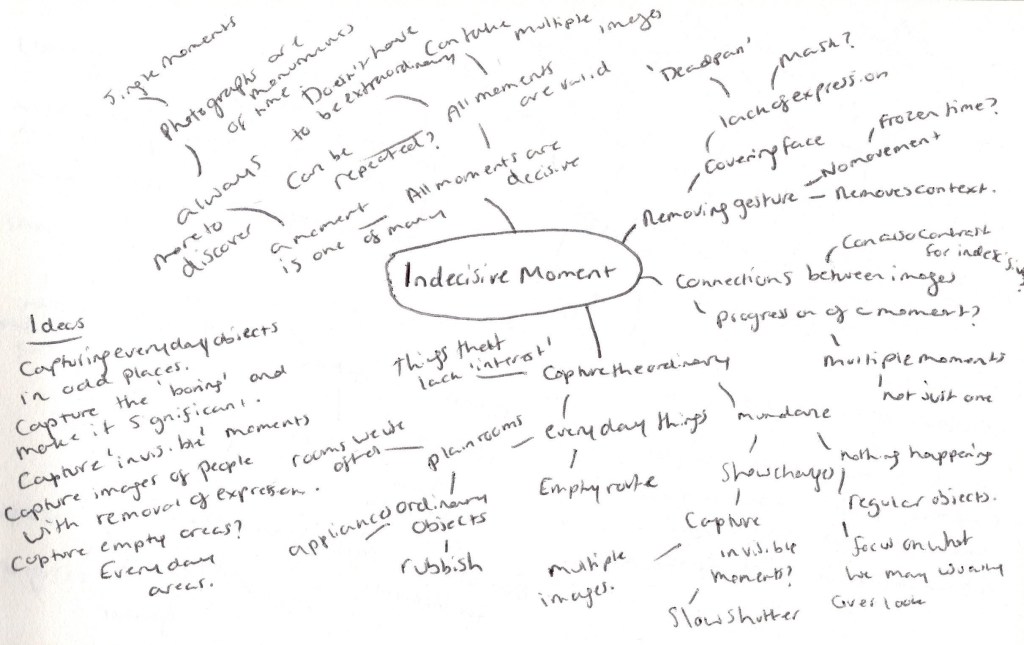
Fig. 2. Indecisive Moment (2020)
Reflection on (in)decisive moment mind map(see Fig. 2).
– I have more control of the composition and what I’m capturing. – Can remove context if necessary to create questions and tension. – Would be able to gather together multiple subjects within a safe environment. – Would link back to my preferred coursework “slow shutter speed”. – Playing around with the ordinary and bringing focus to the things we are used to is an interesting concept. – Could play around with empty areas, without breaking covid guidelines. – Allows me to have multiple chances to get an image I like, rather than missing a moment. – Maybe not outside of my comfort zone, so would have to figure out a way around it. – Restricted in terms of unique, unpredictable moments. – Restricted to my home which in some ways, will reduce the amount of opportunities I may be able to capture. – Would have to consider what I’m capturing, as I share a home with family.
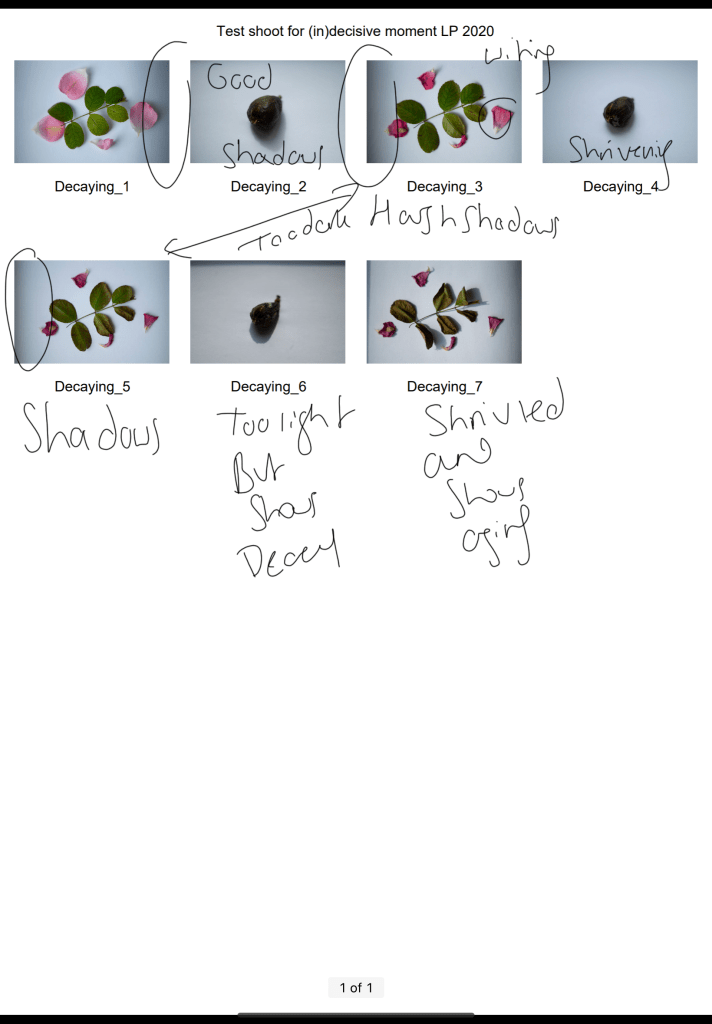
Fig. 3. Test Sheet (2020)
Following my test shoots where I captured the gradual decay of fruits and flowers (see Fig. 3), I’ve decided to use this idea for my final shoot. Placing an object in isolation to something else would represent our current lockdown situation, without directly shooting images surrounding it. A play on words and subject if you will. Playing around with time, subjects and showing what is invisible, much like the research I did for coursework. I am planning this shoot, have set up a frame as well as time scale I will be shooting these images across, therefore these aren’t spontaneous moments as such as I am in control of them unlike decisive moments. Capturing the mundane indoors, rather than street photography. The removal of context by not having a background involved.
Shoot plan
– Capture the mundane and perishable goods. – Set up camera up in front of the item to decide the desired frame and adjust the focal length to assure an in focus end result. – Set up the item and leave it untouched until all images are shot. – Be aware that camera settings may have to be changed throughout the day depending on light changes. – Keep out of direct sunlight to avoid harsh light and shadows, as seen in my test shoot. – Keep shooting at pre-chosen times to document the changes that occur across a set amount of hours or days, before overlapping each picture in Photoshop. – Explore the idea of invisible time by creating a ‘double exposure’. We know time is passing each minute, but when can’t necessarily see it unless we isolate it. Metaphor for life and death?
– Stated Walter Benjamin’s view on what a collection is for future reference to see if I agree with this after researching various artists.
– Drew on the work of Barry Rosenthal, a fine art photographer and sculptor who collects rubbish found on the shore before organising them into groups and bringing them back to life in the studio.
– Briefly analysed Rosenthal’s work to explore what concepts I could find within his imagery and the techniques I felt he used, such as deep depth of field and studio lighting.
– Explored the work of Sam Oster, who uses medium black and white film to shoot typologies (inspired by the Becher’s) of abandoned electrical equipment to emphasise the relationship between humans and their electronic consumption.
– Analysed both her typologies and moving images to gather inspiration from her visual and technical approaches, such as the use of form, texture and various depths of field.
– Studied the work of Jim Golden, a still life photographer who shoots for commercial companies by stripping the products down to their most natural forms.
– Analysed his bold compositions to understand his use of bold colours, organised arrangements and studio lighting to enhance the collections he is shooting.
– Reflected on each artist and how they both compare or differ, visually, technically and conceptually.
– Stated whether I believe these artists reflect the views of Walter Benjamin, as well as
– Summarising my test shoot plan and how I’d like to implement the inspiration gathered by the chosen photographers.
‘Fragments of a vessel which are to be glued together must match one another in the smallest details although they need not be like one another.’ (Walter Benjamin, [1936] 1999, p.79).
Walter Benjamin expresses that although a collection should link in concept and small details, they don’t have to be identical. Therefore making sure there are differences throughout, subtle or keep a collection exciting and engaging.
Using this idea as a guideline, I have decided to research a selection of photographers who have shot a collection of various items to see how they have executed it to see whether their artistic approach differs from the view of Benjamin. Taking influence from these artists will help me decide on how this assignment develops.
Barry Rosenthal
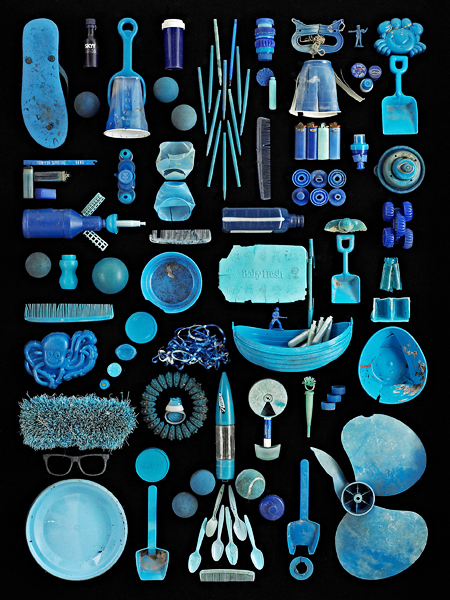
Barry Rosenthal is a fine art photographer and sculptor who has become well known globally for his “Found in Nature” work. The project began in 2007 as a side-project to his Botanical series. It has since developed from a small collection of objects found on the ocean shore into a series of large scale images that capture and display the impact littering has on the planet (Rosenthal, 2012).
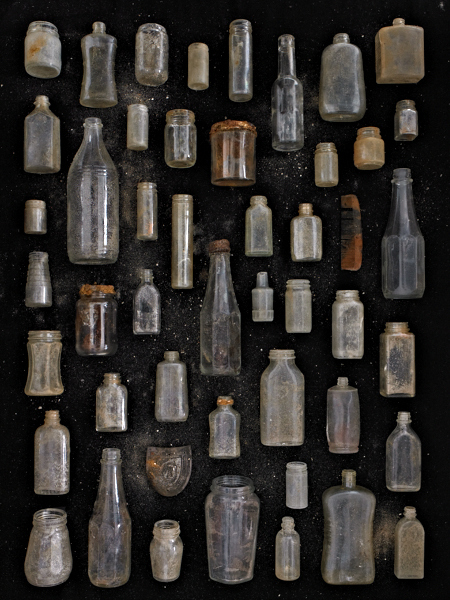
After collecting trash from the shore of New York Harbour, Rosenthal separates the items into groups, determined by colour, theme, type, or otherwise, bringing objects that have been beaten out of shape and have lost their purpose back to life in his studio. Using a combination of photography and sculpting, he can form a narrative that confronts the viewer with ‘the way humanity is managing its relationship with nature and the oceans in particular’ (Rosenthal, 2012).
Fig. 1. Blue Ocean (2013)
Fig. 2. Clear Glass Jars and Bottles (2012)
Rosenthal appears to use a deep depth of field as the objects are crisp, and there is no focal point to direct the viewer around the frame. The use of a plain background helps the textures, shapes, colours stand out on their own. The reflections and shadows on the items suggest side lighting by artificial lighting such as studio lights. A birds-eye view flattens the object’s form allowing the viewer to focus on the narrative told via the arrangement, something that may not have been achieved if shot at an angle. The shapes and sizes of each item complement one another without the collection becoming cluttered and unorganised. Subtle changes are made throughout his series, keeping the images fresh, unique yet consistent in concept.
Sam Oster
Sam Oster is an Australian based photo-media artist who has experience in stills photography, moving images, lecturing, film and documentaries.
Oster has exhibited in both solo and group shows across the years including Art Images Gallery, Adelaide (2014); Shimmer Photographic Biennale, Southern Australia (2012) and Duckspool Photographic Centre, England (2001).
‘Short Circuit‘ was created in 2009 to investigate the consumption of electrical items and the ever-growing issue of consumerism and competition between companies, which can create a conflict between what is ‘trash and treasure’ (Oster, 2019).
Bernd and Hilla Becher’s typologies of industrial buildings and structures heavily inspired her; however, Oster used portable electrical items as her subject instead of permanent structures.
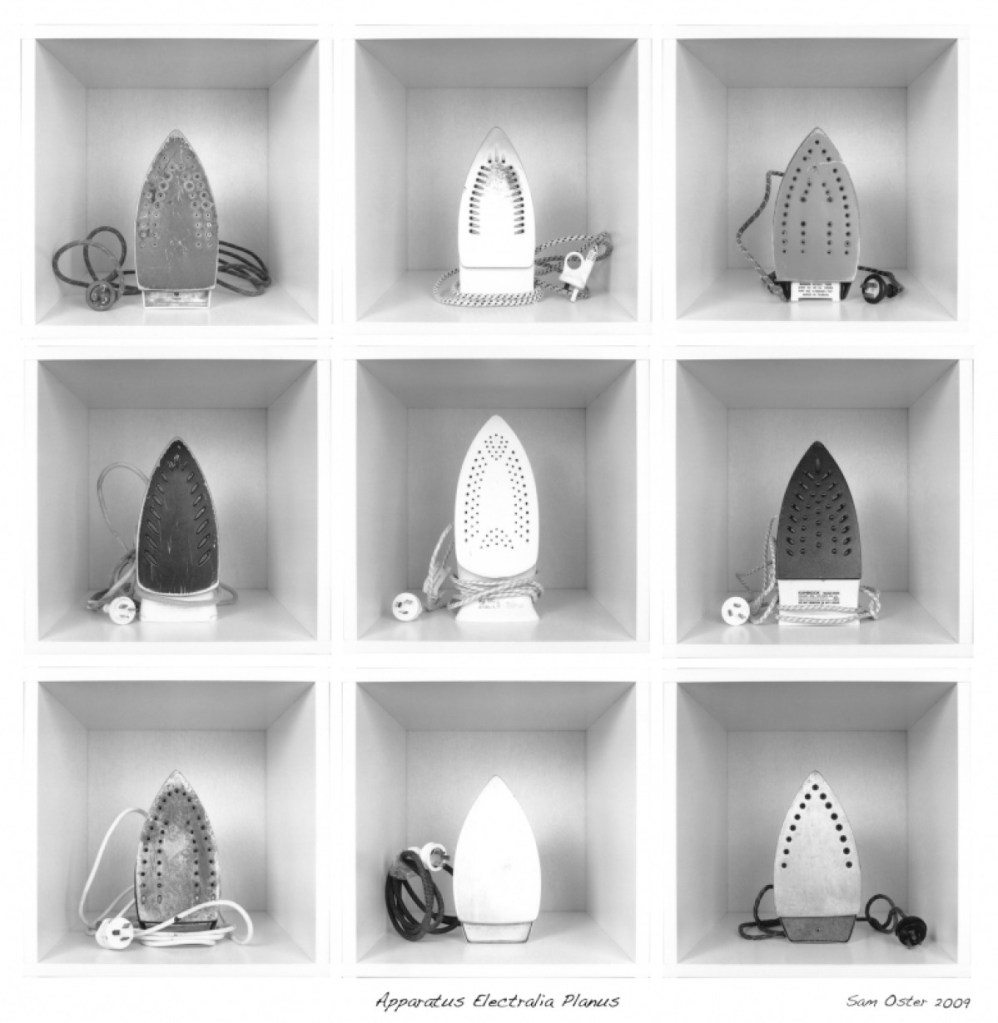
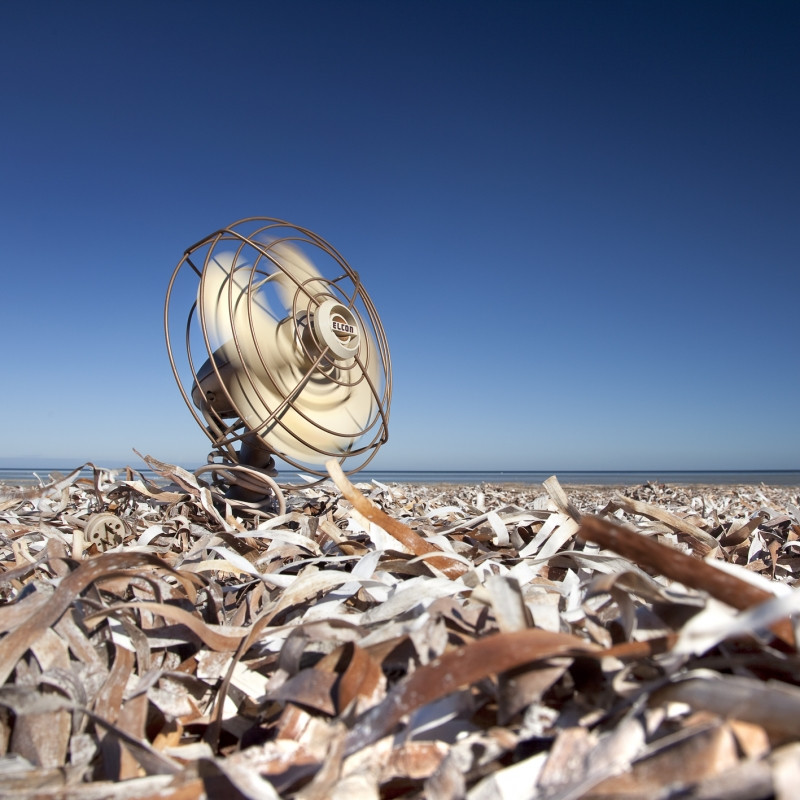
Oster captured electrical items found in rubbish dumps, neatly arranged in individual cabinets to examine the form and function of the objects in the grid. However, the moving image time-lapses represent the idea of electrical dependency and its impact on the environment, for example, a fan placed in a sea of metal in front of an ocean’s horizon (Oster, 2019).
The work shot on a medium format black and white film are hand processed and printed. These pieces have the same grainy post-industrial effect the Becher’s achieved.
Fig. 3. Apparatus Electralia Planus (2009)
A collection of discarded irons (see Fig. 3.) are framed centrally in a square cabinet, forming a grid of 9. This composition cleverly splits the image into sections without having to take individual photographs. There is an even contrast between light and dark, shown through the metal, scratches, age marks, shape of the subject and the plugs. The lighter irons are aligned down the middle of the collection, framed by different tones of grey and black. While they are the same in function, their forms, the impact of time and usage make them unique, providing the viewer with change. A deep depth of field may have been used for this image, as the items, geometric lines, and the extent of the cabinets are clear.
Fig. 4. Cooling Down (2009)
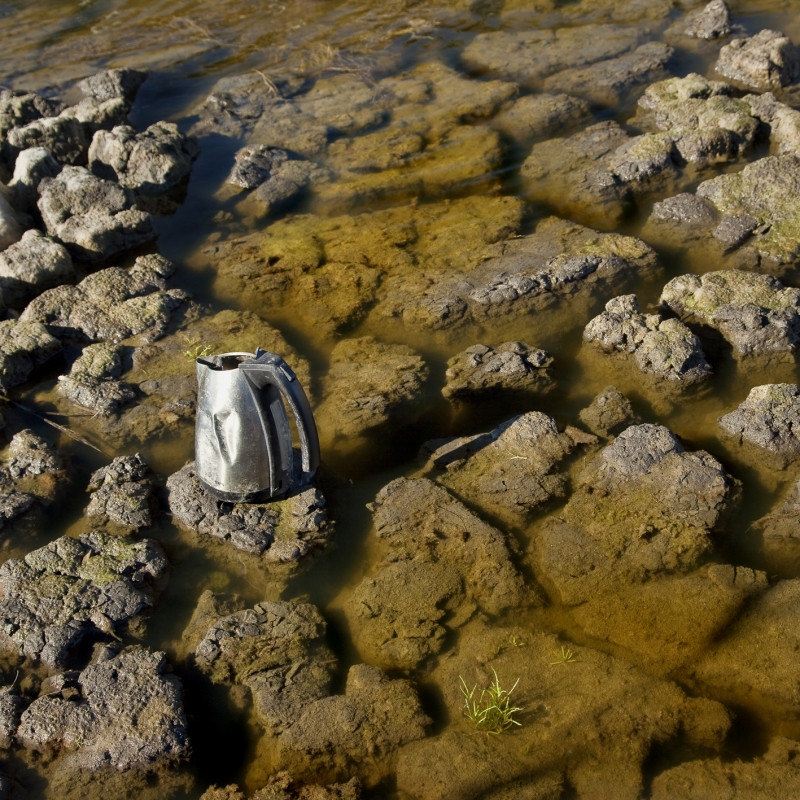
Fig. 5. Boiling Over (2009)
Unlike the typologies, these moving-image time-lapses feature one item each, however, once paired they form a collection of discarded electrical items in various landscapes. A shallow depth of field may have been used in Cooling Down (see Fig. 4.) due to the subtle blur in the foreground directing the viewer’s eyes to the fan. Deep depth of field seems to have been used to shoot Boiling Over (see Fig. 5.); however, the kettle placed slightly off centre on a rock in the muddy water creates a focal point and direction. These small details call back to the idea of electrical dependency impacting the earth, global warming and the loss of lush green growth, clear waters and land.
Jim Golden
Jim Golden is a still-life and product photographer based in Portland and shoots subjects in their purest forms to avoid applying artificial beauty. Golden is artistic and stylistic in his photography, capturing inanimate objects in a bold or quirky way while keeping the subject accurate to what it is.
He learnt photography by joining the fast-paced world of New York advertising, specialising in high-end retouching and visual effects (Jim Golden Studio, n.d.).
Golden’s enthusiasm and ‘sense of humour’ (Jim Golden Studio, n.d.) reflects throughout via bright colours, exciting subjects, and thorough planning.
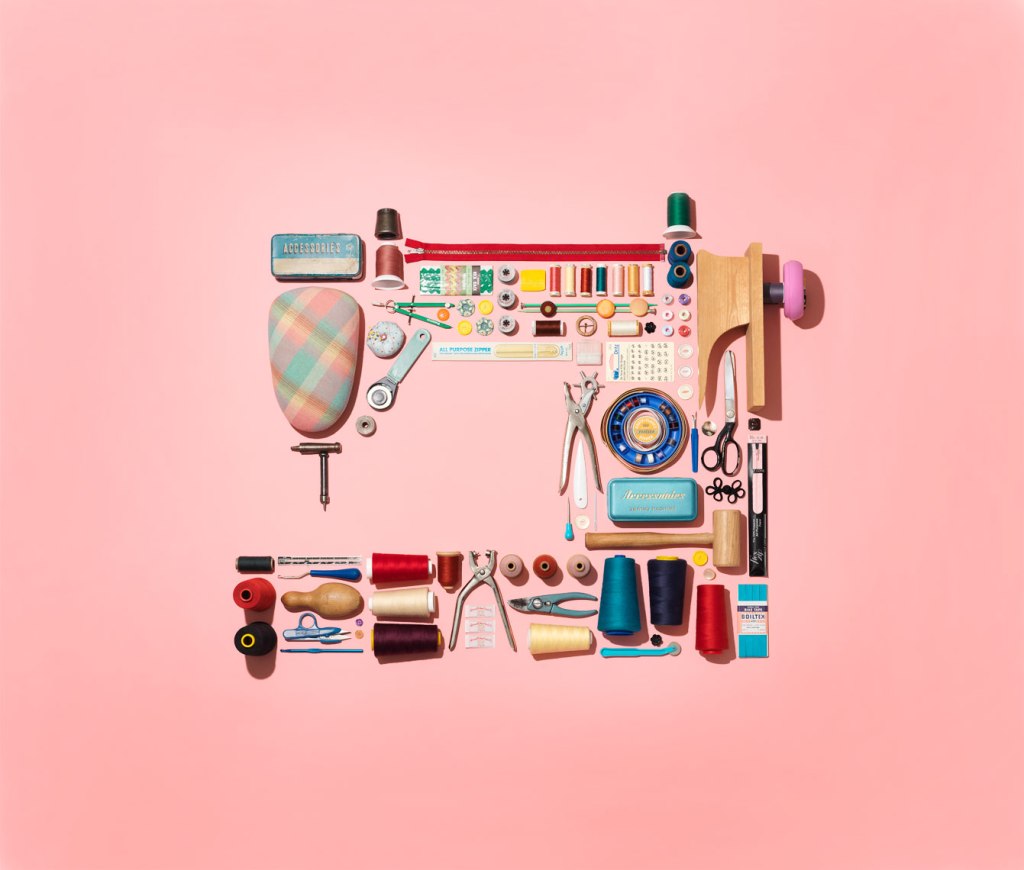
Fig. 6. collection of sewing stuff in shape of a sewing machine (2019)
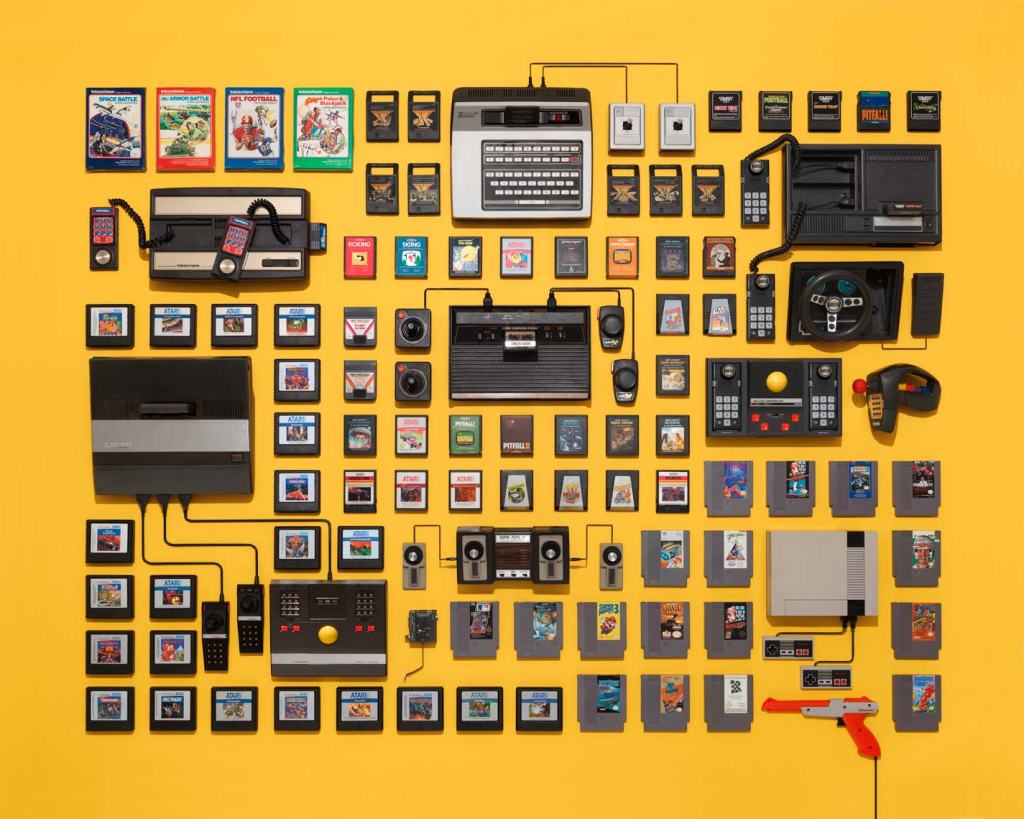
Fig. 7. vintage video game consoles and cartridges on a yellow background (n.d.)
Golden may use deep depth of field in his work due to the sharp, crisp and geometric forms created by the arrangement of the items. There are many leading lines throughout the imagery, the spaces between the subjects outline the shapes and sizes of each item, allowing the viewer’s eyes to follow around the composition with no end to the line. Like Rosenthal, Golden shoots his subjects from above from a height or using a wide-angle lens, using studio lighting to light the items. A soft halo in the middle of collection of sewing stuff (see Fig. 6.) and the few harsh shadows in both images caused by taller items may imply lighting from above or behind. Creating shapes that relate to the collected items, using the products and making the image pop with intense colour may represent happiness, playfulness, love or other positive emotions.
Overall thoughts:
All of the artists above vary from one another visually. Oster uses a mixture of B&W film and coloured imagery, using the background to frame the items. Rosenthal uses monochrome backgrounds and uses the collection to add colour and depth. In contrast, Golden uses bold colours, leading lines and negative space to enhance the objects.
However, they are alike technically as their images are crisp and in focus, suggesting a deep depth of field. Sharp shadows and bright highlights imply artificial lighting, and they all share a meticulous approach to the composition and framing of their subjects.
Contextually Rosenthal and Oster focus on political issues, such as the impact of human nature and consumerism on the planet. The way they execute this is by collecting disposed electrical products, plastic from the ocean and dumps. Oster’s choice to shoot with B&W film creates a raw emotion by enhancing the aged and shiny, textural details on the metal irons, while the rusty browns and muddy waters evoke thoughts of decay and neglect. Her choice of discarded electrical items reflects the waste caused by a lack of appropriate recycling resources. Rosenthal’s use of a black background creates a contrast between the colourful plastics and their battered forms, helping them stand out; this shows how time has affected the product’s shape but is mostly still intact and beautiful. The way items form shapes such as a man on a boat, link back to humanity’s relationship with the ocean. These elements, when combined, form a narrative about the negative correlation between land and ocean pollution, and human activity.
On the other hand, Golden shoots a selection of brand new goods and electronics, documenting products that show human progress, and a positive, appealing side to consumerism. The use of vibrant colours and shapes brings playfulness, contrast the vintage products, implying how style and inventions have evolved. Arranging individual components when put together become a working product, for example, the gaming cartridges wouldn’t be playable without the console, which wouldn’t be functional without the wiring, celebrates human creativity and growth.
Each artist has formed a cohesive series by keeping visual changes to a minimum or at least make sure they are complimentary to avoid jarring the viewer and being consistent with the overall concept, and in turn support Walter Benjamin’s view on collections very well.
After researching these practitioners and the concepts behind their work I have decided to explorewhat ‘necessity’ means. I will develop on this by collecting various items based on the responses gathered in my online survey and personal list group them by theme, form or function if possible, before looking for juxtapositions or similarities within the collection.
Keeping the framing and position of the subject consistent, as Oster does in Apparatus Electralia Planus, is something I will apply when composing my shoot to avoid breaking the fluidity. The choice of black and white or colour can impact the overall mood of the images; therefore I will experiment with the use of colour to decide how I want to evoke emotion or enhance details in the shot. Shadows and highlights can affect the form of a subject as well as the depth so I will consider using artificial light during my test shoot to decide whether I’d like to achieve a soft or sharp visual style. Shooting from a birds-eye view isn’t something I do very often and is something I would like to try out for this assignment, taking influence from Rosenthal and Golden as a guide for creating successful compositions. Deep depth of field assures that everything in the frame is crisp and in focus, so even though I would like the items to stand out, the rest of the composition will be just as essential to provide context; therefore, I will use a narrow aperture.
The final selection of images can make or break the set and how they knit together, so I will be meticulous when it comes to formulating the collection as a whole. During my test shoots, I would like to take influence from Oster and experiment with grid work and typologies; this may determine how I present my final selection.
Summary of the shoot plan :
– Experiment with B&W and colour.
– Vary the lighting used to see what works best.
– Test different angles, focal lengths and apertures.
– Consider the framing and positioning of the selected items.
– Play around with cropping and grid work.
– Be thorough when choosing final camera settings.
– Consider the relationship between each image when it comes to the final selection.
References:
Benjamin, W. ([1936]1999) Illuminations. London: Pimlico
In this post I – Explained how I planned my shoot using the 5 W’s, H and why – Listed my plan in bullet points
Plan
I planned my shoot using the 5W’s and H so I could think about my goals and ideas properly, instead of just formulating a list of various aims that were inspired by the mind-map I created.
Area of choice – Where? : Winchester High Street and the surrounding areas
Why? : It holds significant memories with my grandparents, cousins and direct family, so I would like to explore various childhood memories, see how the areas may have changed throughout the years and if they are as I remember them. For example, new buildings vs old architecture, as well as modern-day life within an aging town.
When? I would like to go early in the morning so that it isn’t too crowded. This way it’ll allow me to focus on what is around me, what is happening and how I feel about it as a whole. We also used to go to town fairly early in the day to avoid the rush of people, so it is quite fitting with the routine I followed as a child.
Who? : Depending on whether Winchester is as quiet as I am expecting it to be in the morning, I may include members of the public in my imagery to give a bit of life and action to my photographs. For example, people going about their day, unaware of what significance the town holds for me and vice versa if the town means anything to them. We all share the same space, but we’re not always aware of what people are doing there, how it makes them feel or where they’re headed.
What? : As noted in my post ‘Initial Thoughts About ‘The Square Mile’ + Mindmap’ (Powell, 2019), I will be revisiting some areas I visited or spent significant time with close family. That way I can capture what they look like now, the people/objects surrounding them that may have changed, are consistent or may only be temporary.
How? :
– Go to town early in the morning via train. – Start from the top of town from the station and work your way down. – Notice and capture whatever captures your eye as you observe, while keeping original ideas in mind. – Set the aperture and keep it constant, only change the shutter speed to fit the light settings on the day. SET CAMERA TO MANUAL. – Have the chosen ideas in mind, but be flexible too. E.G. If something doesn’t work, it’s fine. If you notice something you didn’t think about beforehand, then work with it. – Think about making a cohesive series – can images/areas be paired up in your final selection process? – Have fun and go out of your comfort zone. – Shoot multiple images so you have a reasonable selection.
 Lauren Powell OCA