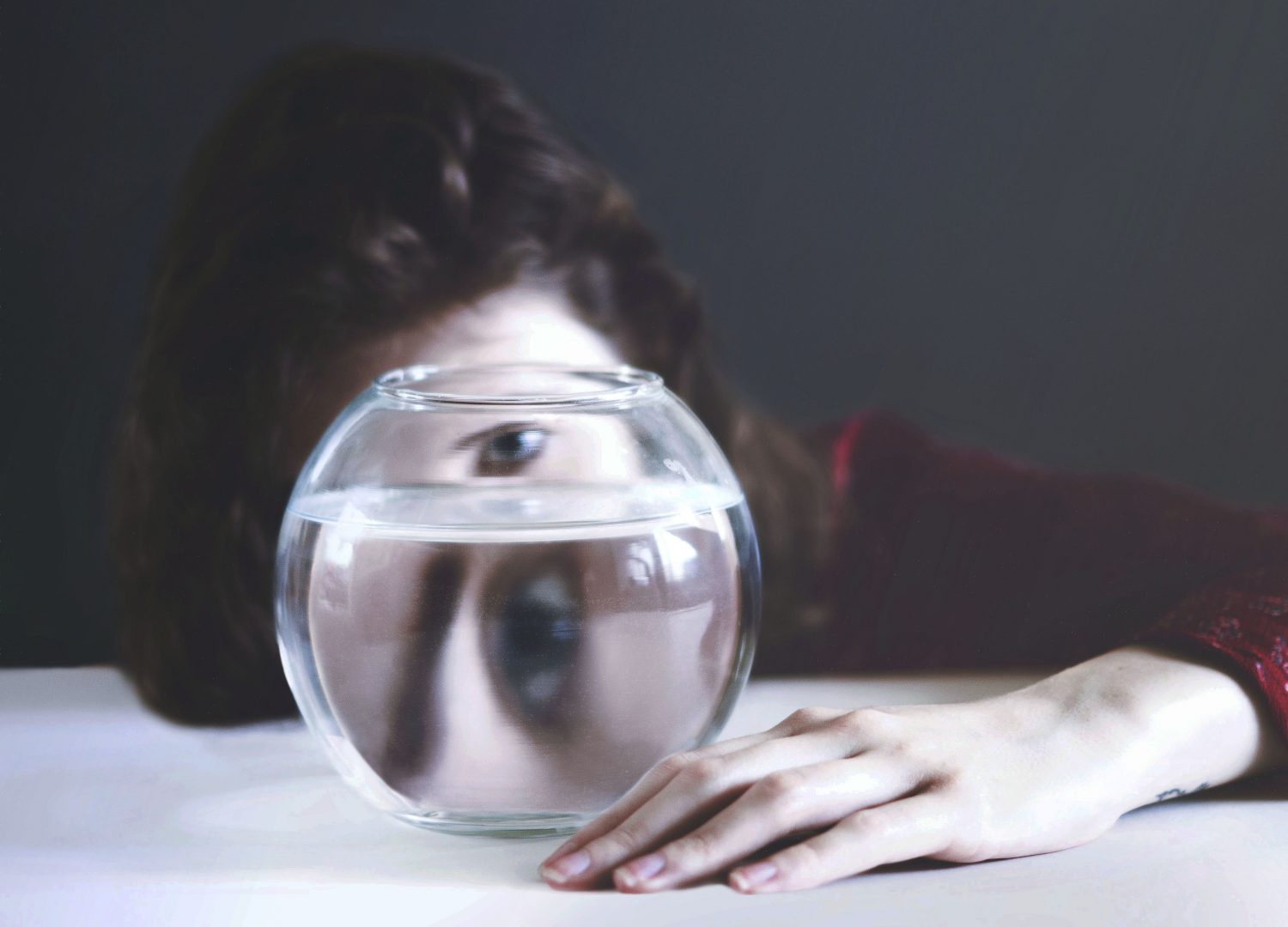
Summary:
For this research I have;
– Drawn on the work of Eadweard Muybridge, one of the pioneers of the frozen image, most famous for his ability to prove that a horse can indeed lift 4 hooves off the ground at the same time.
– Muybridge’s work was shown via slides, that showed the individual phases of movement that provided a huge step for science and photography.
– As well as improving his camera equipment by developing a motorised shutter that didn’t rely on the subjects movement, before inventing the zoopraxiscope. A machine that projected the moving image and inspired the development of the cinema.
– Explored the work of Harold Edgerton, the inventor of the ‘strobe’ flash, a photographer who froze time and provided images of motion that the naked eye couldn’t see, such as a crown of milk.
– Drawn on the work of Jeff Wall, a conceptual artist who captures everyday occurrences, or ‘micro gestures’, before
– Re-enacting in a different location, allowing him to take control of the composition, while providing tension in the imagery via the lines, gestures or other such elements.
– Reflected on the work of Philip-Lorca diCorcia, a photographer who meticulously plans his compositions by combining elements that don’t necessarily go together
– Challenging the traditions of photography and creates tension between the candid and posed. So while his work may look natural, with further inspection you understand they are not, due to obvious lighting or odd positioning of subjects.
– Reviewed whether I feel the camera captures or fragments time, giving examples of my opinion by harking back to the imagery of the listed artists.
Photographic exposure times developed massively since the early days of photography when exposures used to take hours to produce since reduced to mere points of a second with the evolution of technology.
We have been able to go from hours of standing/sitting still to avoid motion blur, to capturing movement as a still image with no traces whatsoever.
Some of the earliest photographers to experiment with the new, improved film speeds and shutters, are as follows.
Eadweard Muybridge (1830-1904):
Eadweard Muybridge, formally known as Edward James Muggeridge was one of ‘ … the great photographic thinkers and technical pioneers of all time …’ (Huxley Parlour, 2017), who thought way beyond the walls of still photography and was passionate about the evolution of the moving picture.
Leland Standford, a racehorse owner and former governor, hired Muybridge in 1872 to capture photographs of his horse to confirm whether all four hooves can be off the floor at the same time. To achieve this, Muybridge set up multiple cameras and a tripwire which would be activated upon the horse’s movement to capture each stage. After five years full of court trials, travelling and death, he returned to Standford. After producing conclusive results about the horses galloping abilities, this led newspapers to reproduce these images as drawings and artists such as Edgar Degas and Thomas Eakins, referencing them to produce art that was more realistic to life.
After his relationship with Leyland had ended due to lack of recognition following the publication of The Horse in Motion (Muybridge, 1878) , Muybridge began a new set of work for the University of Pennsylvania called Animal Locomotion which became one of his most influential pieces of work. The project allowed the study of movement through a variety of animals and the human form, which was a massive step for both science and photography by capturing each phase of a single action.
Muybridge significantly improved his camera equipment by developing a clockwork motor, meaning he could capture the minutest of movements without relying on the subject to trigger the shutter.
Muybridge’s work has helped contribute towards physiology, biomechanics and a range of artists such as Marcel Duchamp and Jasper Johns. Not only that, but he was the first to invent the machine called the “zoopraxiscope” which projected the moving image and animated a selection of photographs, potentially inspiring the development of cinema.
Harold Edgerton (1903-1990)
Dr Harold Edgerton was born in Nebraska, raised in Aurora and began a career as a professor at the Massachusetts Institute of Technology, which was the reasoning behind his invention of the ‘strobe’ flash and dedication to documenting what the naked eye couldn’t see.
Edgerton shaped the world of photography by freezing time and capturing results such as liquid on liquid forming a symmetrical crown of milk, as well as the ghostly arch that is formed by a golfer swinging their arm as the torso is ‘superimposed on itself 50 times’ (Michael Hoppen Gallery, 2015).
Due to his invention of flash cameras, his influence inspires photographers, journalists and many others today albeit the cameras are much smaller, which shows his impact on the photographic world and how we can capture the subjects around us. Being able to document what cannot be seen and controlling how a moment can be frozen in time, can help people understand how certain events occur and the result of them.
Jeff Wall (1946 – )
Jeff Wall was born in Vancouver and went on to study art history at the University of British Columbia in the 1960s, which is where he discovered Vancouver’s experimental art scene and used this as inspiration to teach himself photography to portray his conceptual ideas.
After many years of studying and receiving his BA and MA degrees at UBC, Wall went on to teach at Nova Scotia College of Art and Design, Halifax, Simon Fraser University, Vancouver and has since been a teacher at UBC where his journey first began (Riggs, 1997).
Having been inspired by the paintings of Goya and Velázquez, Wall wanted to find a way to depict everyday life through the medium of photography following his thought that ‘it was no longer possible for modern artists to paint like the great masters’ (Riggs, 1997). He decided upon creating backlit transparencies, which are large-scale photographs mounted in lightboxes to combine both cinema and sculpture, therefore a successful contemporary approach.
The inspiration for Wall’s pictures is everyday occurrences that he has personally witnessed, as well as his interest in ‘micro-gestures’ which are essentially actions that take place without much previous thought, portraying the tensions within society.
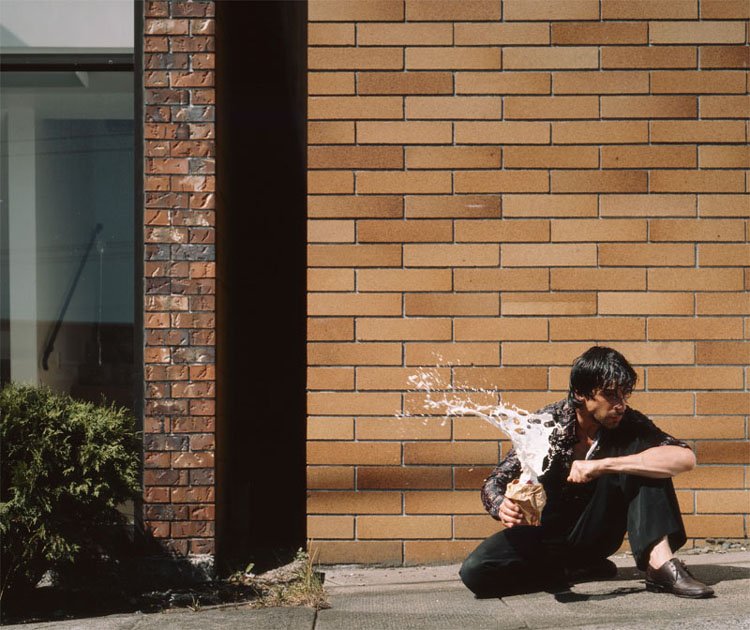
Milk (see fig. 1.) reflects the current state of mind the man in frame is in, portrayed by the explosion of liquid and clenched fists; however, the moments leading up to this moment are unknown. As a result of this, the viewer may wonder what caused such a reaction, creating tension between the two (Tate, 2017).
Wall tends to reconstruct the events he sees, to allow himself to gain control of the composition, which is why he relocated for this particular situation while keeping the formal elements in mind.
‘The grid-like order of the brick wall background, and strong vertical bands that stripe the left side of the image contrast sharply with the tension in the man’s arms and the uncontrolled arc of milk’ (Tate, 2017).
Philip-Lorca diCorcia (1951 – )
Philip-Lorca diCorcia studied at the School of the Museum of Fine Arts, Boston, the University of Hartford, Connecticut and received his Master of Fine Arts from Yale University in 1979. He didn’t initially set out to become a photographer; however, Jan Groover suggested that ‘a photograph should result from careful planning and orchestration’ (Sidley, 2016), which diCorcia may have used as inspiration when he began identifying as a photographer.
DiCorcia’s work challenges and pushes the traditional boundaries of photography by meticulous planning and composing. So, while they may look natural and accidental, they’re not due to the combination of people and places that don’t necessarily go together. This approach creates a tension between random and controlled, directs the imagery towards various paths without a definite conclusion or direction, therefore suggesting a narrative more so than telling a story (Sidley, 2016).
One of the ways DiCorcia executed his shots, for example, Mario (DiCorcia, 1978) was by setting the camera up on a tripod, putting a flash in the fridge and readjusting each element while testing the composition with a Polaroid camera, keeping the desired result in mind. So, while the subject looked completely natural, in deep thought as they observe the contents of the refrigerator, everything was precisely planned at each step (Sidley, 2016).
The use of harsh artificial light is a recurring technique through his work which could be street lighting, however, on closer inspection, the contrasts between the shadows and highlights are almost too intense to be considered accidental. An example of this is the spotlight that hits the subject in Edward Earle Windsor; 20 years old; Atlanta, Georgia; $30 (DiCorcia, 1990-92).
Reflection
‘There is a pleasure and beauty in this fragmenting of time that had little to do with what was happening. It had to do, rather, with seeing the momentary patterning of lines and shapes that had been previously concealed within the flux of movement.’ (Szarkowski, 2007, p.5).
Upon completing some artist research, I would consider that the camera captures time in these images, as well as fragmenting it, it’s isn’t necessarily mutually exclusive.
Muybridge’s images I believe do capture time, by documenting each phase of a singular movement, in turn, supplying context to each photographic plate. While Edgerton’s work also freezes moments in time and form an opinion in the viewers head as to what happened moments before, what we assume happened before shooting the apple may not be correct. As a result, I consider these images to be both a captured moment in time and a fragment.
Wall and diCorcia, on the other hand, fragment time with meticulous planning and creating tension throughout the composition, either through technical decisions or formal. While they are pre-meditated, the body language and locations cleverly help create intrigue for the viewer, making them wonder how the events shot occurred and what caused the particular gestures in that specific place. The imagery doesn’t necessarily look staged at first glance without prior knowledge; therefore, you would believe they are just a brief moment in history frozen forever; however, are not. A fragment of time provides just a slice of the story, not the whole product.
This research has made me question whether the street photography I have seen in the past is just a capture of time, whether there is more the story than initially thought or if it has been pre-planned to convey a particular narrative, controlled by the artist.
References:
Huxley Parlour. (2017) Eadweard Muybridge | Photographer’s Biography & Art. [online] Available at: https://huxleyparlour.com/artists/eadweard-muybridge/ (Accessed 4 March 2020)
Michael Hoppen Gallery. (2015) Dr Harold Edgerton | Michael Hoppen Gallery. [online] Available at: https://www.michaelhoppengallery.com/artists/54-dr-harold-edgerton/overview/#/artworks/9778 (Accessed 4 March 2020)
MoMA. (2019) Philip-Lorca diCorcia. Mario. 1978 | MoMA. [image] Available at: https://www.moma.org/collection/works/46273?artist_id=7027&locale=en&page=1&sov_referrer=artist (Accessed 4 March 2020)
MoMA. (2019) Philip-Lorca diCorcia. Edward Earle Windsor; 20 years old; Atlanta; Georgia; $30. 1990-92. [image] Available at: https://www.moma.org/collection/works/57854?artist_id=7027&locale=en&page=1&sov_referrer=artist (Accessed 4 March 2020)
Riggs, T. (1997) Jeff Wall born 1946 | Tate. [online] Available at: https://www.tate.org.uk/art/artists/jeff-wall-2359 (Accessed 4 March 2020)
Sidley, K. (2016) Philip-Lorca diCorcia | MoMA. [image] Available at: https://www.moma.org/artists/7027 (Accessed 4 March 2020)
Szarkowski, J. (2007) The Photographer’s Eye. New York: MoMA Thompson, K. &
Tate. (2017) Jeff Wall : room guide, room 3 | Tate. [online] Available at: https://www.tate.org.uk/whats-on/tate-modern/exhibition/jeff-wall/jeff-wall-room-guide/jeff-wall-room-guide-room-3 (Accessed 4 March 2020)
Time. (2016) The Horse in Motion |100 Photographs. [image] Available at: http://100photos.time.com/photos/eadweard-muybridge-horse-in-motion (Accessed 2 April 2020)
List of Images:
Figure 1. Wall, J. (1984) Milk [image] Available at: https://www.tate.org.uk/whats-on/tate-modern/exhibition/jeff-wall/jeff-wall-room-guide/jeff-wall-room-guide-room-3 (Accessed 5 March 2020)



 Lauren Powell OCA