Technical research and ideas

Assignment 4, Books & Magazines, Online Research, Reflection on assignments, Thoughts & Ideas

Summary

In this post I have

– Briefly discussed my mind-map post

– Explained how my preferred concepts led me to research via YouTube and books

– Before explaining three techniques, how they’re done and the results you can get

– Including screenshots and scans of the examples from the research

– Finishing the post with a short reflection about these techniques and what I plan to do as a project.

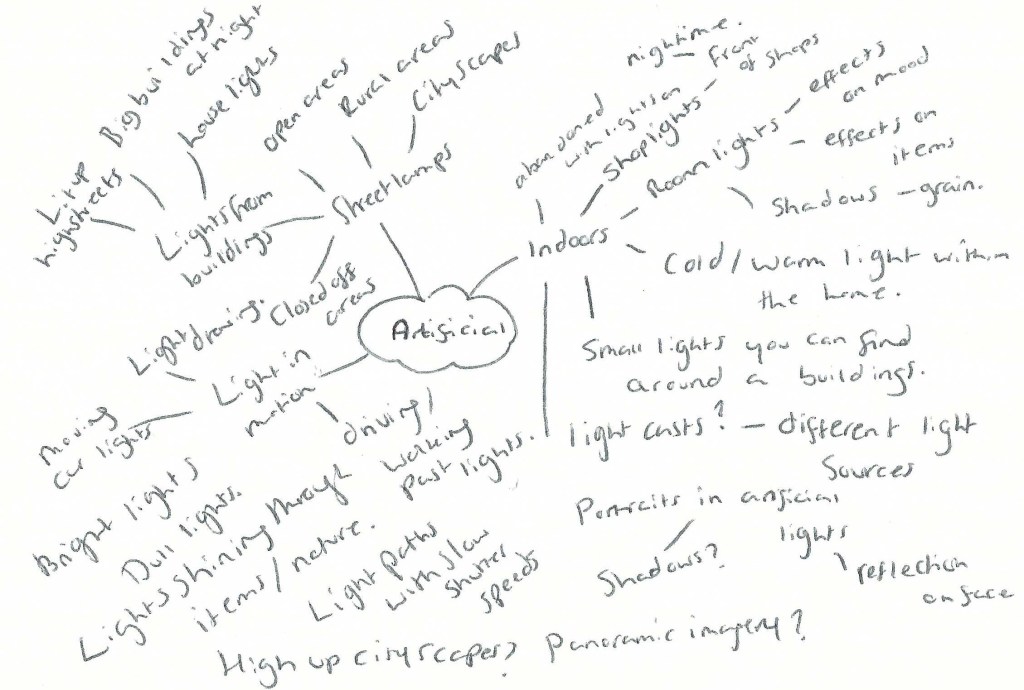
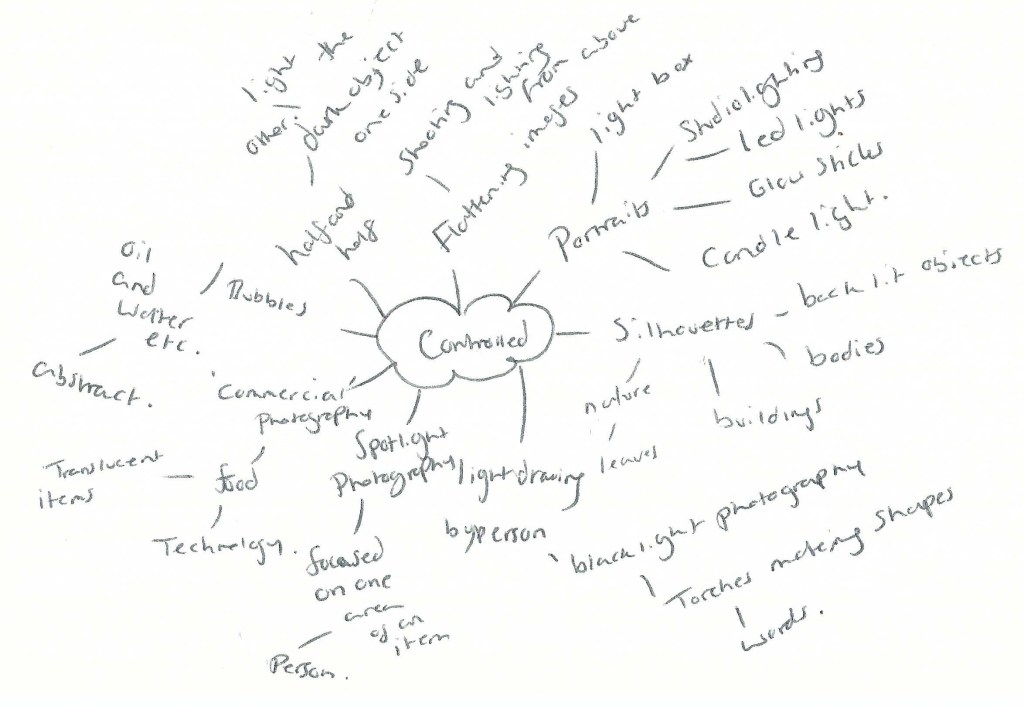
In my last post, I briefly discussed my mind-maps for both artificial light and controlled light, the multiple techniques, concepts and possible subjects that could be explored, along with their pros and cons. The ideas ranged from cityscapes to light casts, streetlamps and their shadows, light drawings, spotlight photography, commercial and lightbox photography.

As mentioned in my initial thoughts I sat with the ideas I was interested in most, which were silhouette and lightbox photography. While these ideas were in the foreground of my mind, I searched YouTube for further ideas and tutorials for lightbox, abstract and macro photography, as well as referring to an experimental photography book. This helped me figure out the direction I want to take for this assignment while pushing me to explore techniques I’d not done before or in a long time.

Oil and water

One of the first concepts I thought of when exploring the idea of using a lightbox, was oil and water macro photography, a simple set-up with incredibly unique results. Lighting the subject from behind (or below if it’s flat on a surface) and lifting the subject high above the light source intensifies the shallow depth of field, diffusing the colours below and making sure the main focal point is the bubbles in the frame. You can adjust the colours used underneath, the direction they’re pointing and the shape of the oil bubbles by stirring it and manipulating the mixture (Adaptalux, 2019). Ben from Adaptalux inserted videography of his results at the end of the YouTube tutorial, which I was able to take a screenshot of (See Fig. 1) for future reference.

Having more control over the process, can result in some incredible shots and allow you to get the exact outcome you’re looking for, however, it is possible to let gravity and chemistry take control of the subject while you focus on the light. This technique is full of flexibility, depending on what you prefer to do, but not so much so that you don’t have to plan or take control of what is going on. While this would be perfect to use for a controlled light project, it is also a concept I’ve explored myself in the past, so isn’t ideal for pushing myself further. The set-up and technical information regarding light placement, filters and stability for the camera/subject from this specific tutorial have still been beneficial for me to consider for this assignment, so worth the watch and research time.
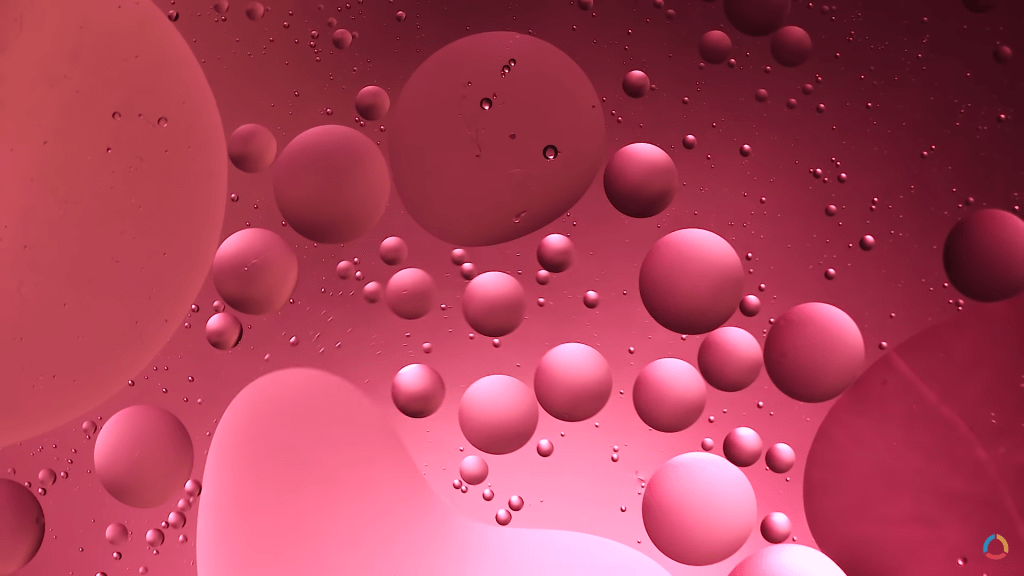
Fig. 1. Oil and Bubble (2019)

Abstract paper photography

Another tutorial I saw from Adaptalux on YouTube, was an abstract photography project with nothing but lighting and paper. Much like the previous project with the oil and water the lighting is coming from underneath the subject (backlit when it’s flat on a surface) via the use of a lighting arm and some diffusion filters for additional colour. Before shooting, the camera is set up on a tripod and the focus is set beforehand so all that has to be changed is the paper folds, positioning or lighting direction/colour. The height of your camera and the focal range of your lens can result in an extremely close frame or a wider shot depending on your preference, making this another flexible technique to try out (Adaptalux, 2020). You can either fold the paper, roll it up, use one sheet or multiple sheets and manipulate their shape to get a variety of styles to shoot. Despite being lit from below, due to the curves in the paper, soft shadows are captured as opposed to a silhouette or flat image of the item in the frame.

Shooting the cross-section of paper is much more interesting than I first imagined it would be, as it cuts the camera frame into multiple sections and is ambiguous in terms of the subject (see Fig. 2). Abstract art is meant to be ambiguous and cause questions to be asked, in turn making it a much more complex idea to explore and play around with.

I’ll definitely consider exploring this particular technique, even if it’s not chosen for this assignment.

Fig. 2. Abstract photography with paper (2020)

Lumen prints

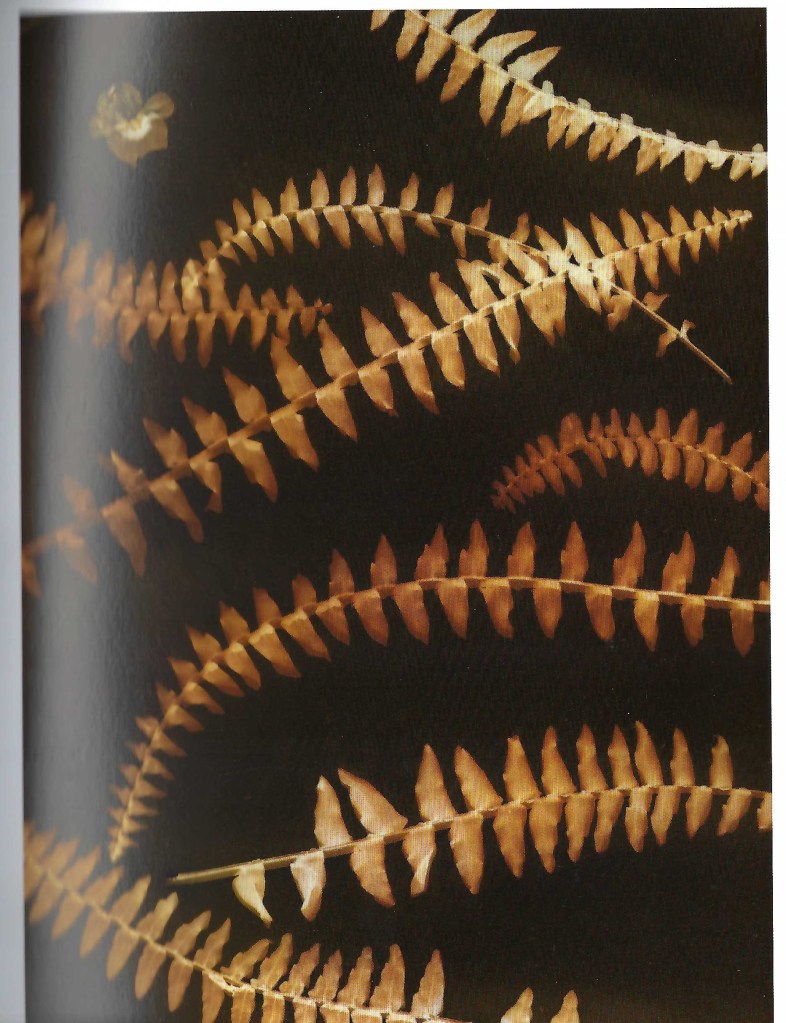
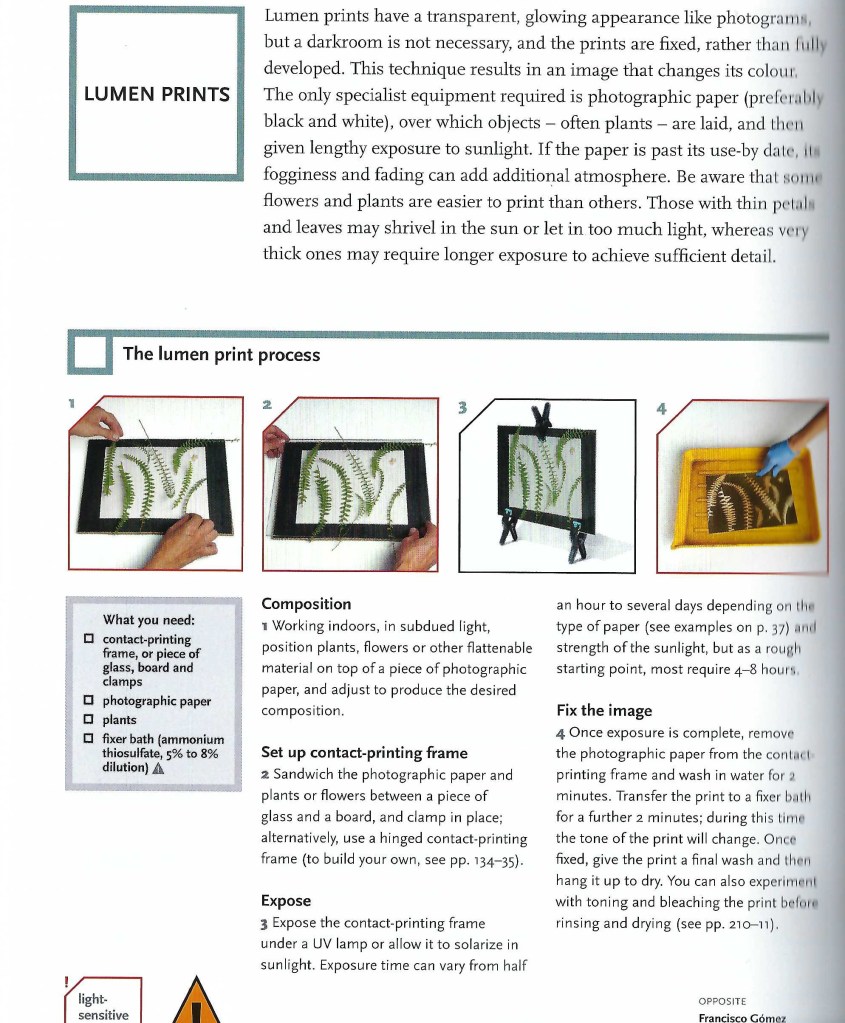
Despite not having the products needed for this particular experiment, looking through Thames & Hudson’s book Experimental Photography (Bendandi et al., 2015) gave me something to think about in terms of photographic presentation and technical choices made in photography. The contact printing frame used for this experiment (see Fig. 3) looked similar to a light pad, a thin LED glass pad used for tracing for art and other such things, while the lumen print Francisco Gomez managed to produce (see Fig. 4), reminded me of a photographic film after they’ve been developed. Placing the leaves on a piece of photographic paper, blocked those specific areas from the light, much like objects do when shooting with film. The denser subject is shown via a ghostly silhouette; with a few shadows to define the details where light has seeped through, while the open areas are much darker to show how much light the paper was subjected to during the experiment. By ‘inverting’ the print with Photoshops gradient map, the image looks like a typical sepia print, which has got me thinking about the possibility of creating digital ‘negatives’ for this assignment and how light can affect the results of an image.
Reflection

The techniques explored in this post have helped me understand a variety of techniques that can be used for this particular assignment, including macro photography, inverting photographs and experimenting with light, colour and its subjects. Abstract photography is unique and results in a never-ending list of outcomes, especially if the subject is constantly moving, such as oil bubbles in the water. Despite having total control of the light it doesn’t mean that you are in control of everything which I like. Lumen prints could be similar if you measure the exact amount of time the paper is exposed for, but the subjects used to make the composition are most likely to be different, even by a millimetre.

This has me thinking about film photography and how you have a restricted amount of time to get the desired image. Over or underexposure could make or break an image, influencing the mood or details of the subject. One second out, or one wrong move and you could’ve missed the ‘perfect’ composition. Light levels are shown on a negative via the translucent and opaque areas; the lighter areas are caused by denser objects that have been less exposed to light, in comparison to the darker areas such as a clear sky or another strong light source.

For my Languages of light assignment, I may explore the use of a light pad or lightbox to illuminate subjects from the bottom, how lens filters or gels could affect the overall image and how to create digital ‘negatives. Further research is needed to make this decision.


References

Adaptalux, 2019. Oil & Water Bubble Photography & Videography Tips | Macro Photography Tutorial. Available at: https://www.youtube.com/watch?v=mixLIIQ5N00&t=678s [Accessed 18 May 2021].

Adaptalux, 2020. How to shoot beautiful abstract photography using paper!. Available at: https://www.youtube.com/watch?v=2oM41u3JyCc&t=335s [Accessed 18 May 2021].

Bendandi, L., Minniti, S., Gómez, F., Lungarella, G. and Antonini, M., 2015. Experimental photography. 1st ed. London: Thames & Hudson, pp.34-35.

List of images

Figure. 1 Adaptalux. (2019) Oil and Bubble videograph by Adaptalux [YouTube, screenshot] Available at: https://www.youtube.com/watch?v=mixLIIQ5N00&t=678s [Accessed 18 May 2021].

Figure. 2 Adaptalux. (2020) Abstract photography with paper by Adaptalux [YouTube, screenshot] Available at: https://www.youtube.com/watch?v=2oM41u3JyCc&t=335s [Accessed 18 May 2021].

Figure. 3 Gómez, F. (2013) Lumen Prints [Scanned page] In: Bendandi, L., Minniti, S., Gómez, F., Lungarella, G. and Antonini, M. (2015) Experimental photography. 1st ed. London: Thames & Hudson, p.34.

Figure. 4 Gómez, F. (2013) Lumen Print [image] In: Bendandi, L., Minniti, S., Gómez, F., Lungarella, G. and Antonini, M. (2015) Experimental photography. 1st ed. London: Thames & Hudson, p.35.
Assignment 4 – Initial Ideas (Mind-Maps)

Assignment 4, Reflection on assignments, Thoughts & Ideas

Summary

In this post I

– Included the brief for this assignment and

– Listed my initial thoughts, reasonings for choosing a specific path

– Before attaching two mind-maps with various ideas/concepts

– Then listing the pros and cons for each technical approach

– With a short reflection on my ideas and how I will come to decide what I want to do for Languages of Light.

Brief

‘Revisit one of the exercises on daylight, artificial light or controlled light from Part Four (Ex 4.1, Ex 4.2 or Ex 4.3) and develop it into a formal assignment submission. The submission requirement for this assignment is a set of between six and ten high-quality photographic prints‘ (Bloomfield, 2018).

Initial thoughts

As I’ve used natural light a lot for personal work and past assignments, I feel it’s necessary to push myself out of my comfort zone and explore either artificial or controlled light for this particular assignment. Both 4.2 and 4.3 were interesting to do as well as the analysis of the results and what they taught me, so choosing the exercise I would like to revisit may take a little longer than anticipated.

I’ve gathered together multiple ideas for each technical approach and formulated two individual mind-maps, allowing me to figure out the subjects or projects that stand out to me most over the next few days. I plan to sit with these ideas for 2-3 days, see which ones come back to mind most and begin researching the different techniques or approaches, before exploring the chosen project in more detail.


Mindmaps

Artificial light

– Shooting with artificial light will remove the option for me to control how the light falls, forcing me to capture it in an interesting way from what is available.

– Working outside would be more realistic currently, given the slow ease of lockdown restrictions.

– If I didn’t want to go outside, there is always the possibility to explore artificial light within the home e.g. lamps, lights from house windows, lights from technology etc.

– Shooting during the night would mean fewer people around so wouldn’t have to worry about social distancing and could capture shop windows/high streets in a way we may not see usually. Ghosttown-esque?

– Could experiment with light paths by capturing images from a moving vehicle or by moving around the light source. Abstract?

– Capturing cityscapes and working at night isn’t something I usually do so would be interesting to explore.

– Portraits would be interesting to take at night, as I’ve never done that before and could result in some really interesting shots depending on location and light source.

– It’s nearing summertime so would have to work much later than expected, which isn’t as ideal.

– May have to travel to photograph cityscapes or highstreets, so would have to plan transport.

– Lighting within the home is possible, but more restrictive and not pushing myself further.

Controlled light

– I have control of the light and how it falls on the subject, which could result in some really interesting shots.

– Would push me far out of my comfort zone, having avoided studio lighting for many years.

– Trying out various light sources would be interesting and provide me with much more knowledge than before.

– Could work within the home which is ideal for social distancing purposes and removing the need to travel.

– Silhouette work would be interesting to explore, as they may have the ability to be much more defined than if I were to shoot using a duller artificial light.

– I could make a set-up within the home or garden, which is easier to do than setting up outside with no electrical sources etc.

– Lightbox photography is something I’ve explored briefly before and could link in with silhouette photography, combining multiple ideas.

– If I wanted to use a model for this project, I would have to consider social distancing still if the set-up was indoors.

– Space would be more restrictive working within the home which may not be ideal, depending on what I decide to shoot.

– May have to invest in more lights for this project, as I have very limited options in my pre-existing kit.

Reflection

There are pros and cons for each exercise, ranging from lack of kit to the planning of travel and considering the time of day. Despite all of this, there are some strong ideas that I’d be more than happy to explore and willing to take the time to gather equipment or plan. Silhouette photography, the use of a lightbox and creating abstract images are currently the strongest contenders for me. If I wanted to use a model for this assignment and work around social distancing, I could either model myself with a tripod set up or ask a family member. Sourcing a variety of lights is also possible with a little bit of research and asking around, but still doable.

Any struggles that may occur during this assignment are making me more excited to explore and shoot for Languages of light, as it will push me to work with what I’ve got, find a way around the difficult stages and grow from it.

Still undecided on whether to use artificial or controlled light, but I have plenty of ideas to think about and research in the meantime. Looking forward to this assignment and what results will come from it.


References

Bloomfield, R., 2018. Photography 1: Expressing your Vision. 4th ed. [pdf] Barnsley: OCA, p. 97. Available at: https://www.oca-student.com/course/photography-1-expressing-your-vision [Accessed 18 May 2021].

List of images

Figure. 1 Powell, L (2021) Collection [Ballpoint pen on paper] In possession of: Lauren Powell: Eastleigh.

Figure. 2 Powell, L (2021) Artificial [Ballpoint pen on paper] In possession of: Lauren Powell: Eastleigh.

Assignment 3 – Tutor Feedback

Assignment 3, Reflection on assignments, Reflection on feedback, Thoughts & Ideas

I have received formal feedback from my tutor for my third assignment ‘The Decisive Moment’. Considering this particular assignment took a long time to complete due to personal situations, I am happy with the response I got.

Here is a summary of the comments received via email:

Strengths:

– Strong interpretation of the ‘ongoing’ (in)decisive moment through the representation of time in the still life flower.
– Using the domestic setting shows a strategic conceptual documentation of the private and quotidian, rather than the public realm of most decisive work.
– Good references about technical approaches.
– Explores the technical/conceptual and how it alludes to still life.

Weaknesses:

– Define critical terms right away concisely with a firmer introduction to the assignment.
– Show the subject, presentation and give context to the approach, so tell them rather than let them find out themselves.
– Link what I’ve found via references but be clear on the subject to start with.
– Expand my points further with ‘whys’ with references to show how I’ve done something.

Areas of development:

– Attach annotated contact sheets to show how I got to a certain technical decision etc.
– Explain concept initially and expand later one in more detail.
– Lead reader into the subject and reference my evidence to back it up.
– Reference influences and how I interpreted the assignment.

Reflection:

Once again, I need to work on being more concise but avoid being too vague by referencing and explaining my approaches in more detail. Write about what’s relevant and the influences I used within my own work is important. I need to lead my readers into the subject and further expand with evidence at a later point. Overall, I have the ideas there and the strong images to show that I’ve understood the assignment, however, my written work needs to be clearer and reflect exactly what I discovered. They’ve noted that it’s difficult to do, but worth getting the hang of early on.

Assignment 2: Tutor Feedback

Assignment 2, Reflection on assignments, Reflection on feedback

Following the email submission of my second assignment ‘Collection’, I received my feedback and some files to look at to reflect the comments made by my tutor.

Here is a summary of my strengths, weaknesses and areas to improve on in future pieces of work:

Strengths:

– Appropriate assignment that shows a familiarity with still life informing conventions (vanitas) and a typology strategy.
– Hierarchy of needs well informed by reference to other art forms.
– Choice of influences drawn from coursework and research.
– Write up well researched.

Weaknesses:

– Be more concise, focus on the subject and how I approached it.
– Meandering when explaining my process, so summarise.
– Summarise and refer to blog posts to show process etc.
– Clearly show test shoots and technical details.

Areas for development:

– Tell assessor what I’ve found and summarise, be more concise.
– Clarify my intent with references and research on technical choices to back it.
– Structure and outline in any written work.

Reflection:

While my practical work is strong and shows my understanding of the brief, technical elements I’m exploring and clear research, I need to be more concise with what I’m writing. Blog posts are ideal for explaining my process in more detail, but for an assignment with a restricted word count it is better to be short and sweet with descriptions, backing it with references and knowledge.

Rather than allowing the assessor to read and come to their own conclusions about my work, I need to be clear and straightforward by telling them what I did, what I discovered during the process and how I would improve.

Glad to know that I have succeeded in most areas so early on however.

Project 3 – Surface and Depth – Research Point

Notes, Part 1, Reflection on assignments, Thoughts & Ideas

Summary:

– This research point was difficult to complete due to intellectual text overpowering Campany’s review of the work.

– Campany helped me understand how Ruff works and the importance of archives but didn’t get a feel for how they viewed the work as a whole.

– Colberg’s review was much easier to process and got straight to the point.

– Explained what they did and didn’t like, without dismissing other’s opinions on how the work was presented.

– I agree with Colberg’s view that an image can be beautiful on its own, without having a complex concept behind it.

Brief:

Read the reviews by Campany and Colberg and, if you haven’t already done so, use them to begin the Research section of your learning log. Try to pick out the key points made by each writer. Write about 300 words.

If you wish, you could add a screengrab of an image from Ruff’s jpeg series, and one or two of your own compressed jpegs (taken on auto mode of course). You can achieve the effect quite easily by re-sizing a photograph to say, 180 x 270 pixels, and saving at ‘zero quality’ compression. If you use Photoshop’s ‘save for web’ you can see the effect immediately without having to save, close and reopen the file.‘ (Bloomfield, 2018)

Review 1 – David Campany – Thomas Ruff: Aesthetic of the Pixel, IANN MAGAZINE NO. 2, 2008

Campany describes Ruff’s work as being ‘cold and dispassionate’, yet surprisingly beautiful at times. They also state that Ruff’s art can ‘solicit individual and global responses’ that cannot be completely agreed upon (Campany, 2008) .

All photographic images come from archives, which has shaped Photography and how it developed over time. Photographic prints, family albums, computerised image files and gallery work are all forms of archives, all unique in their way but still forms of photography.
We cannot tell which archives Ruff’s JPEGs have come from, simply by looking at them. However Ruff does mention that the images come from the internet, as he searched for images, going from link to link and finding imagery through a route (Campany, 2008).

Campany believes that Ruff has made a great impact on introducing the ‘art of the pixel’, into photographic art, allowing us to view the pixel at a base level, both aesthetically and psychologically (Campany, 2008) .

While analogue photography was created using film and the prints being made up of grains, in the modern-day these grains are now replaced by pixels.
They suggest that Ruff’s JPEGs are not organised or planned like pixels which are evidence that our view of the pixel is changing and may not be as regimented as we first thought (Campany, 2008) .

Review 2 – Joerg Colberg – Review: jpegs by Thomas Ruff

Colberg believes that Thomas Ruff may be one of the most ‘creative and inventive photographers of all time’, however, they also acknowledge the fact that many people may debate whether his work can be classed as photography at all (Colberg, 2009). 

Despite how you view the work and what you believe the art form is, Colberg, realises the importance of what the work does, more so than what the work is.
Colberg states that the images work well in book form, in comparison to the large physical prints at the Zwirner gallery, where they felt it was a ‘tad too pretentious’. While they understand the importance of physical interaction from the viewer, in their opinion the detail in the images weren’t large enough to justify the size of the prints in the gallery (Colberg, 2009) .

Despite all of the positive feedback, Colberg feels slightly uneasy about Ruff’s work as the images are great, but they feel as if the concepts rely too much on the techniques involved (Colberg, 2009) . 

References :

Bloomfield, R., 2018. Photography 1: Expressing your Vision. 4th ed. [pdf] Barnsley: OCA, p.33. Available at: https://www.oca-student.com/course/photography-1-expressing-your-vision [Accessed 7 November 2019].

Campany, D. (2008) ‘Thomas Ruff: Aesthetic of the Pixel, IANN MAGAZINE NO. 2, 2008‘. [online] At : https://davidcampany.com/thomas-ruff-the-aesthetics-of-the-pixel/ ( Accessed 7 November 2019).

Colberg, J. (2009) ‘Review: jpegs by Thomas Ruff’. [online] At: http://jmcolberg.com/weblog/2009/04/review_jpegs_by_thomas_ruff/ (Accessed 7 November 2019).

Final images and analysis

Assignment 1, Notes, Reflection on assignments, Thoughts & Ideas

Summary:

In this post I will be

– Analysing the 8 images I have chosen for my final set
– Explaining why they were paired together, visually, technically and conceptually if applicable
– Sharing my overall thoughts on how the assignment has evolved, the visual techniques I enjoyed using such as colour, shapes and texture
– As well as my understanding of the importance of looking around you, to find something new.

Pair #1

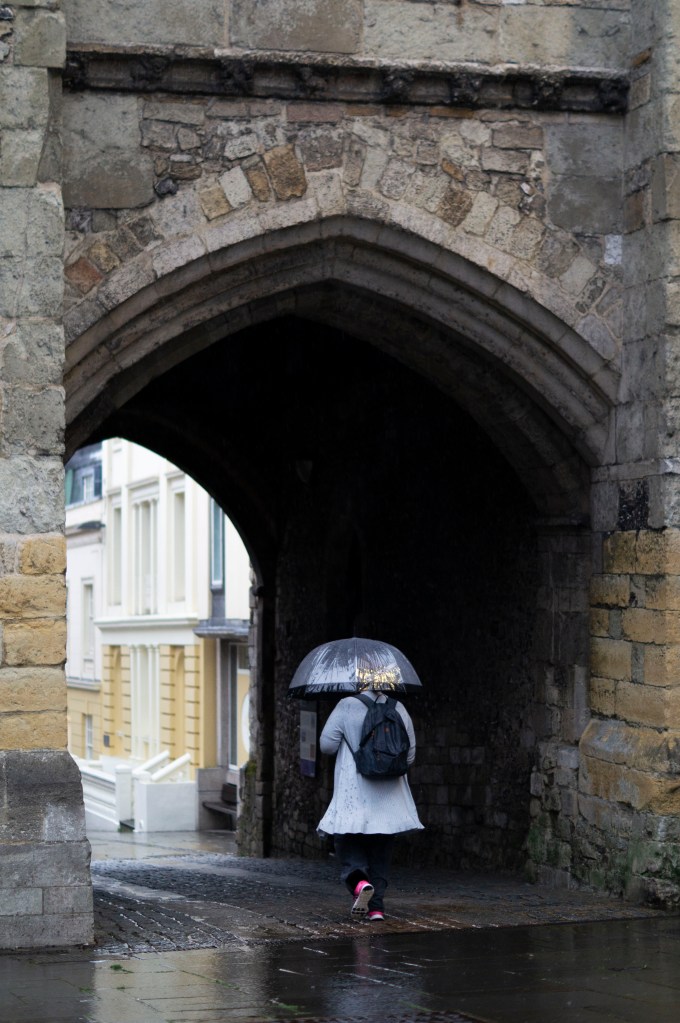
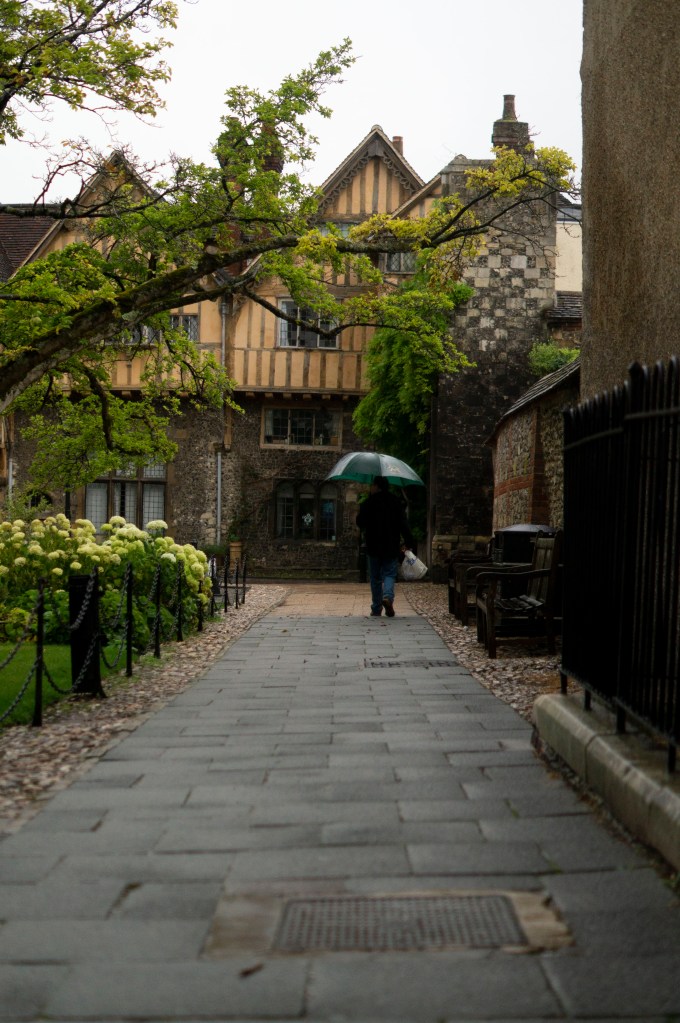
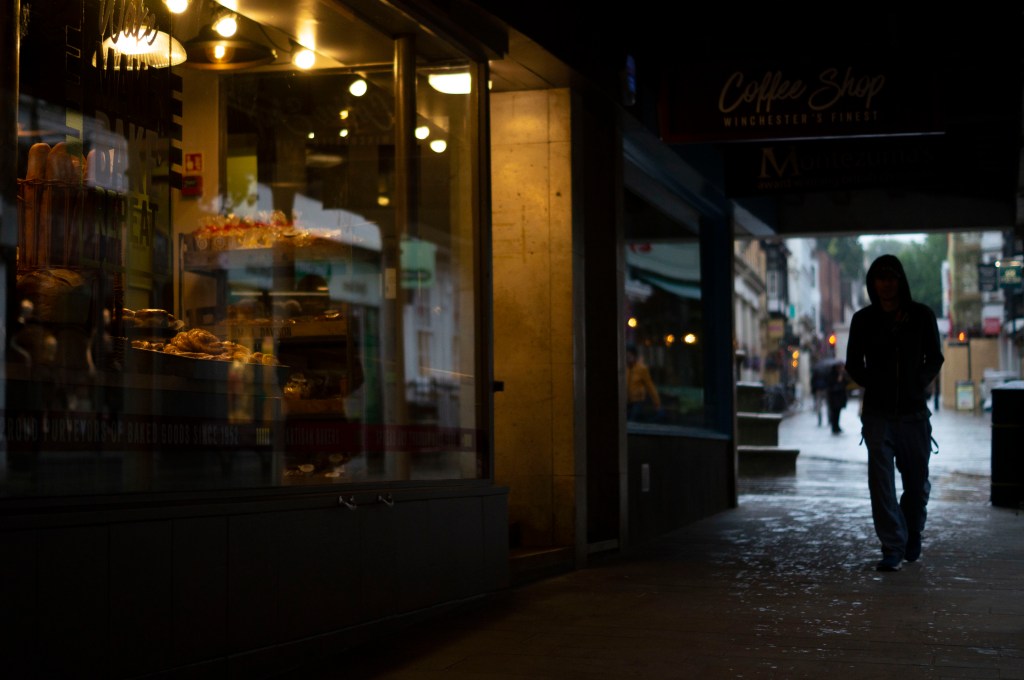
This pair contrast in tonality, colour, and space. While ‘Winchester 2019 18‘ (see Fig. 2) shares the cool and gloomy tones of ‘Winchester 2019 03‘ (see Fig. 1), the colours are much more saturated and warm due to the tanned wooden architecture in the background and vibrancy of the leaves framing the person in the shot. There is plenty of negative space in ‘Winchester 2019 18‘, displaying how open and free the surrounding area is, unlike the claustrophobic composition of its partner. The use of daylight, emphasises the highlights and shadows bouncing off the wet paths and textured areas in a much more natural way, preventing too many harsh lines and shapes. In terms of the subject, they are almost identical, both include umbrellas, bags, and coats, however, the focal points are the complete opposite. One person is positioned in the foreground at the top of a path, the shallow depth of field appearing in the background and the other is located in the background at the end of a path, the shallow depth of field creating a much softer foreground. Their positions in frame and the clear differences in location could symbolise the start and the end of a journey.

Pair #2

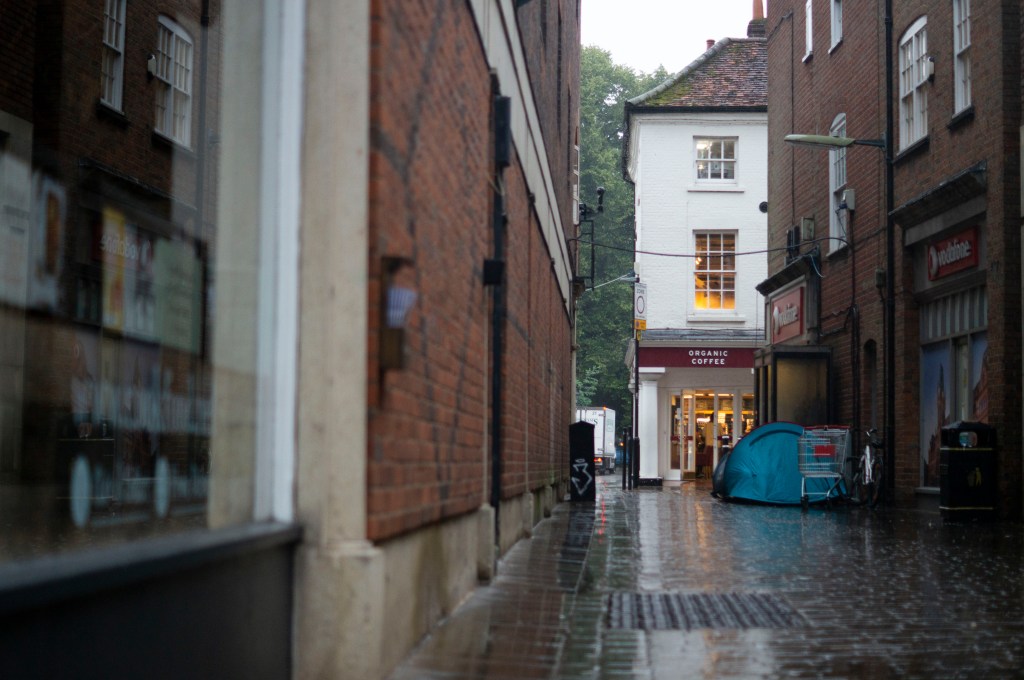
This pair share a lot of similarities. The composition is exact which provides a repetition of the geometric buildings, the leading lines are heavier on the left-hand side, drawing the eye from the left and across to the right which in turn naturally follows the paths in the shots. The artificial lights mixing with natural light, add warmth and tension between man-made inventions and the nature of weather affecting light and temperature levels. Even though the shutter speed, aperture, and ISO were the same for each shot, the highlights and shadows completely contradict one another. Silhouettes, reflections, and intense blacks are more dominant in ‘Winchester 2019 11‘(see Fig. 3), whereas textures, colours and bright whites stand out in ‘Winchester 2019 12‘ (see Fig. 4). Signs of life are featured throughout the two via full high street shop windows, members of the public, temporary shelters and graffiti, all of which portray different elements of modern life and how certain issues such as homelessness continue to exist in the 21st century.

Pair #3

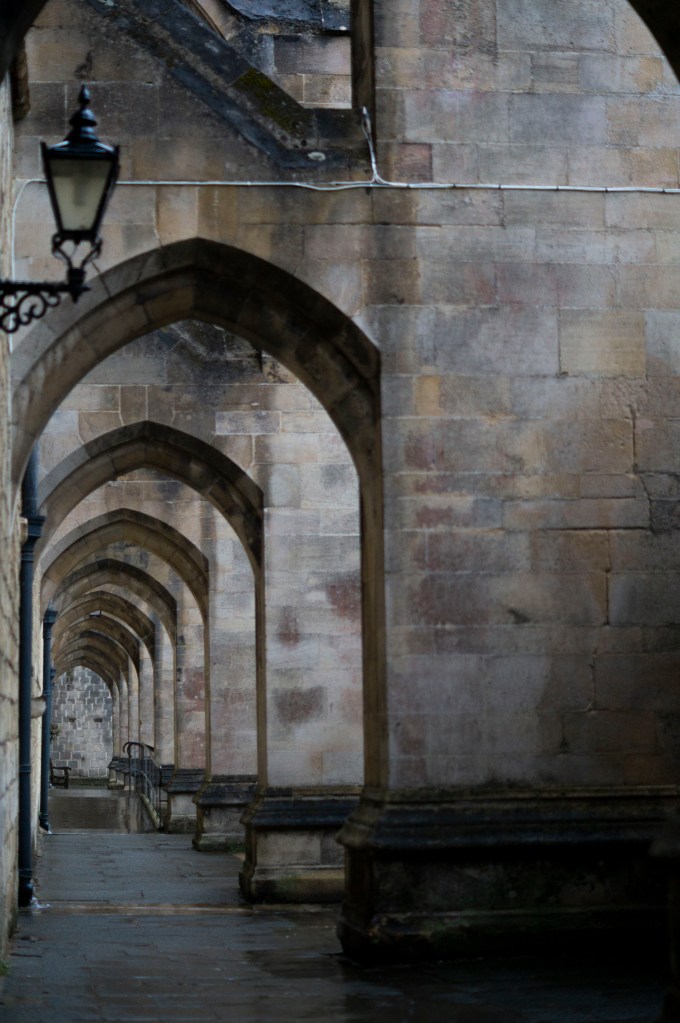
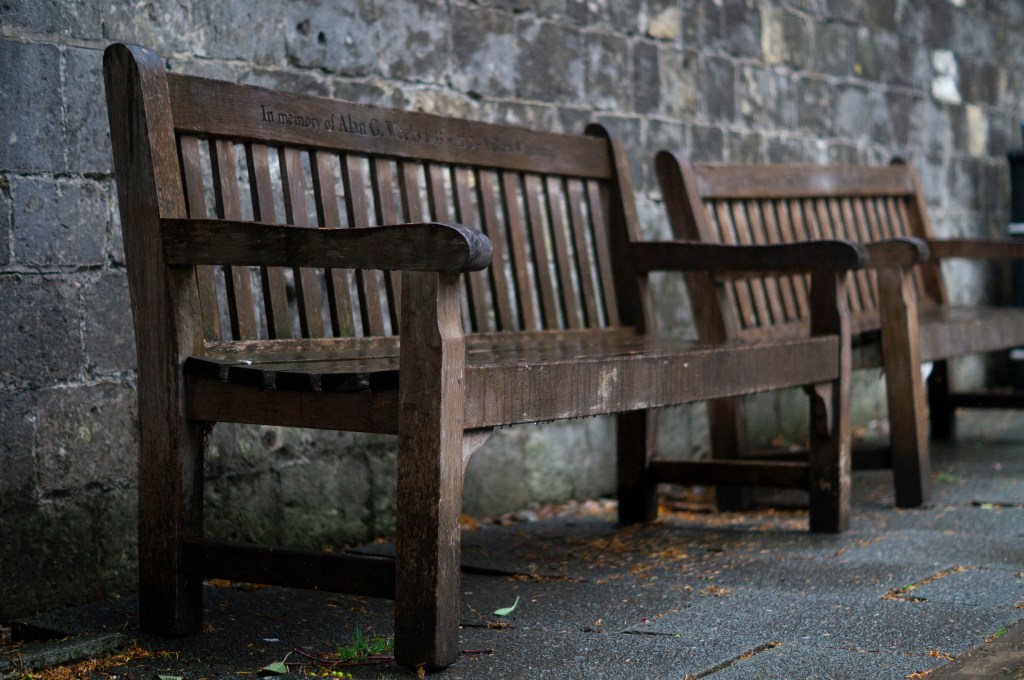
Visually this pair works best in terms of the similarities in tones and textures. The smooth grey brickwork of the cathedral and surrounding areas create a very cold and gloomy atmosphere with the help of the wet floor and raindrops on the bench. However, the daylight bouncing off the lighter areas of the stone brightens up the image, drawing out and accentuating the natural shadows created by the archways and cracks in the walls. While repetition is very obvious in ‘Winchester 2019 14‘ (see Fig. 5) due to the archways over the path, if you follow the natural line of the walkway and look closely, you can see the wooden bench featured in ‘Winchester 2019 19‘ (see Fig. 6). So, while it may seem that these two images don’t link together beyond the fact they are similar due to location, temperature, and tones, if more time is spent looking into the image, more connections may be found than at first glance. The emptiness of the walkway and bench forms a very lonely feeling as if what was once there many times, has vanished since.

Pair #4

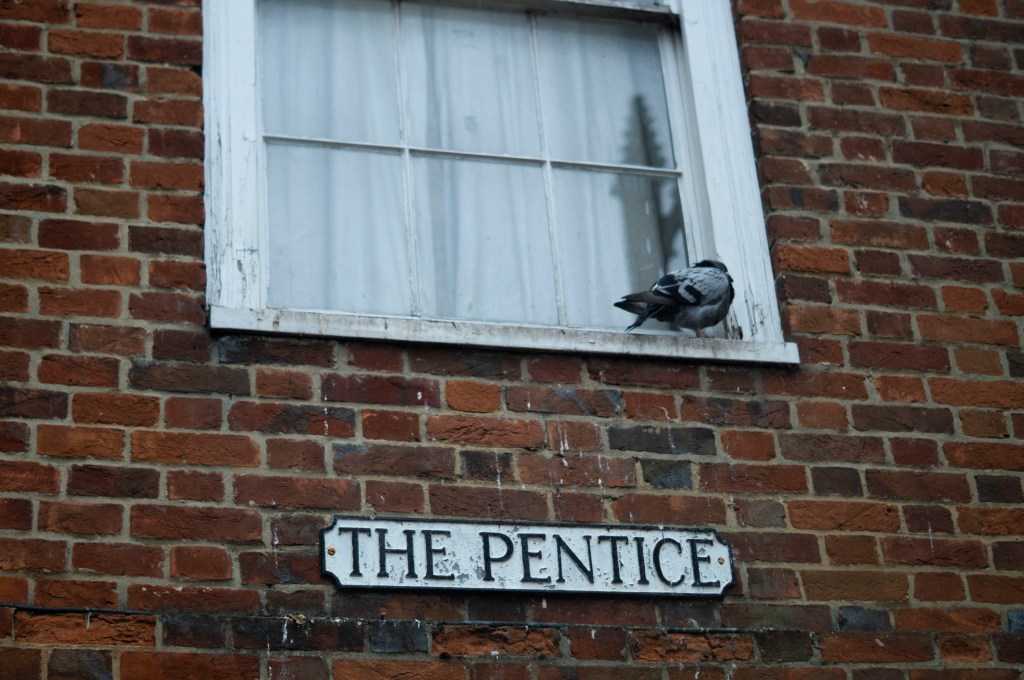
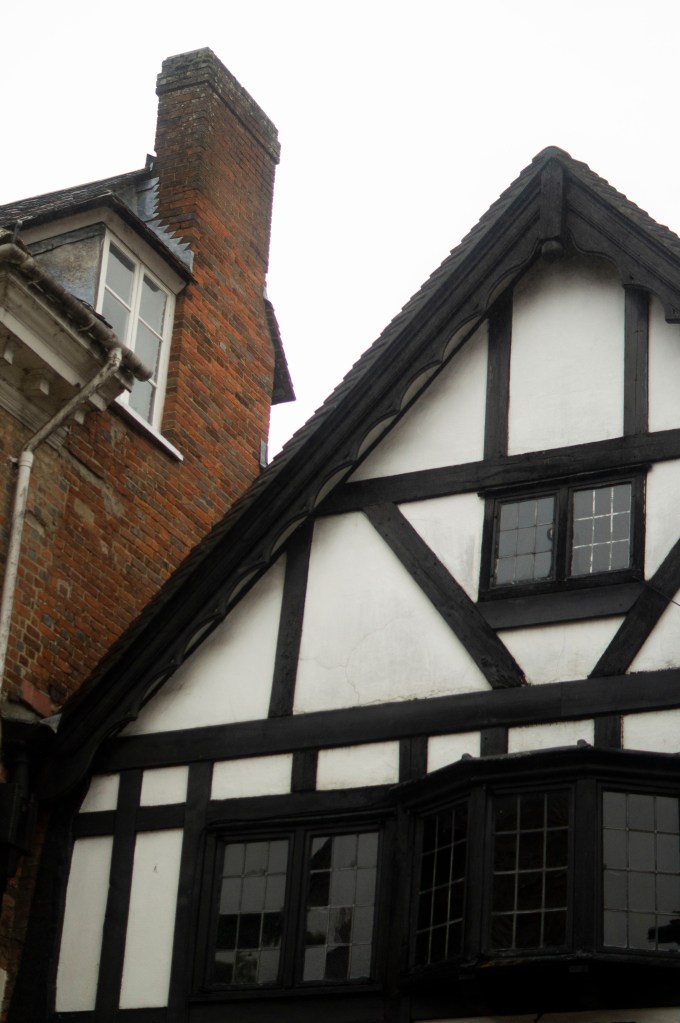
While the two images juxtapose in terms of the architectural elements in question, the colours, window styles, and dirty marks from nature, pull the pair together. Black and Whites are more prominent in ‘Winchester 2019 26‘ (see Fig. 8), with the geometric wooden beams, painted stone walls, and dark-tinted windows, only appearing very subtly on the road sign in ‘Winchester 2019 10‘ (see Fig. 7). However, the rusty colours and textured bricks stand out more at The Pentice than it does in the other shot, creating an even balance between the two. The framing is cropped in both, in turn helping the viewer focus on the details in the image, rather than the surroundings. Viewpoint wise, they are both shots from below and are at a slight angle, implying that the subjects weren’t at eye level or as easy to photograph due to the height of the building. While the aperture was wide, the shallow depth of field cannot be seen as clearly or at all due to how close the camera was to the buildings, creating a very sharp focus that works beautifully with the precise angles of the beams and grouting in the brickwork. Animals unfortunately now have to find their place, around what man has built over time, so the appearance of the pigeon atop a windowsill sheltering from the rain may communicate the impact humans have on nature.

Overall, I am pleased with these images as it pushed me to view this town in a more detailed and clear way, rather than focusing purely on the personal connections it holds. While I was initially driven by a personal view when I first read the brief, being able to explore the architecture, shapes, colours, textures and how places have changed over time, really helped me understand that we need to look at our surroundings much closer. You may think you know a place like the back of your hand, but a bit more time and a different perspective can help you explore in more depth and find a whole new area within.

List of images:

Figure. 1. Powell, L. (2019) Winchester 2019 03 [image] In possession of: Lauren Powell: Eastleigh.

Figure. 2. Powell, L. (2019) Winchester 2019 18 [image] In possession of: Lauren Powell: Eastleigh.

Figure. 3. Powell, L. (2019) Winchester 2019 11 [image] In possession of: Lauren Powell: Eastleigh.

Figure. 4. Powell, L. (2019) Winchester 2019 12 [image] In possession of: Lauren Powell: Eastleigh.

Figure. 5. Powell, L. (2019) Winchester 2019 14 [image] In possession of: Lauren Powell: Eastleigh.

Figure. 6. Powell, L. (2019) Winchester 2019 19 [image] In possession of: Lauren Powell: Eastleigh.

Figure. 7. Powell, L. (2019) Winchester 2019 10 [image] In possession of: Lauren Powell: Eastleigh.

Figure. 8. Powell, L. (2019) Winchester 2019 26 [image] In possession of: Lauren Powell: Eastleigh.

Selection process for final images.

Assignment 1, Notes, Reflection on assignments, Thoughts & Ideas

Summary:

– I have analysed the contact sheets provided in the previous post, selected the strongest images and edited them slightly by adjusting the highlights/shadows, cropping and straightening.
– The edited images are provided below in a gallery
– Before the selection was cut down once more to help with the final selection process
– Stating why some images weren’t included, for instance, they weren’t strong enough conceptually or technically
– Unlike the photographs shown in the scanned document, that is highlighted and numbered to show the two attempts at image pairing, the numbers being the final choice.
– Brief bullet points have been listed to cover the strong variety of elements within the final collection and why they were paired together.


I decided to select what I feel we’re the best images from the shoot and edited them very slightly. The only photo manipulation that took place was correcting the highlights and shadows, cropping them down and straightening a few of them out where needed, without completely changing what was captured in the camera which was requested in the ‘Expressing Your Vision’ course material.

The edited images are as follows :

After editing these images, I cut down the selection once more to make it easier to choose my final images for the ‘Square Mile’ assignment.
While there were quite a few images that I liked, some of them just didn’t ‘fit’ or have a strong enough link to the project plan, where I stated that ‘I would like to explore various childhood memories, see how the areas may have changed throughout the years and if they are as I remember them’ (Powell, 2019).

For example, ‘Winchester 2019 28′ (see Fig. 2.) is strong due to composition, the relaxed position of the bike, the highlights and shadows, as well as the shallow depth of field, however, it didn’t compliment the collection. Considering the majority of the images explored architecture, the differences between each building and the effects time has had on them, it became an odd one out.

The following images are a part of my second selection process. The scans below show my initial pairings in colour and the final image pairings with numbers. I will provide a brief list as to why I decided to pair up these specific images, to refer back to in my image analysis.

Reasons for pairing up:

While I am aware I didn’t have to pair these images up, to create a cohesive series I felt that it was the best option for me to make sure I achieved what I set out to do, which was to explore Winchester by retracing steps, capturing what had changed, the similarities and presenting a personal view in a different way to which I’m used to. Pairing the photos up has helped me form a short journey through the town, as well as a complementary collection.

Winchester 11 and 12

– Similar compositions.
– Contrasts between light and dark.
– Contrasts between natural and artificial light.
– References to work and daily life.
– Shows human interaction.
– Both significant places I visited with family.

Winchester 14 and 19

– Similar tones.
– Repetition.
– The juxtaposition between architecture and public seating.
– Both in the same area and have a significant connection.

Winchester 3 and 18

– Person framed by architecture and nature.
– Umbrellas.
– Shows daily life.
– Monochrome.
– Pathways.
– Start and end of my journey.
– Special areas vs new.

Winchester 10 and 26

– Similar brickwork.
– Nature vs man-made.
– Similar tones.
– Contrasts in colour.
– Reflection of a significant statue.
– Depth.
– Dirty buildings.
– Buildings are behind one another.
– Family links.


References :

Powell, L. (2019) Plan for ‘The Square Mile’. [online] Available at: https://laurenpowelloca.photo.blog/2019/08/20/plan-for-the-square-mile/ [Accessed 12 September 2019].

List of images:

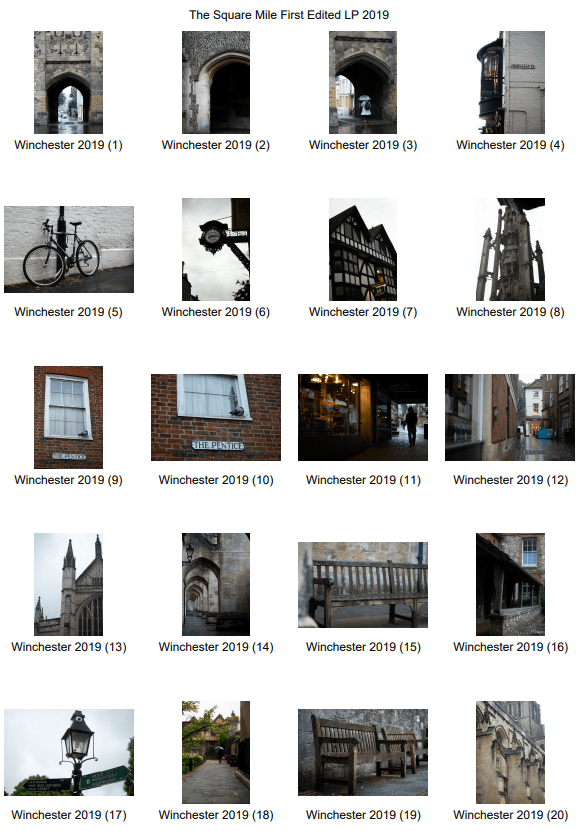
Figure 1. Powell, L. (2019) Page 1 [PDF, Screenshot] In possession of: Lauren Powell: Eastleigh.

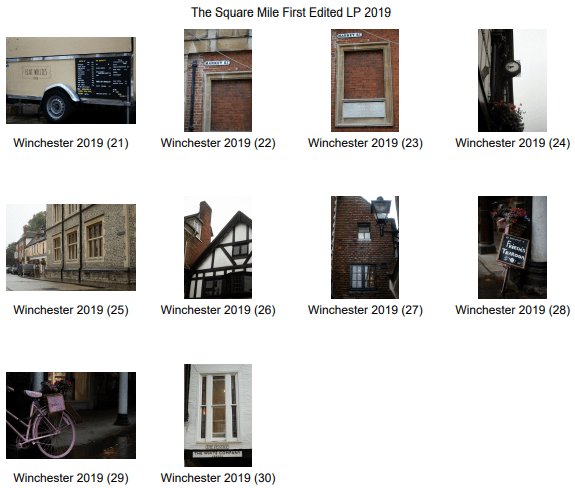
Figure 2. Powell, L. (2019) Page 2 [PDF, Screenshot] In possession of: Lauren Powell: Eastleigh.

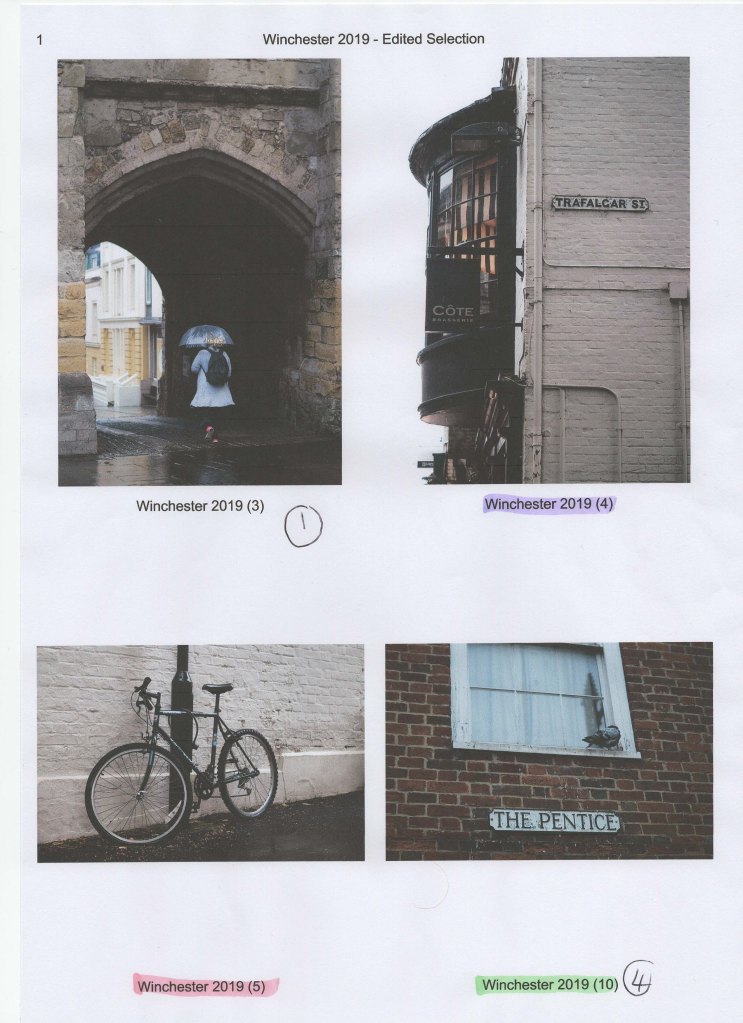
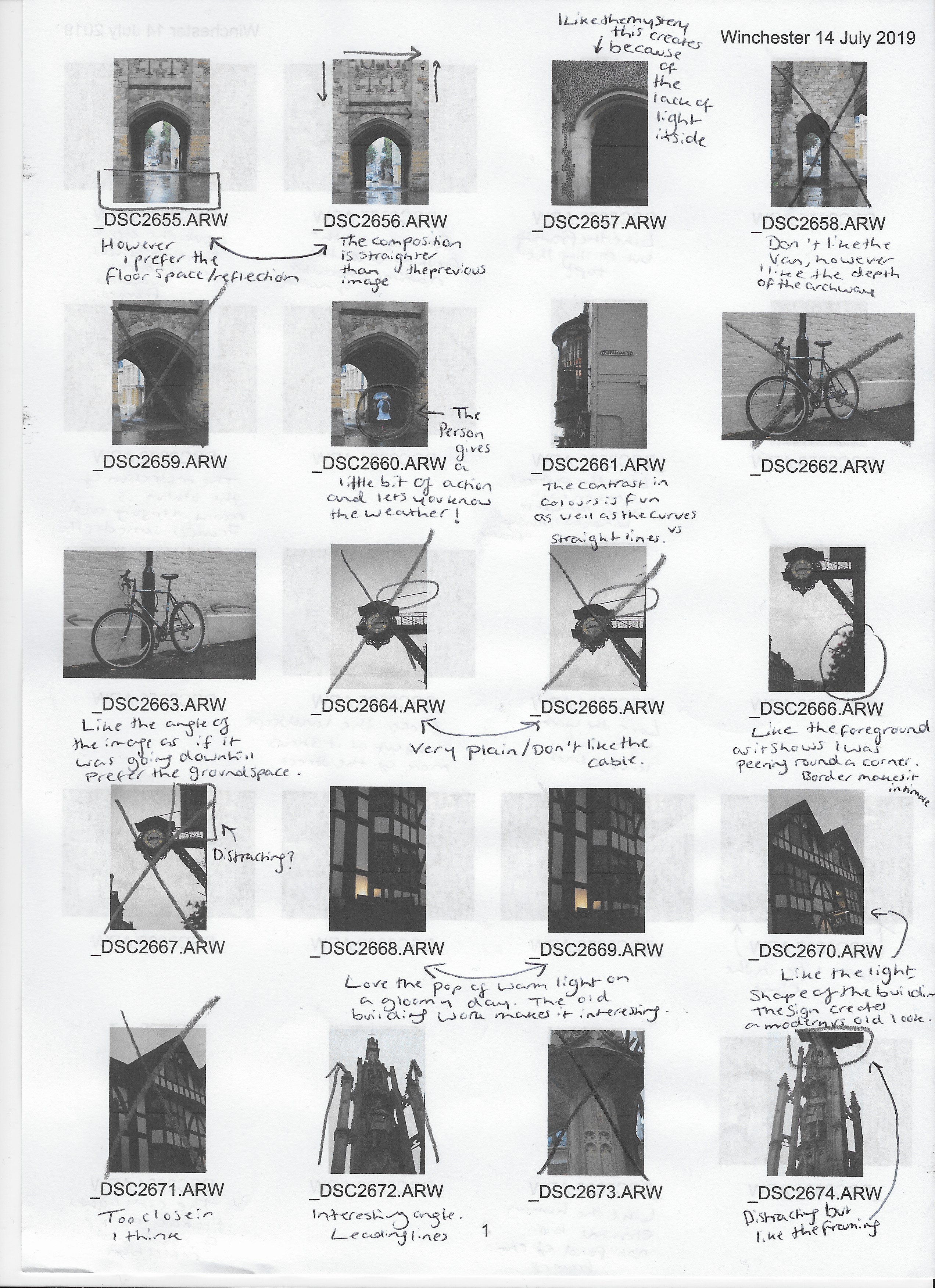
Figure 3. Powell, L. (2019) Contact sheet 1 [Scanned Document] In possession of: Lauren Powell: Eastleigh.

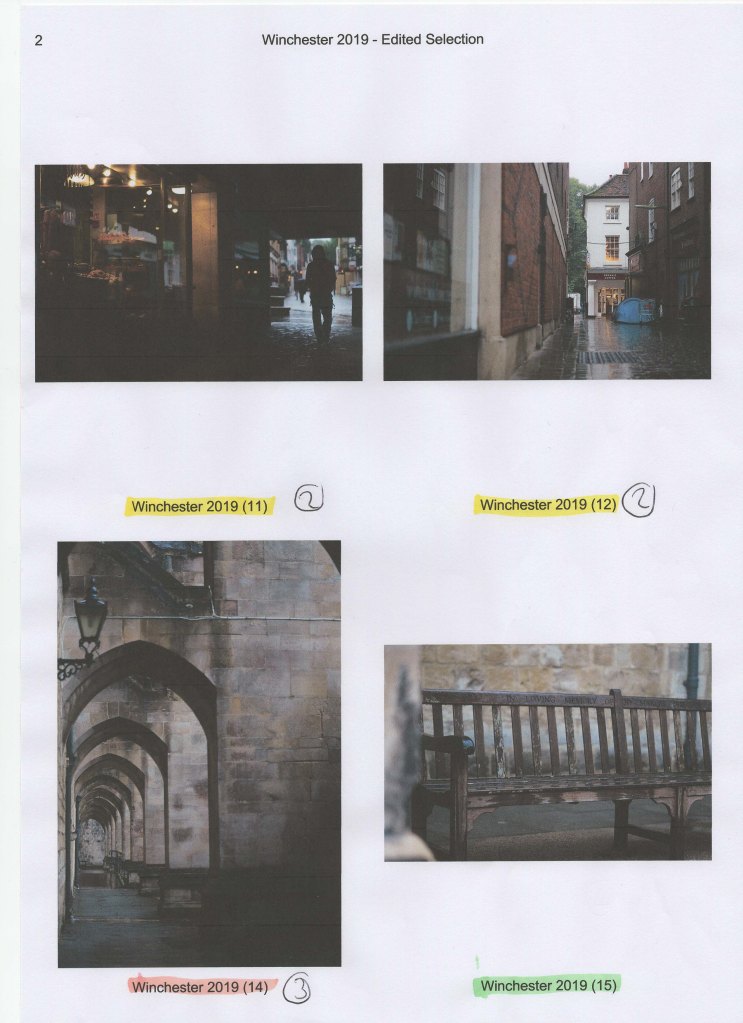
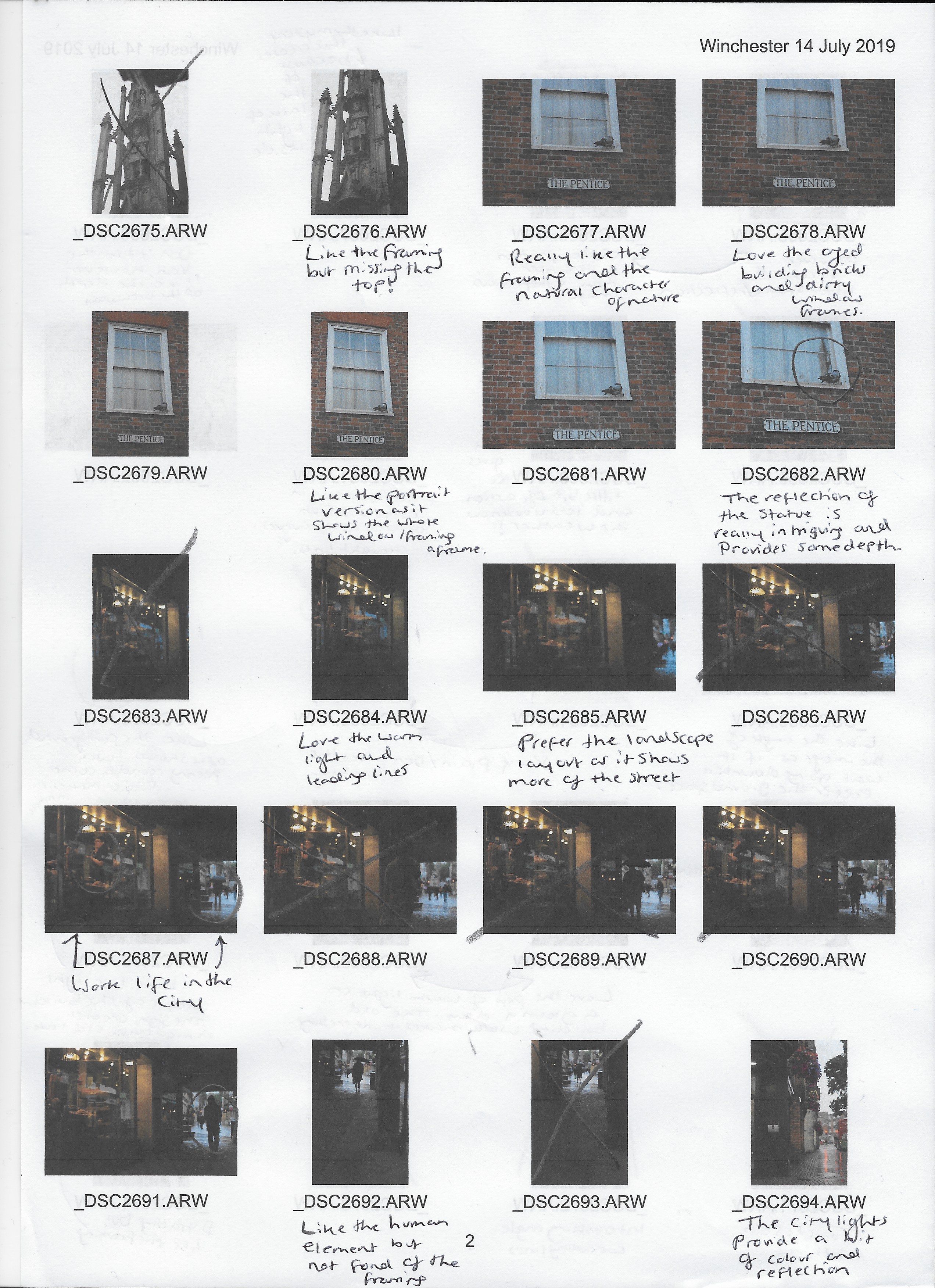
Figure 4. Powell, L. (2019) Contact sheet 2 [Scanned Document] In possession of: Lauren Powell: Eastleigh.

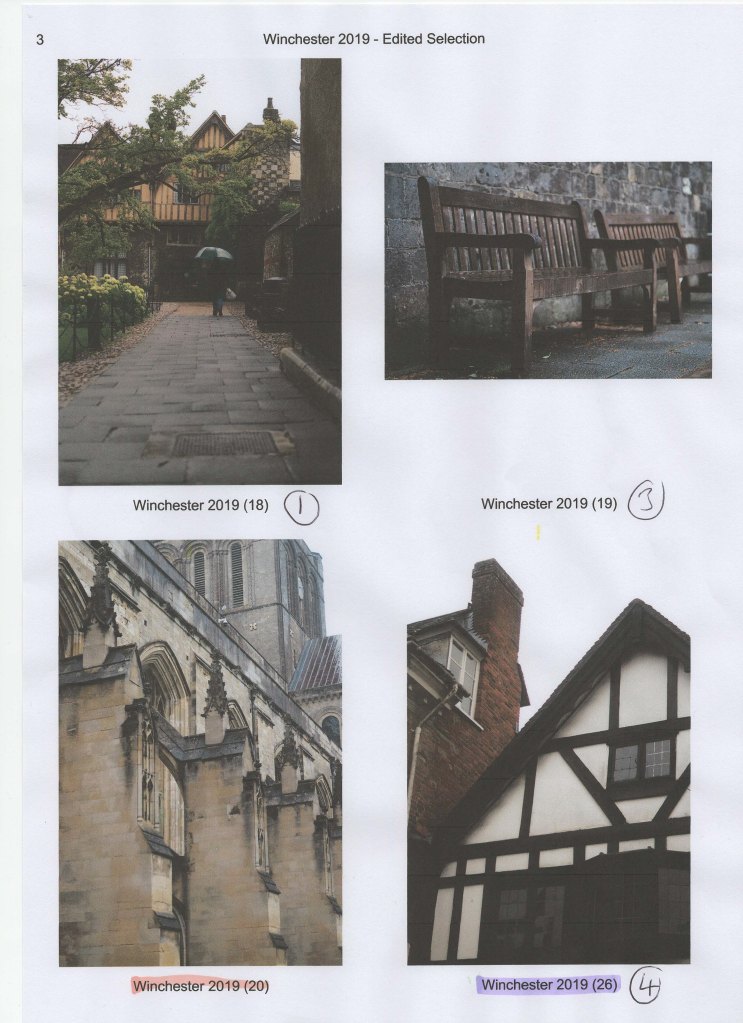
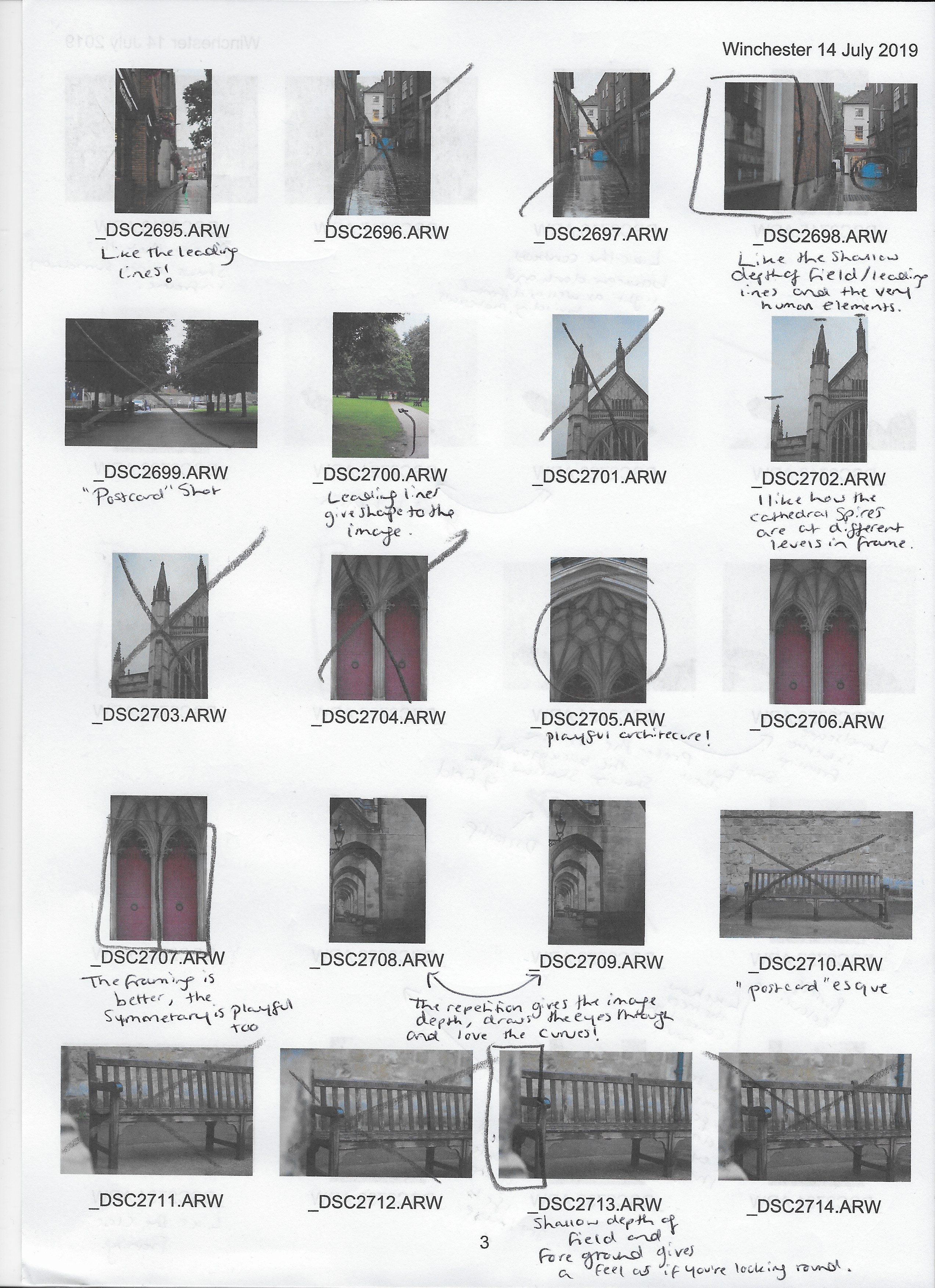
Figure 5. Powell, L. (2019) Contact sheet 3 [Scanned Document] In possession of: Lauren Powell: Eastleigh.

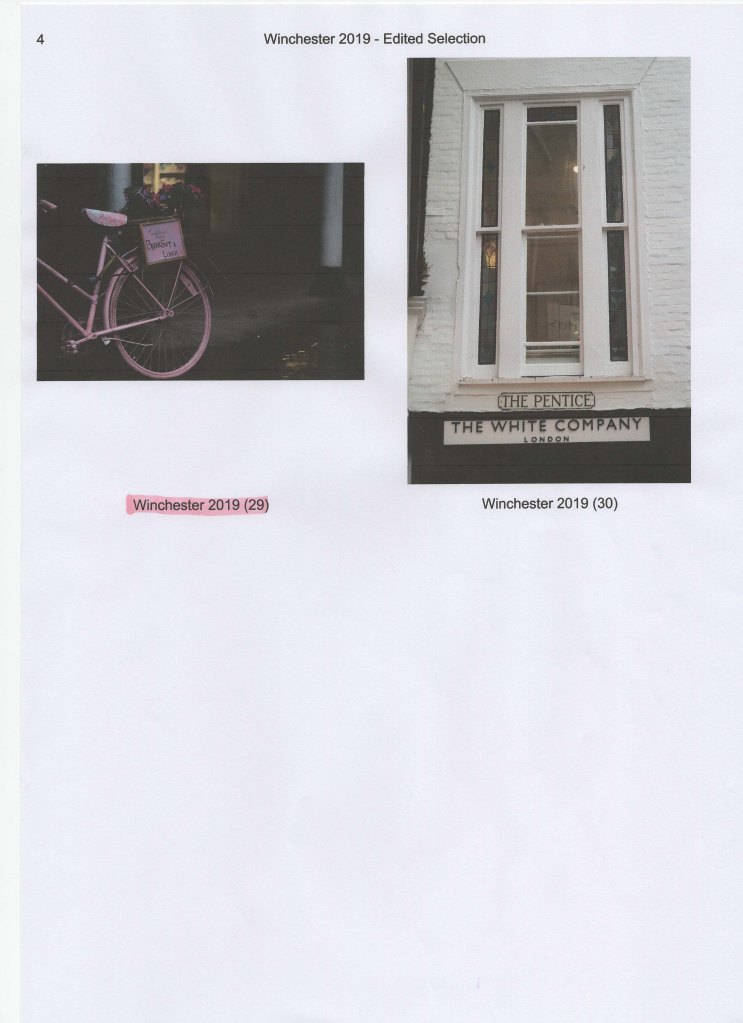
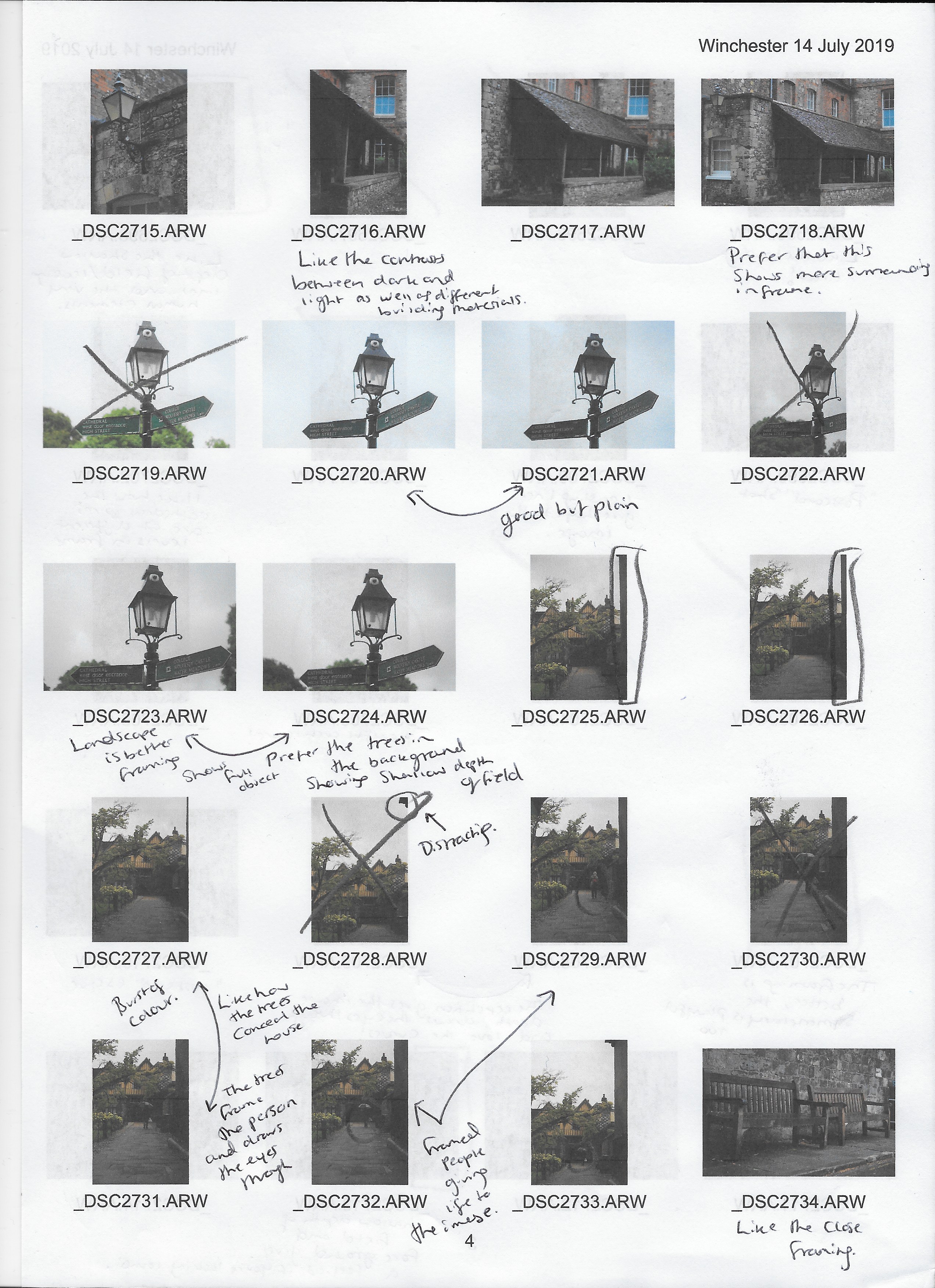
Figure 6. Powell, L. (2019) Contact sheet 4 [Scanned Document] In possession of: Lauren Powell: Eastleigh.


Contact Sheets for ‘The Square Mile’ + reflection.

Assignment 1, Notes, Reflection on assignments, Thoughts & Ideas

Summary:

In this post I have;

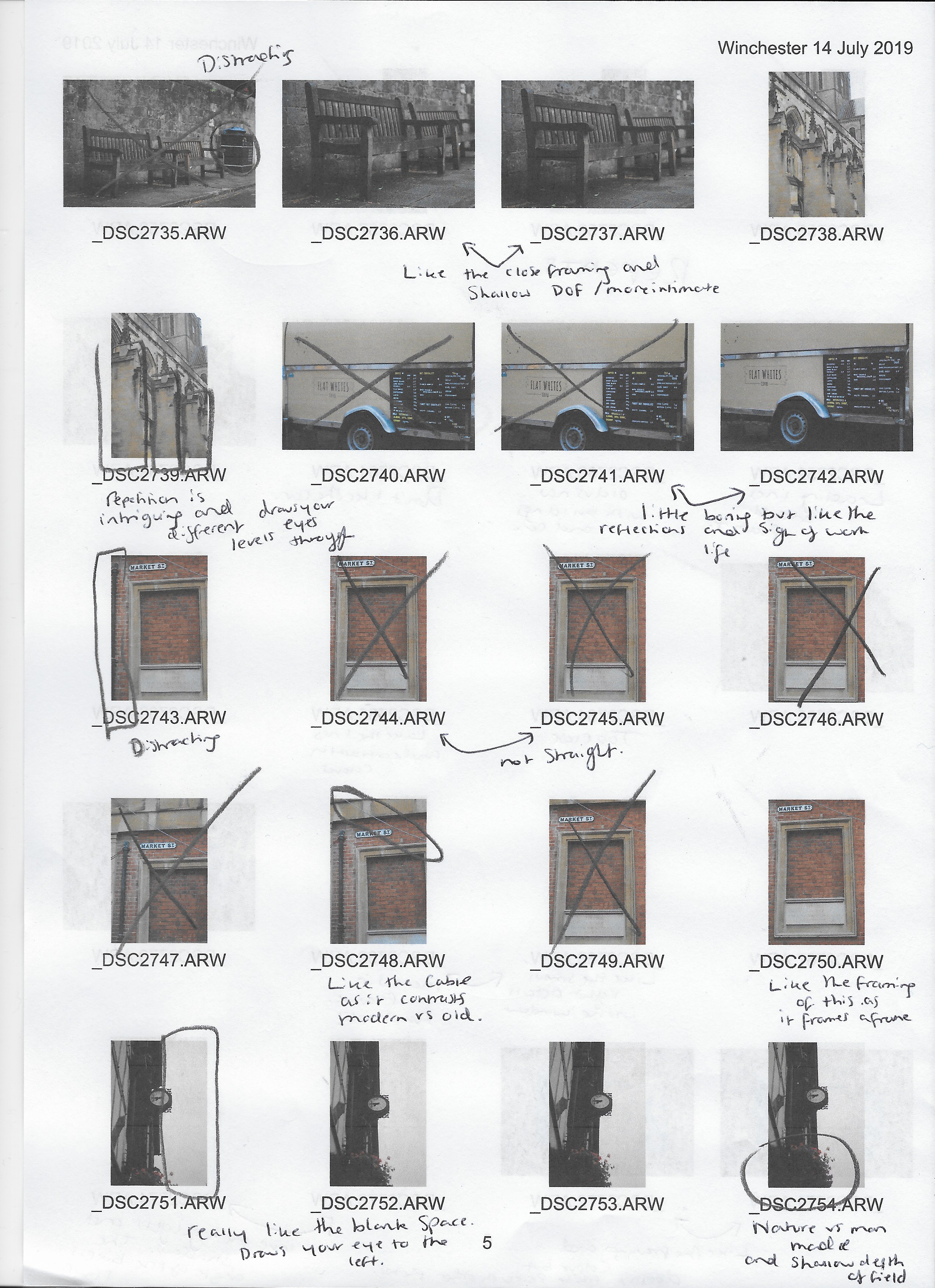
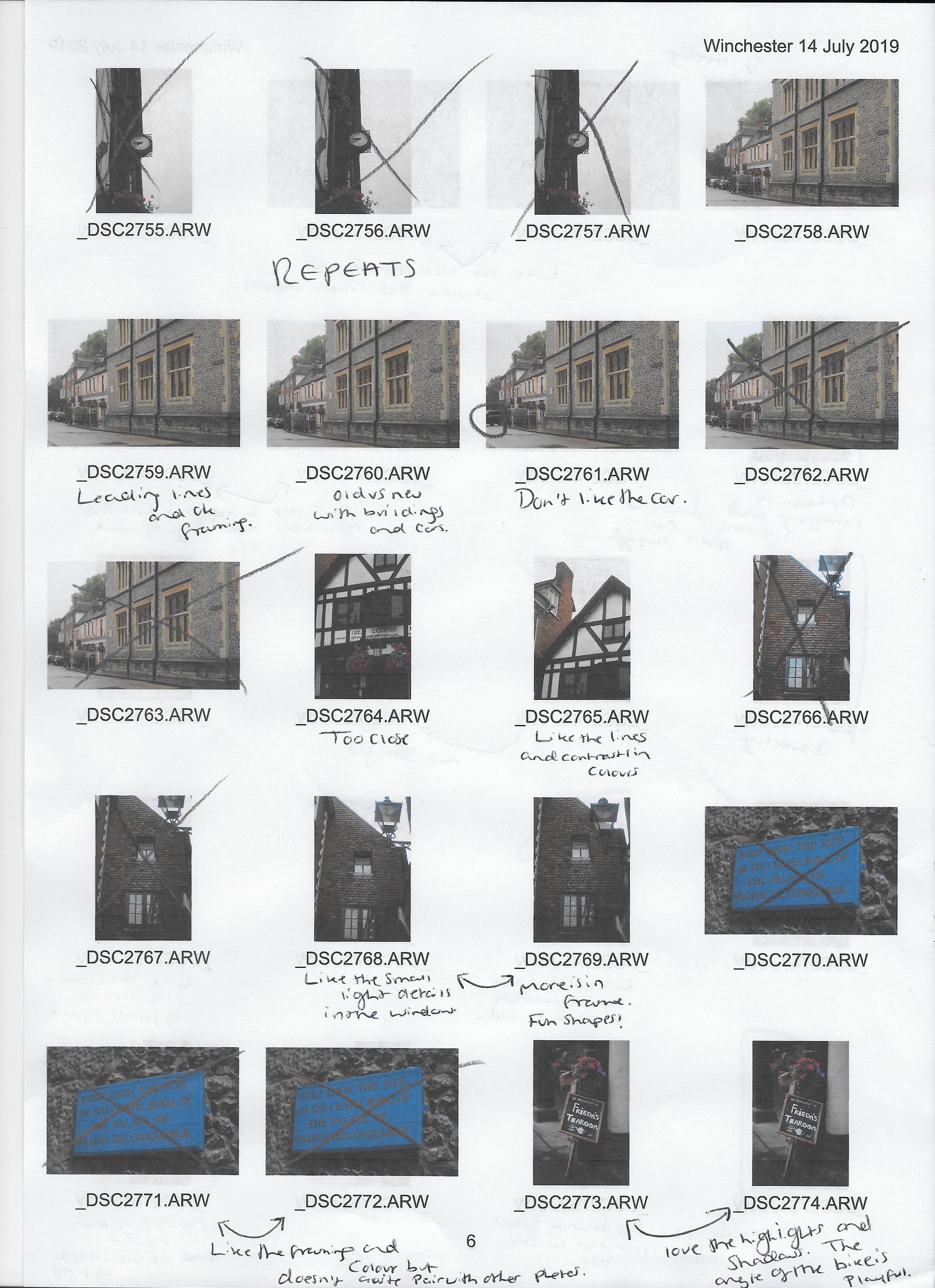
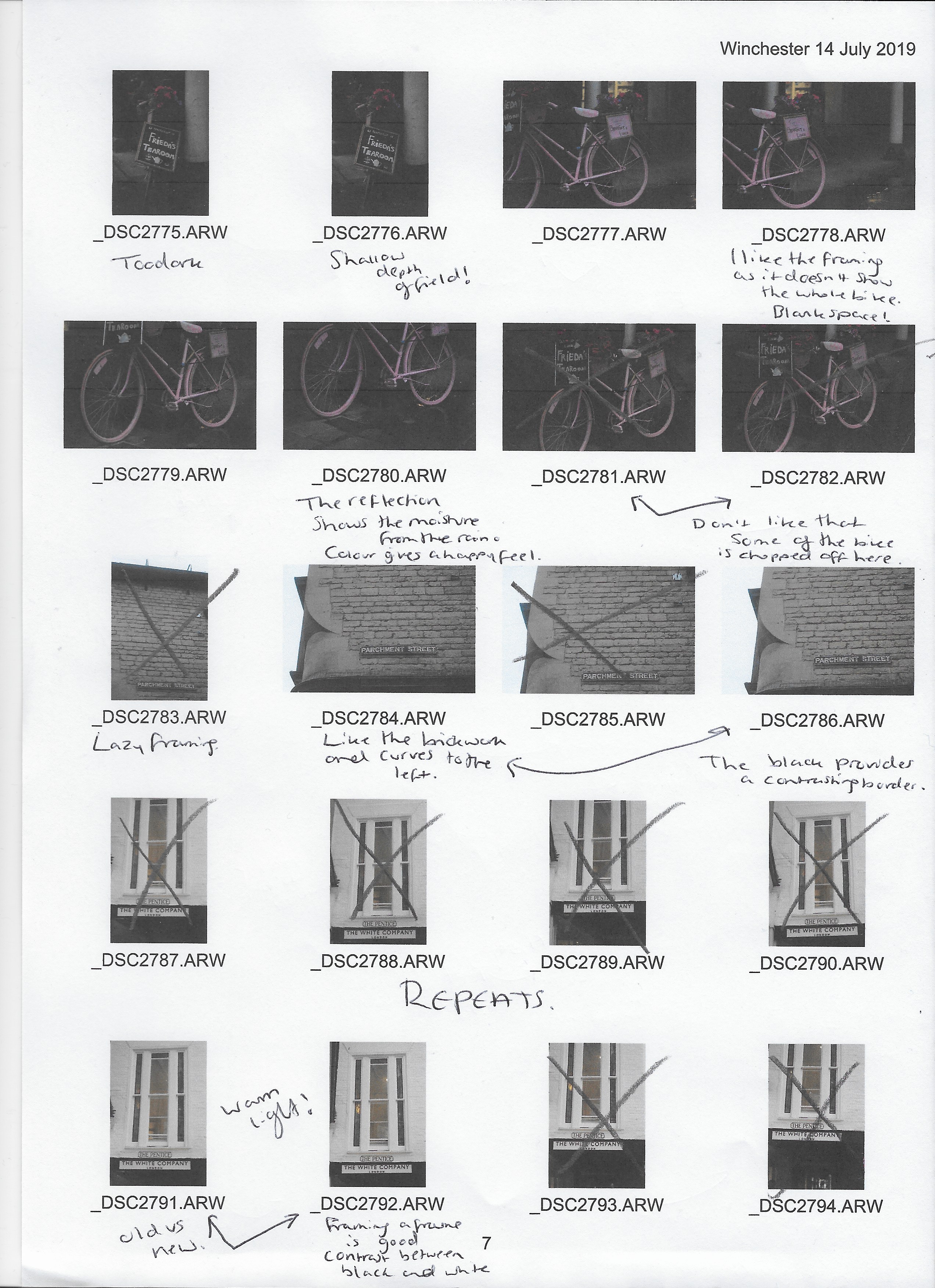
– Provided annotated contact sheets of my shoot around Winchester, noting the strengths and weaknesses of a variety of shots
– As well as a PDF version for a clearer view of the sheets.
– Noted what images worked well and drew on the techniques used, such as consistent framing, natural lighting and such.
– Covered what went well during the shoot, for instance my ability to think about my surroundings to gather a cohesive series much like Keith Arnatt, reflecting on his influence.
– Explored how the shoot went despite an unexpected burst of bad weather, enabling me to achieve the ’empty’ town shots I was looking for and supplying an added interesting atmosphere, as well as
– Stating what could be improved in the future, for example being aware of the angles images are shot at and reducing the amount of duplicate images I capture, in turn being more selective.

Contact sheets:

The following contact sheets include all of the images shot during the ‘Square Mile’ photo-shoot in Winchester, Hampshire. They’ve been annotated and scanned onto my computer, providing suggestions of how the images could’ve been stronger and/or the various elements I enjoyed.

All images were shot in RAW on my Sony A57, so I could then make the basic corrections in post-production without losing too much detail.

Notes :

What do I think of my images?

I’m pleased with how my images turned out, considering that street photography isn’t my usual area of focus and isn’t something I have explored very much. I tried my best to consider similar framing techniques and be aware of the light in my surroundings, to take inspiration from Keith Arnatt who has been part of my practitioner research. Summaries of Arnatt’s work suggest that he ‘may have planned his approach, due to the way he composed the series and stayed consistent with his choice of natural lighting and fixed camera distance’ (Powell, 2019).

What are some of my favourite images?

One of my favourite technical elements from the images shot in the high street (see Fig. 2.) is the contrast between cool, natural light from the gloomy, rainy weather and warm artificial light from the shops and cafes.
Another shot that stands out is the pigeon resting on the window ledge (see Fig. 2.), with the reflection in the glass, very subtly adding tension to the image as you don’t know at first glance what that silhouette may be.

What went well?

The variation of subjects I shot and being able to form a cohesive series purely from my surroundings, successfully achieving my aim to be flexible with what I captured in-camera while keeping the final selection process in mind so I’m not going to be left with a group of random ‘snapshots’ that don’t compliment each other.

What could be improved?

I need to work on my framing and angles a little bit more when shooting. Sometimes my photographs are intentionally taken at an unusual angle, but I also understand that some subjects are better suited with a straight horizon line, which creates more work in post-production if I don’t think about it or can’t get it right the first time round in camera.
Also, I have a habit of taking multiple images which aren’t necessarily an issue, but a few duplicates would be better than half a dozen especially when it comes to producing contact sheets. This is something I will discuss with my tutor to get their opinion on whether I need to work on this or not.

How did the shoot go?

When the shoot was planned, I stated that ‘I would like to go early in the morning so that it isn’t too crowded. This way it’ll allow me to focus on what is around me, what is happening and how I feel about it as a whole’ (Powell, 2019). However, one element not considered was unexpected weather conditions. Thankfully the rain worked in my favour as it was even quieter than expected while creating a moody, dark atmosphere which challenged me to work in conditions that I wouldn’t usually choose to shoot in, due to the inconsistency of light levels, much like direct sunlight at midday.
It was interesting to see how I worked with what I had and how the quality of the images wasn’t necessarily hindered by the weather.

What am I going to do with these images now?

After going through my images as a whole on my computer, I am going to select a few of my best images and apply very basic corrections to them, such as highlight/shadows alterations e.t.c. They will then be cut down again and paired together for the final series of photographs needed for the assignment.

References :

Powell, L. (2019) Keith Arnatt Research. [online] Available at: https://laurenpowelloca.photo.blog/2019/08/13/keith-arnatt-research/ [Accessed 20 July 2019].

Powell, L. (2019) Plan for ‘The Square Mile’. [online] Available at: https://laurenpowelloca.photo.blog/2019/08/20/plan-for-the-square-mile/ [Accessed on 20 July 2019].

List of images:

Powell, L. (2019) Page 1 (Scanned document) In possession of: Lauren Powell: Eastleigh.

Powell, L. (2019) Page 2 (Scanned document) In possession of: Lauren Powell: Eastleigh.

Powell, L. (2019) Page 3 (Scanned document) In possession of: Lauren Powell: Eastleigh.

Powell, L. (2019) Page 4 (Scanned document) In possession of: Lauren Powell: Eastleigh.

Powell, L. (2019) Page 5 (Scanned document) In possession of: Lauren Powell: Eastleigh.

Powell, L. (2019) Page 6 (Scanned document) In possession of: Lauren Powell: Eastleigh.

Powell, L. (2019) Page 7 (Scanned document) In possession of: Lauren Powell: Eastleigh.

Initial Thoughts About ‘The Square Mile’ + Mindmap

Assignment 1, Notes, Reflection on assignments, Thoughts & Ideas

Summary :

In this post I have;

– Referred to the brief.
– Noted down my initial thoughts and concerns for this assignment.
– Provided a mind-map of ideas for the Square Mile.
– My chosen subject area and the reasoning as to why it was selected.

‘The Square Mile’:

In our earliest years we know a patch of ground in detail we will never know anywhere again – a site of discovery and putting names to things – people and places – working with difference and similitude – favourite places, places to avoid – neighbours and their habits, gestures and stories – textures, smells – also of play, imagination, experiment – finding the best location for doing things – creating worlds under our own control, fantasy landscapes.’ (Professor Mike Pearson)

‘Photographers and artists have always found inspiration in their immediate location. There is a concept within Welsh culture called Y Filltir Sgwar (The Square Mile), described above by Professor Mike Pearson. It is the intimate connection between people and their childhood ‘home’ surroundings. Use this ‘sense of place’ as the starting place for your assignment.‘ (Bloomfield, 2018)

Brief:

Make a series of six to twelve photographs in response to the concept of ‘The Square Mile’. Use this as an opportunity to take a fresh and experimental look at your surroundings. You may wish to re-trace places you know very well, examining how they might have changed; or, particularly if you’re in a new environment, you may wish to use photography to explore your new surroundings and meet some of the people around you.’ (Bloomfield, 2018).

Initial thoughts about the concept:

– So far I am very intrigued about this concept, as my photography is usually inspired by personal experiences, past and present.

– It will be interesting to see how I can explore these ideas, as well as pushing myself to portray them in a different manner and style to what I am used to.

– Quite anxious to start, but also eager to learn and grow.

Initial plans for the brief:

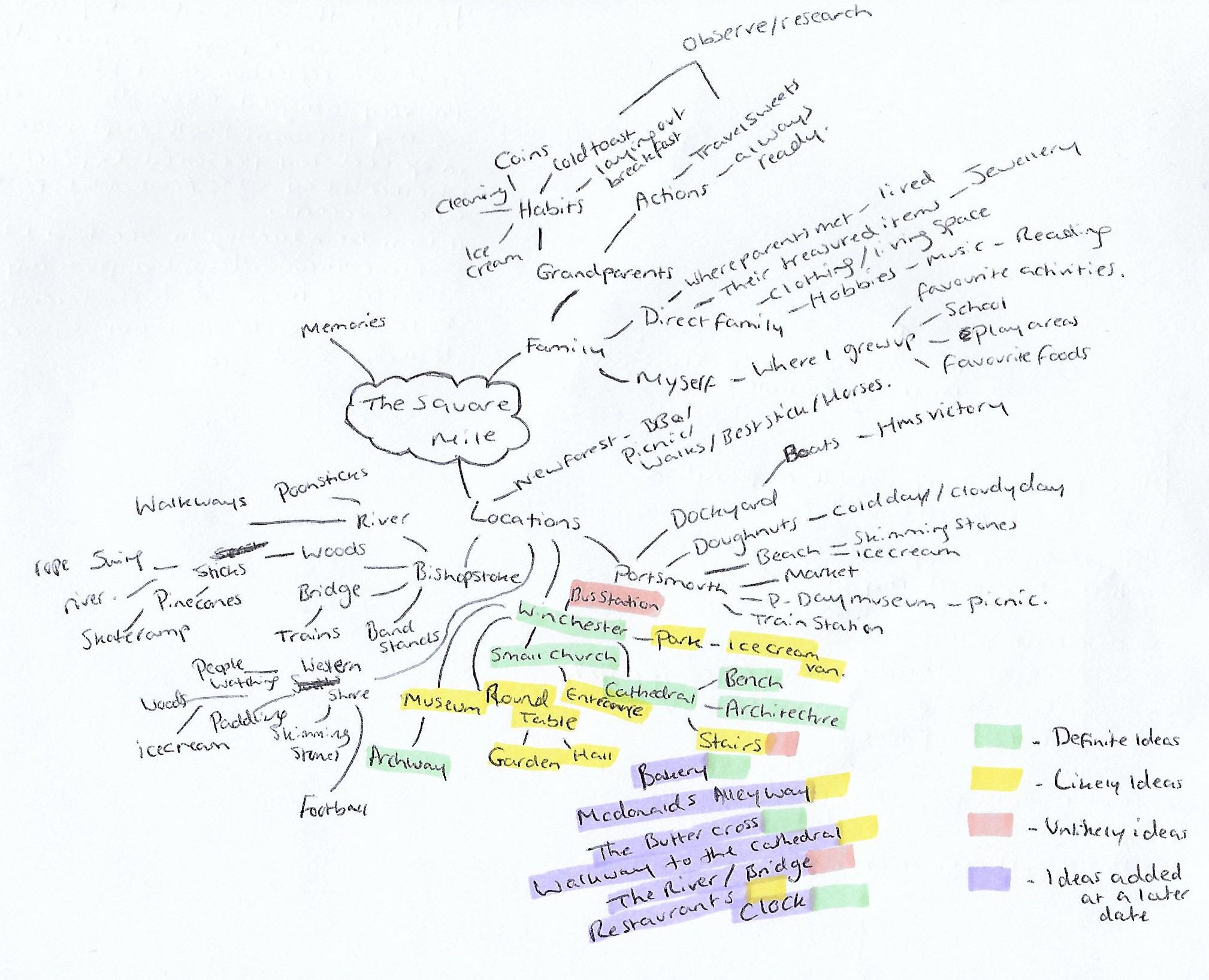
– Will expand with a mind-map/mood-board? (See Fig. 1)

– Refer to past college project – ‘My Britain’ which explored my childhood. Potentially take ideas from this and work on them differently?

– Explore childhood memories/areas/people?

– Significant buildings/objects/symbols?

– Explore the family tree?

– Photos of people in my chosen area that aren’t linked with my memories or are related to me?

Fig. 1. Mindmap (2019)

Reflection on mind-map

– Pleased with initial ideas and think I already know the route I want to go down.
– The route will be decided after further research and shoot planning.
– Mind-map could be tidier and clearer in the future.
– Maybe use different coloured pens for different areas or subject arms?

I’ve decided to choose ‘Winchester’ as my area of choice mainly due to the family links it holds and the memories experienced here. It isn’t my immediate location as I wasn’t born there, nor do I live there, however, it is a local city that I am fairly familiar with and have grown up visiting multiple times, therefore I felt as if it was significant.
The buildings/locations/objects have been listed, instead of the memories linked with them, hopefully allowing me to view the town with a fresh set of eyes.

Highlighting the chosen area and the things I want to visit while I’m there, make it a lot clearer for those viewing it as well as myself, so I will continue to do this in the future.
Making a key for different colours helps me prioritise what I want to explore in more detail and the less important ideas.

*Purple ideas were added on the 12th August for future reference.

References :

Bloomfield, R., 2018. Photography 1: Expressing your Vision. 4th ed. [pdf] Barnsley: OCA, p.14. Available at: https://www.oca-student.com/course/photography-1-expressing-your-vision [Accessed 12 August 2019].

List of images :

Figure. 1. Powell, L. (2019) Mindmap [scanned document] In possession of: Lauren Powell: Eastleigh.