‘Photography is simple’ was an open brief that allowed me to explore this title in any way I wanted across ten images that combined the complexity of an instant camera, flexibility within digital art and the intricate nature of a human body. Photography is as simple as the human body and its elements, so I wanted to challenge this statement.
The final images for this assignment were ten digital photographs of 9 Instax mini prints I shot and chose for this project. I combined the limitation of light choices available on the Instax Mini-8 with the wide range of shutter speeds offered by my Sony A57. Correct exposure helped me document crisp, clear digital images to show how important lighting is in art. Framing the prints correctly so that they were clear to view online was another technique to consider.
Mixing digital and tactile media has evolved over the years, making photography seem more straightforward than it is. ‘It can be so easy to edit our work in the modern-day in comparison to the more traditional film photography that can take hours or days’ (Powell, 2021). Keeping most of the shots unedited was a way to show that filters or post-processing is not always needed or necessary to create a strong image. If the subject is powerful enough with the composition, lighting and concept, that may be sufficient. I edited ‘Photography is as simple as the human body’ with a smoke overlay to juxtapose the previous nine images and change something that could have been left alone.
Presenting the collection as a set of 9 individual images in addition to a group helped me explain how pairing and selection can shape a photographic project or art piece. The responsibility is much higher for the photographer or editor to make the right choice when suggesting contexts and concepts to an audience.
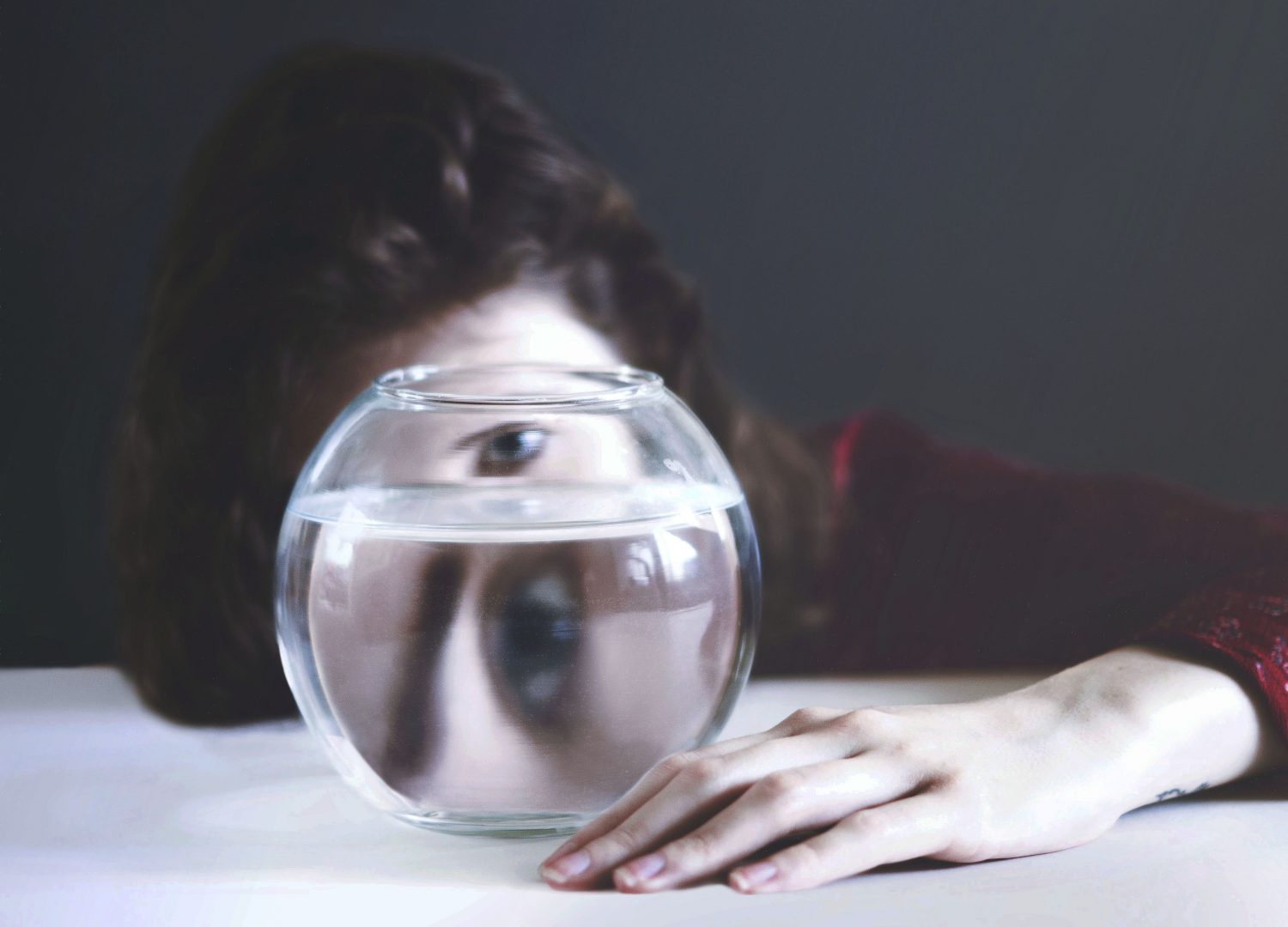
Ziqian Liu is a Shanghai-based self-portrait photographer who integrates nature and the human body to show the close connection with other organisms. ‘In her work, the image in the mirror represents the idealized world she wishes to live in,’ (ARTPIL, 2019), cropping an object warps expectations. Photographing the human body in such an intimate way helps us understand how beautiful the body is and how private we keep it from others.
I took inspiration from Liu by taking closely framed images of my own body in a bed to inject the sense of familiarity, soft aesthetic and personal touch she shows throughout her work. This intimate approach is also explored in ‘Normal People’ (2020), ‘focusing on the parts of the body that make us human or add personality, something many of us can relate to’ (Powell, 2021). Another visual technique I took influence from Liu was her choice of monochrome colour palettes. Fewer colours prevent distraction, drawing focus towards the subject chosen by the photographer.
Taking pictures of various body parts while removing social codes such as facial expressions or identity helped me focus on the skin, flaws and poses used. We as human beings are highly critical of our bodies, so photographing it in such a close, intimate way offers the viewer to observe what is in front of them in more detail without previous judgement. An approach such as that may influence others to connect with their bodies and admire its versatility.
Being minimalist with the details, tones and subjects used kept the images coherent and ‘simple’ in terms of composition. This technique allows an audience to connect with one other human over the period they view the work, instead of being preoccupied with many people, objects or other influences as we tend to be across media. ‘With minimalism, no attempt is made to represent an outside reality, the artist wants the viewer to respond only to what is in front of them’ (Tate, 2017). Whether the viewer sees themselves, someone they love or hate in these pieces, it is getting them to think about the concept.
Physical prints wear down over time if they are not taken care of properly; they can gather scratches, fade through intense sunlight or gather dust, so the grainy overlay used in Photography is as simple as the human body aided in reflecting that too. Digital images are not affected by the physical elements but by viruses or accidental deletion. Everything about photography seems so simple in modern times; the process is the same technical wise, despite the fact the images look crisp and take less time to capture than traditional approaches.
Photography is simple 1 was not easy to shoot despite the process being as simple as turning the light dial to Hi-Key and clicking the shutter button. I could not see what the viewfinder was picking up, nor did I know how close the lens was to my body beyond judging with the naked eye. How the flash would affect the final image was not something I would know until after the image was developed, similarly with the framing and positioning of the camera. All of the images taken without the help of the viewfinder made the photographing process much more complicated and riskier but exciting at the same time. Photography is simple 7 is an example of how unexpected images can be a fine line between a great and a failed image. The whites of the eyes and reflection from the cheekbone created a sense of mystery and imagination for viewers in what could have been a plain, underexposed print.
The assignment was challenging yet exciting. I was able to show how photography consists of many elements that could not possibly be classed as simple once you learn how a photograph manifests. Instant photography is a risk as you are limited to a few films and little information about the end product before development. Digital photography is more straightforward as we can delete and edit, but the correct techniques are needed to capture a successful piece.
References
ARTPIL. (2019) Ziqian Liu [online] Available at: https://artpil.com/ziqian-liu/ [Accessed 25 June 2021].
Normal People: Episode 5 (2020) [Television programme] BBC iPlayer 26/04/2020. At: https://www.bbc.co.uk/iplayer/episode/p089j889/normal-people-series-1-episode-5?seriesId=p089g8vv (Accessed 24/08/2021).
Powell, L. (2021) Final shoot plan + images [online] Available at: https://laurenpowelloca.photo.blog/2021/06/21/final-shoot-plan-images/ [Accessed 25 June 2021].
Powell, L. (2021) Research for ‘Photography is simple’ + Mindmap [online] Available at: https://laurenpowelloca.photo.blog/2021/06/14/research-for-photography-is-simple-mindmap/ [Accessed 24th August 2021).
Tate. (2017) Minimalism – Art Term [online] Available at: https://www.tate.org.uk/art/art-terms/m/minimalism [Accessed 25 June 2021].
 Lauren Powell OCA