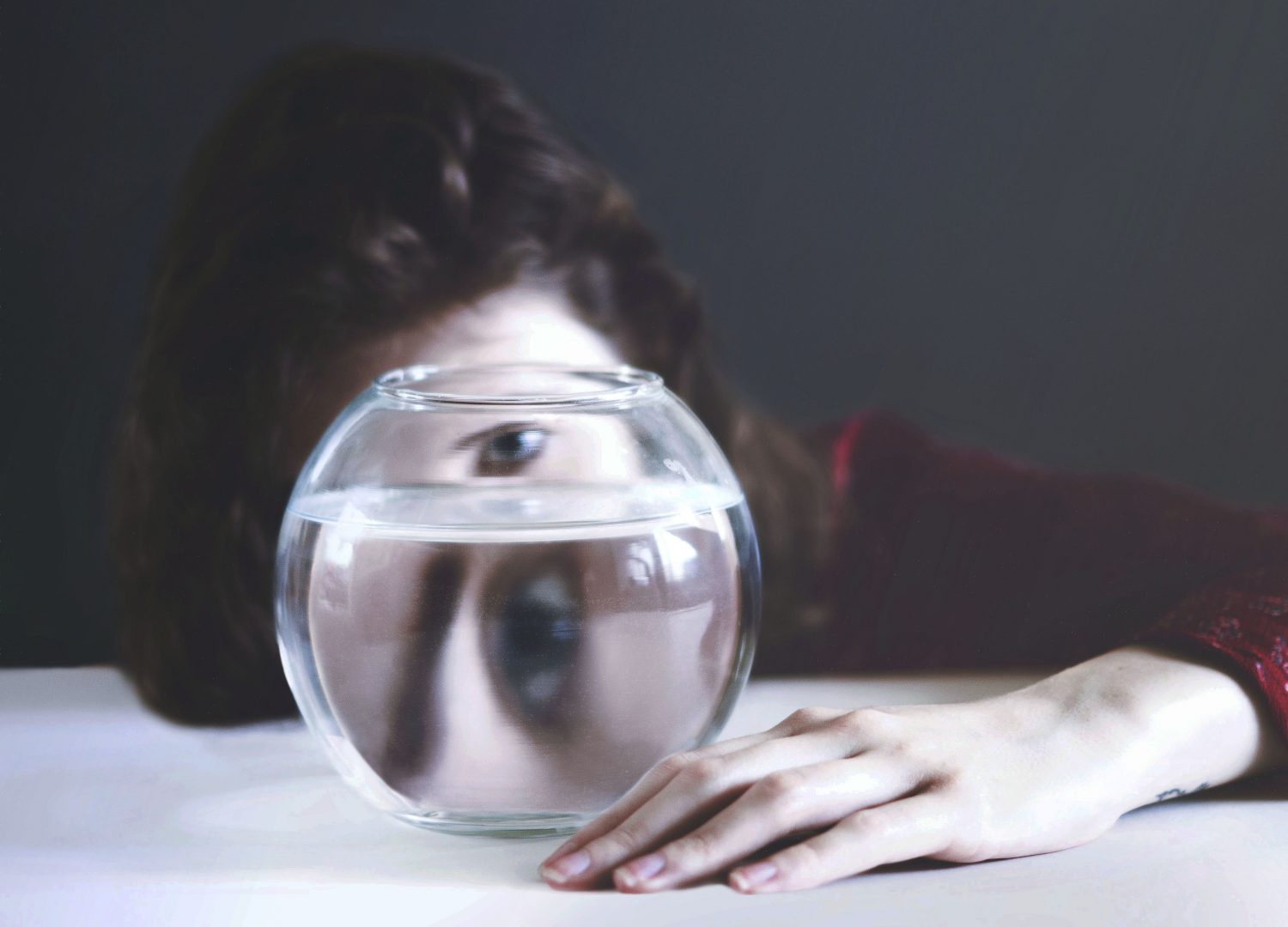
To recognize the assignments with the most compelling outcomes I had to re-visit and review each from a cold viewpoint. Detaching from your work and looking at it as a critic isn’t an easy task, but I am aware this is necessary to select the best examples for assessment. It was fascinating to do as it has helped me see how I’ve developed across this unit, both creatively and analytically.
Assignment 2 – ‘Collection’.
‘Collection’ felt like the first proper assignment for this unit as there were exercises that took place beforehand, providing me with more knowledge and research to take forward.
The brief required us to choose one of three topics, build on that chosen word and produce a set of harmonious images in terms of concept but visually different. Deciding upon the ‘things’ route allowed me to explore items we use daily, similar to Sam Oster and Barry Rosenthal that used electrical and plastic objects in their works.
Assignment 2 was the first time I gathered inspiration from practitioners from a technical, visual and presentational standpoint, making my work effective.
Gathering information from the general public and collecting the items mentioned enabled me to produce a coherent typology of images exploring the everyday necessities we use. While the subjects were different, shooting in black and white, using square framing and a plain background, enabled consistency to flow through the set.
I have reworked some elements of the assignment to reflect upon my tutor’s feedback: https://laurenpowelloca.photo.blog/category/assignments/assignment-2/
Assignment 4 – ‘Languages of light’.
Following a troublesome experience with my third assignment, ‘Languages of light’ was my favourite project out of this unit. Testing the different choices of light used within the photographic world, building knowledge on how to use them effectively enabled me to push myself beyond my comfort zone by using controlled studio lighting.
Branching out from natural light and producing powerful images while using an LED light pad helped me appreciate studio lighting and the artist’s ability to manipulate it to your benefit.
Taking influence from film negatives, lightbox photography, and Andy Ellisons MRI scans of fruits and vegetables helped build my technical knowledge within the camera and photoshop. My compositions are coherent, full of contrast, detail and are innovative in nature.
Assignment 4 outcome rework: https://laurenpowelloca.photo.blog/category/assignments/assignment-4/
Assignment 5 – ‘Photography is simple’.
I am glad that my final assignment is one that I feel could be listed as one of my three best outcomes, as should be expected after a whole unit of learning and growing.
‘Photography is simple’ enabled me to be flexible in terms of topic and approach; something that I enjoy as a photographer is challenging a subject rather than backing the statement up kept this brief exciting. Discovering Ziqian Liu encouraged me to shoot self-portraits with an instant camera to present how difficult photography can be from a compositional point or technical angle.
Conceptually my images are intriguing as they subtly link back to the argument that photography is far from simple, nor is the human body. Mixing media, using post-production to show the evolution of photography and how quickly images take to capture in the modern-day assisted me in discussing how easy it can be to believe photography is simple.
My reworked outcome for assignment 5 is here: https://laurenpowelloca.photo.blog/category/assignments/assignment-5/.
References:
Powell, L. (2021) Collection [online] Available at: https://laurenpowelloca.photo.blog/category/assignments/assignment-2/ [Accessed 24th August 2021].
Powell, L. (2021) Languages of Light [online] Available at: https://laurenpowelloca.photo.blog/category/assignments/assignment-4/ [Accessed 24 August 2021].
Powell, L. (2021) Photography is simple [online] Available at: https://laurenpowelloca.photo.blog/category/assignments/assignment-5/ [Accessed 24 August 2021].
Month: August 2021
Assignment 5 – Photography is simple – Reworked
Assignment 5‘Photography is simple’ was an open brief that allowed me to explore this title in any way I wanted across ten images that combined the complexity of an instant camera, flexibility within digital art and the intricate nature of a human body. Photography is as simple as the human body and its elements, so I wanted to challenge this statement.
The final images for this assignment were ten digital photographs of 9 Instax mini prints I shot and chose for this project. I combined the limitation of light choices available on the Instax Mini-8 with the wide range of shutter speeds offered by my Sony A57. Correct exposure helped me document crisp, clear digital images to show how important lighting is in art. Framing the prints correctly so that they were clear to view online was another technique to consider.
Mixing digital and tactile media has evolved over the years, making photography seem more straightforward than it is. ‘It can be so easy to edit our work in the modern-day in comparison to the more traditional film photography that can take hours or days’ (Powell, 2021). Keeping most of the shots unedited was a way to show that filters or post-processing is not always needed or necessary to create a strong image. If the subject is powerful enough with the composition, lighting and concept, that may be sufficient. I edited ‘Photography is as simple as the human body’ with a smoke overlay to juxtapose the previous nine images and change something that could have been left alone.
Presenting the collection as a set of 9 individual images in addition to a group helped me explain how pairing and selection can shape a photographic project or art piece. The responsibility is much higher for the photographer or editor to make the right choice when suggesting contexts and concepts to an audience.
Ziqian Liu is a Shanghai-based self-portrait photographer who integrates nature and the human body to show the close connection with other organisms. ‘In her work, the image in the mirror represents the idealized world she wishes to live in,’ (ARTPIL, 2019), cropping an object warps expectations. Photographing the human body in such an intimate way helps us understand how beautiful the body is and how private we keep it from others.
I took inspiration from Liu by taking closely framed images of my own body in a bed to inject the sense of familiarity, soft aesthetic and personal touch she shows throughout her work. This intimate approach is also explored in ‘Normal People’ (2020), ‘focusing on the parts of the body that make us human or add personality, something many of us can relate to’ (Powell, 2021). Another visual technique I took influence from Liu was her choice of monochrome colour palettes. Fewer colours prevent distraction, drawing focus towards the subject chosen by the photographer.
Taking pictures of various body parts while removing social codes such as facial expressions or identity helped me focus on the skin, flaws and poses used. We as human beings are highly critical of our bodies, so photographing it in such a close, intimate way offers the viewer to observe what is in front of them in more detail without previous judgement. An approach such as that may influence others to connect with their bodies and admire its versatility.
Being minimalist with the details, tones and subjects used kept the images coherent and ‘simple’ in terms of composition. This technique allows an audience to connect with one other human over the period they view the work, instead of being preoccupied with many people, objects or other influences as we tend to be across media. ‘With minimalism, no attempt is made to represent an outside reality, the artist wants the viewer to respond only to what is in front of them’ (Tate, 2017). Whether the viewer sees themselves, someone they love or hate in these pieces, it is getting them to think about the concept.
Physical prints wear down over time if they are not taken care of properly; they can gather scratches, fade through intense sunlight or gather dust, so the grainy overlay used in Photography is as simple as the human body aided in reflecting that too. Digital images are not affected by the physical elements but by viruses or accidental deletion. Everything about photography seems so simple in modern times; the process is the same technical wise, despite the fact the images look crisp and take less time to capture than traditional approaches.
Photography is simple 1 was not easy to shoot despite the process being as simple as turning the light dial to Hi-Key and clicking the shutter button. I could not see what the viewfinder was picking up, nor did I know how close the lens was to my body beyond judging with the naked eye. How the flash would affect the final image was not something I would know until after the image was developed, similarly with the framing and positioning of the camera. All of the images taken without the help of the viewfinder made the photographing process much more complicated and riskier but exciting at the same time. Photography is simple 7 is an example of how unexpected images can be a fine line between a great and a failed image. The whites of the eyes and reflection from the cheekbone created a sense of mystery and imagination for viewers in what could have been a plain, underexposed print.
The assignment was challenging yet exciting. I was able to show how photography consists of many elements that could not possibly be classed as simple once you learn how a photograph manifests. Instant photography is a risk as you are limited to a few films and little information about the end product before development. Digital photography is more straightforward as we can delete and edit, but the correct techniques are needed to capture a successful piece.
References
ARTPIL. (2019) Ziqian Liu [online] Available at: https://artpil.com/ziqian-liu/ [Accessed 25 June 2021].
Normal People: Episode 5 (2020) [Television programme] BBC iPlayer 26/04/2020. At: https://www.bbc.co.uk/iplayer/episode/p089j889/normal-people-series-1-episode-5?seriesId=p089g8vv (Accessed 24/08/2021).
Powell, L. (2021) Final shoot plan + images [online] Available at: https://laurenpowelloca.photo.blog/2021/06/21/final-shoot-plan-images/ [Accessed 25 June 2021].
Powell, L. (2021) Research for ‘Photography is simple’ + Mindmap [online] Available at: https://laurenpowelloca.photo.blog/2021/06/14/research-for-photography-is-simple-mindmap/ [Accessed 24th August 2021).
Tate. (2017) Minimalism – Art Term [online] Available at: https://www.tate.org.uk/art/art-terms/m/minimalism [Accessed 25 June 2021].
Assignment 4 – Languages of Light – Reworked
Assignment 4For ‘Languages of Light‘ we had to revisit an exercise from part four and develop it into a formal piece. I explored natural light, artificial light or controlled light, from which I chose the last. Photographers can use the light provided to them at the time or take it into their own hands to get the shadows and highlights they require.
The final images for my assignment were black and white, 360-degree mirrored images of the cross-sections of fruit and vegetables. I took the techniques from exercise 4.3, ‘Egg or stone’, lit the subjects from underneath with a light pad to create a highly contrasted yet 2D image full of detail to prevent the work from being flat and lifeless.
Doug McKinlay made a tutorial on capturing slices of fruit, vegetables, flowers and other translucent items with a lightbox and macro lens. Overexposing the images by one or two stops prevents the background from being dull and grey (McKinlay, 2017), enhancing the bright whites and colours of the subject. McKinlay shot his images without a tripod by bumping the ISO up enough to allow for a fast shutter speed, avoiding camera shake. I intended to use a tripod for my photoshoot to prevent any blur, yet, the lens was not close enough to the slices, forcing me to go handheld and use the advice from the YouTube tutorial.
Andy Ellison is an MRI technician who has produced multiple scans of the cross-sections of fruit and vegetables, following an MRI machine settings test with an orange slice (Insider, 2013). He was so impressed by the results that he created an entire series of images from fruits and vegetables, both static and animated Gifs of the scans. The scans inspired me to explore the idea of black and white film negatives, but on a much larger scale. Film negatives are the opposite of a fully developed print, ghostly yet beautiful. The denser areas are white or light grey, while exposed areas are dark grey or black, like medical scans.
I combined ‘the use of lightbox and macro photography technique from McKinlay’s tutorial, Ellisons MRI scans and presenting them as individual prints like Gomez’ lumen prints; while keeping it unique’ (Powell, 2021). My SONY A57 settings were manual, with an ISO of 1600, aperture of F/2.8., a range of shutter speeds depending on the subject and the light intensity.
The light source for the photoshoot was an A4 daylight LED pad, set to the highest setting and covered by a sheet of white paper to block out the dots on the surface. Overexposing the image like McKinlay suggested prevented the background from going grey and dulling the slices of food. Shooting from above flattened the subject while keeping the shadows and highlights balanced. Using a shallow depth of field caused the camera to focus on the areas closer to the lens. As a result, it created a soft eerie effect on some of the images when converted to black and white. The macro lens allowed me to examine the fruit and vegetables more intimately, enhancing the small details within the flesh and how they are grown. Seeing the unseen is explored in Photography and the optical unconscious (Sliwinski and Smith, 2017). Walter Benjamin observes Blossfeldt’s photograph of horsetail, ‘saw ancient Greek columns; saxifrage seemed to reveal miniature cathedral windows’, a privilege we get to experience through the camera.
Using photoshop to invert the images and convert them to black and white using a B&W filter and gradient map allowed me to replicate the ‘negative film’ aesthetic of an MRI. Conceptual photographer Richard Mosse has used Aerochrome infrared film ‘to capture the grass and trees and soldiers’ uniforms in vivid hues of lavender, crimson and pink’ (Documentary Deconstruction, n.d.), enabling the viewer to see the unseen and discover something new. Enlarging the canvas and duplicating the individual shots to create a 360-degree symmetrical piece intensified the details and shapes within the photographs selected from my shoot.
The final images are complex, highly contrasted, full of texture and shapes, much like an MRI scan or x-ray would be of the body. The context for these pieces is limited, like Hermann Rorschach’s inkblot tests where people describe what they see within abstract art. Each response is different depending on the person, making the art more captivating.
Presenting the photographs as strong individuals allows each piece to be appreciated, rather than a pair of average images complementing one another to create a set. The vertical order of the pictures enables the collection to become an impactful typology of ‘scans’ from head to toe.
The most compelling images for me are Scan 1 and Scan 3, ripe with texture, contrast, shapes and details. They look like flesh, with the addition of tougher and denser areas throughout, balancing the composition as a result. Heavy black areas represent the bright white areas created by the light pad placed underneath the translucent slices. Intense white areas show the thicker and less exposed elements within the fruits and vegetable makeup. Even though the photographs are flat and two-dimensional, the artificial arrangement of the images creates a complex and exciting art piece from what were individual shots.
Taking images of the fruits and vegetables so closely filled the frame and included little background, causing some of the photographs to be too bright when inverted and providing little or no dark areas to frame the subject like most of my final pieces. Making sure the arrangements are balanced before pressing the shutter, resulting in a better finish. Taking a little more time to compose is something I would consider doing more if I were to do this shoot again.
This assignment has been fascinating to explore as I pushed myself out of a comfort zone, experimented with controlled light and discovered the incredible results it could achieve. Every light source is just as good as the other if you know how to use each one efficiently.
References:
McKinlay, D (2017) Light Box Art: Stay Focused with Doug McKinlay [Video] Available at: https://www.youtube.com/watch?v=kWiL5N-b4YM (Accessed 28th May 2021).
n.d. Documentary Deconstruction. [ebook] p.2. Available at: <https://documentcloud.adobe.com/link/track?uri=urn:aaid:scds:US:14443c9d-386f-4d73-a69a-e2cded899386> [Accessed 24 August 2021].
Powell, L (2021) Further research and shoot plan [Blog post] Available at: (Accessed 7th June 2021).
Sliwinski, S. and Smith, S., 2017. Photography and the optical unconscious. United States of America: Duke University Press, p.5.
Assignment 2 – Collection – Reworked
Assignment 2For ‘Collection’ is created a typology of the necessities of life, everyday objects used by many across the world and the items we take for granted or consider unnecessary. What may have been compulsory a few decades ago may not be the same in modern-day life.
Creating an online survey and gathering anonymous responses about ‘What everyday items do you consider are a necessity? (Something you need) ‘(Powell, 2020), enabled me to be inspired by outside opinions rather than solely relying on my thoughts. These answers meant that I could collect various items, forming groups when shooting my imagery.
Using everyday items to create art can be seen through the works of Sam Oster who used ‘medium format black and white film’ (The Loop, 2019). She defines and enhances the minute details and robust form of the irons in Apparatus Electralia Planus with the contrasting shadows and highlights. Oster’s work is inspired by Becher’s typologies, a grid of square cabinets, splitting the composition into sections without taking multiple shots. The centralisation of objects and using negative space encouraged me to create my minimalist typologies.
Taking minimalism into consideration Barry Rosenthal ‘uses monochrome backgrounds and uses the collection to add colour and depth’ (Powell, 2020), organising the collected items into various groups before shooting, such as blue in Blue Ocean. Plain backgrounds allow the viewer to focus on the subject rather than what it is placed on while enhancing the shadows cast by backlighting, allowing me to avoid flattening the composition.
Trialling a selection of techniques with my SONY A57, such as black and white filters, using long and short focal lengths, lighting temperatures solidified the direction I wanted to go in for my final shoot by analysing the strengths and weaknesses in each shot. Using colour did not enhance the details within the subjects as much as using the high contrast B&W camera setting. This filter had more of an impact when it came to the depth and texture of the composition.
A focal length of 35mm was the most suitable to allow for a reasonable amount of negative space to frame the plates and be balanced enough, so the subjects were not too small or too suffocated in the shot. Cool artificial lighting intensified the highlights and shadows, more so than neutral or warm light hence my decision to backlight with a cooler temperature to enhance the 3D forms. Tonal variation prevented the items from being lost in blocks of dark or light, influencing me to choose a light and mid-ranged blue plate and select which tone was better for each item and their details. Combining a narrow aperture of F14 and a tripod allowed the image to be sharp, reducing distraction by selective focus or motion blur and keeping the framing and angles consistent.
After analysing the final selection I can see that the typology is visually strong due to the intense highlights and shadows, along with various textures that provide the image surface with a soft, hard or rough feel. A balanced composition created by the consistent framing, choice of background and the arrangement of subjects pull the typology together as a whole, as they all bleed into one another. Deciding to use cool artificial lighting evenly lit the frame, creating definition in the shot, which I found did not work as successfully with natural or warmer lighting due to the inconsistency and softness.
I am pleased with the contextual and conceptual elements hinted at in my photographs as I have stated the ‘things’ are ‘necessary items in … daily life’ (Powell, 2020), however, everyone’s view on what is necessary is different, as a result, may tease out the idea of privilege, luxury, political opinions or no message at all. The concept is broad enough to direct the viewer in entirely different paths without being influenced by too much context that could affect how an image is perceived.
Pushing myself out of my comfort zone, taking more inspiration from artist research and experimenting with various techniques allowed me to complete this assignment successfully.
If I were to improve this assignment in the future, I would try to gather more responses to see how many unique items could be listed and be more thorough with my arrangement to avoid post-production to get rid of preventable marks. Typologies are new to me; therefore, it would be an intriguing area to explore in further detail.
References:
Bloomfield, R. (2018) Photography 1 Expressing Your Vision Barnsley : OCA
Lauren Powell OCA. (2020) ‘Initial thoughts about ‘Collection’ + mind-map’. [Online] At: https://laurenpowelloca.photo.blog/2020/02/11/initial-thoughts-about-collection-mind-map/ (Accessed on 28 February 2020).
Lauren Powell OCA. (2020) ‘Collections in photography – Artist research + test shoot plan’. [Online] At: https://laurenpowelloca.photo.blog/2020/02/17/collections-in-photography-artist-research-test-shoot-plan/ (Accessed on 28 February 2020).
Lauren Powell OCA. (2020) ‘Community Survey + Personal Research Results for ‘Things’. [Online] At: https://laurenpowelloca.photo.blog/2020/02/13/community-survey-personal-research-results-for-things/ (Accessed on 28 February 2020).Oster, S. (2009) Apparatus Electralia Planus [Photograph] At: https://www.theloop.com.au/project/silvertrace/portfolio/short-circuit/17421 (Accessed on 28 February 2020).
Powell, L. (2020) ‘Necessary Everyday Items’. [Online] At: https://www.surveymonkey.com/r/KWWFQGM (Accessed on 28 February 2020).
Rosenthal, B. (2013) Blue Ocean [Online] At: http://barryrosenthal.com/found-in-nature/single-gallery/16729872 (Accessed on 28 February 2020).
The Loop. (2019) ‘Short Circuit – Sam Oster Portfolio – The Loop’. [Online] At: https://www.theloop.com.au/project/silvertrace/portfolio/short-circuit/17421 (Accessed on 13 February 2020).
 Lauren Powell OCA