Summary:
In this post I;
– Included the research point brief and my response to it by referencing the text throughout.
– Inserted the exercise brief for ‘Homage’.
– Wrote a short paragraph about Carol Sharp and how she connects with her subjects while photographing
– Before comparing one of her images with my own as a homage
– Alongside a brief analysis of my response and the context
– Inserted a couple of extra images to show how I paid homage to Sharp’s work
– Included a past image from my archive, with a short analysis of the message and context behind it
– Before reflecting on what this exercise taught me
Research
‘For a short introduction to how context operates in relation to photographs, read Terry Barrett’s essay ‘Photographs and Context’: terrybarrettosu.com/wp-content/uploads/2017/08/B_PhotAndCont_97.pdf [accessed 25/01/18]. Barrett suggests that we interpret pictures according to three different types of information: information in the picture, information surrounding the picture and information about the way the picture was made. He calls these the internal context, the external context and the original context‘ (Bloomfield, 2018).
Images can be incredibly flexible in terms of context, based on the environment, the subjects within the frame, the colours or lack thereof. However, the context of a photograph can alter depending on whom it reaches. For example, in Terry Barrett’s Photographs and Contexts (Barrett, 1985) a photograph of a pair sat outside a bar taken by Robert Doisneau was given different contexts; to Gisele Freund’s knowledge, up to five times by various magazines, brochures and galleries. A few examples of this consist of accusations of sex work, alcohol abuse and seduction (Barrett, 1985).
The initial context behind Doisneau’s shot was simply a moment of charm as he enjoyed cafe’s and seeing the couple together was enjoyable.
‘Texts that surround the photograph eliminate any residual ambiguity’ (Barrett, 1985). If we were to put a picture of a beef burger on the front of a vegan magazine, it would probably cause some shock before going on to talk about the environmental effects and immoral behaviour of the industry, however, on the front of a restaurant menu, people would be enticed and seduced by how good it looked.
Images are used for other things, different to their initial intent. Pictures of lungs on a cigarette packet are used to encourage smokers to stop smoking before too much damage occurs but are initially used for scientific and medical research.
The placement of an image is another factor to consider for context. The display of a picture of people in poverty may glorify the situation for the benefit of art and a famous gallery rather than portraying the horrific effect on lives in a place you would expect to see such circumstances.
No matter where you are in the world or what language you speak, photography can be a source of communication for some people (Sander, 1978 referenced in Barrett, 1985:114), whether an artist is documenting their mental state or an audience expressing feeling by sending a photographic meme. Despite the global interaction with these photographs, they may not provide the same message to one person in the way it did to another. Context is still subjective depending on the viewer.
Internal context includes the image, title, date and maker. External context would be the presentational environment, so where it’s displayed. The original context is the ‘causal environment’, in other terms, the physical and psychological elements available to the photographer at the time of capture (Barrett, 1985).
To understand the context as an audience, we need to look deeper and consider everything, including what the photographer may have been doing or thinking at the time. These things combined will help us appreciate the make-up of the image a lot more.
Brief:
‘Select an image by any photographer of your choice and take a photograph in response to it. You can respond in any way you like to the whole image or to just a part of it, but you must make explicit in your notes what it is that you’re responding to. Is it a stylistic device such as John Davies’ high viewpoint, or Chris Steele Perkins’ juxtapositions? Is it an idea, such as the decisive moment? Is it an approach, such as intention – creating a fully authored image rather than discovering the world through the viewfinder? Add the original photograph together with your response to your learning log. Which of the three types of information discussed by Barrett provides the context in this case? Take your time over writing your response because you’ll submit the relevant part of your learning log as part of Assignment Five.‘ (Bloomfield, 2018).
Carol Sharp
“Carol Sharp is an award winning photographer and fine artist, renowned for her lyrical composition, attention to detail and her delicate touch with light.” (Carol Sharp, n.d.)
Sharp is UK based photographer who has over 20+ years of professional photographic experience, has featured in Chelsea Flower Show posters in the past. Her exploration of the world and its plants is a way to encourage society to reconnect with nature and empathise with it.
“I use different types of perception to not only see their form, but to understand the meaning of the form and to reveal its ‘gesture’. which means having a communion with my subjects and a desire to feel their very life force.” (Sharp, n.d.). Unlike the majority who may pass by a flower or tree without much notice, Sharp truly connects with her subjects to understand them and appreciate them. I think this shines through in her work as the framing is cropped and intimate as shallow depth of field emphasises the soft petals and delicacy of the foliage and flowers in the composition. Vibrant colours bring life to the images, subtly getting the viewer to realise that this life source is living, thriving and a powerful part of our world. Flowers, trees, moss and other forms of plants keep this world functioning, helping us live and grow. It’s important to be grateful for what is around us, something Sharp does very well.
Due to how Sharp talks about her work and the passion for her subjects, I would say that the original context is the most prominent context type in these images. Bearing in mind the importance to the maker, it heavily influences how the viewer sees the subject, making it feel more personal and ripe with life. The images are not just another simple set of shots of a bunch of flora and fauna as time and energy have been taken by the creator to capture the beauty.
The selection of images I paid homage to for this exercise came from the Plant Portraits (n.d.) album.
My SONY A57 camera was on manual mode, the aperture was at F/1.8, the shutter speed was 1/250 and ISO was set to 100. The shooting process was simple as I took a walk around my garden during dusk, capturing a few of the flowers available to me. The response to this exercise was to keeping original context at the forefront of my mind by analysing the subjects and connecting with them before pressing the shutter. A creamy shallow depth of field and cropped framing were two of the most important visual and technical elements to include during this shoot.
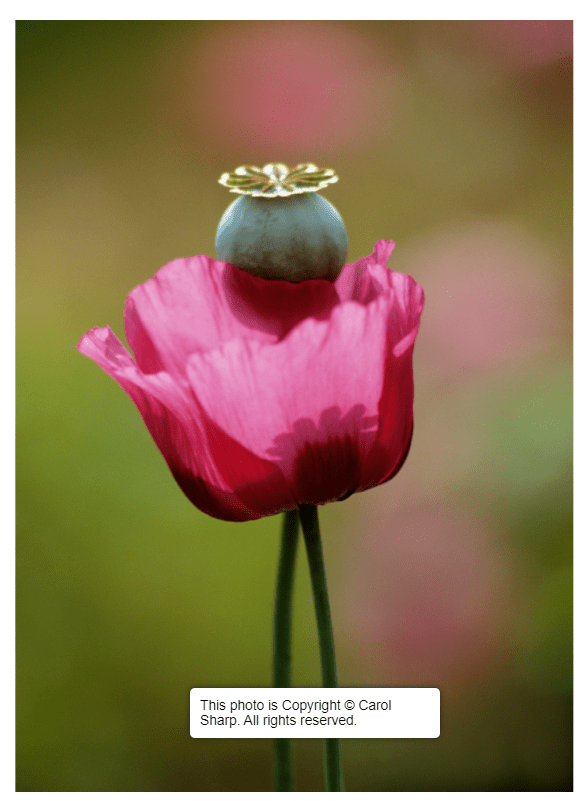
Fig. 1. Plant portraits (n.d.) 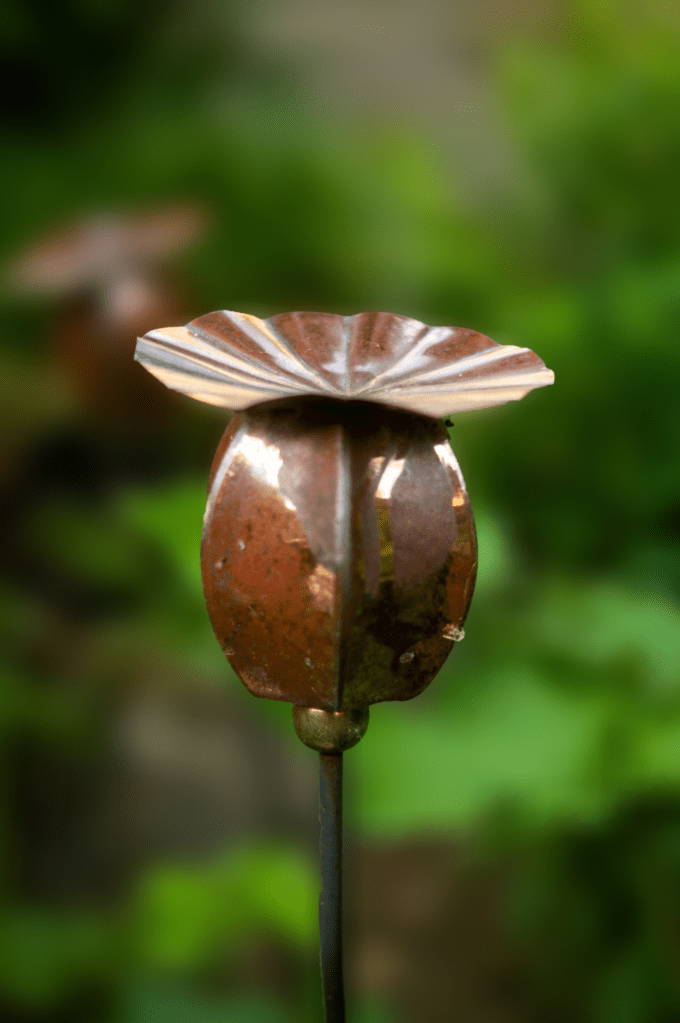
Fig. 2. Homage 3 (2021)
Homage 3 (see Fig. 2) referenced the feature of a poppy seed head in Sharp’s image (see Fig. 1.) by capturing the metal sculpture in my garden, a permanent piece of art, unlike an actual poppy. Using an aperture of F/1.8 enabled me to get the creamy bokeh effect that flows throughout Sharp’s work so beautifully; focal points draw the eyes of the audience to the subject, all of its details, the textures and colours. Cropping the frame brings the object closer to the camera lens, allowing the viewer to observe it more intimately and connect with what is going on within the composition. Contextually, this metal poppy head was a gift to my dad from my mum for his birthday, so holds a deeper meaning for me, much like Sharp attaches to her subjects to appreciate it more. The colours within Plant portraits are vibrant, warm and full of life, while tones within my homage are earthy, so despite it being artificial, the subtle connection to nature and its rich soil is a clever addition to my piece. From a conceptual point of view, the relationship between the two shots juxtaposes despite a few similarities. Sharp embraces the life and death of plants, reconnecting to their importance for our survival as living beings. On the other hand, I have captured a replica of a pollinating plant that will never pollinate, an unintentional parody of how humans keep making things that do not benefit the world environmentally.
Original context brings more personality to photographs as you understand why it was taken, how it made the creator feel, what was going on at the time and the image that was achieved as a result. It pushes the audience to explore it to understand it as a whole composition rather than a simple picture. The work I shot may be unoriginal visually, but the extra level of information lifts it and makes it a rich piece of art.
The internal and external context is just as important but feels less characteristic for some artworks in my opinion as it allows the viewer to come up with their own story as to what the photograph contains and what it may be portraying. Some photographs need that extra bit of information to steer the observer in the right direction.
Here are a few other images I took for this exercise:
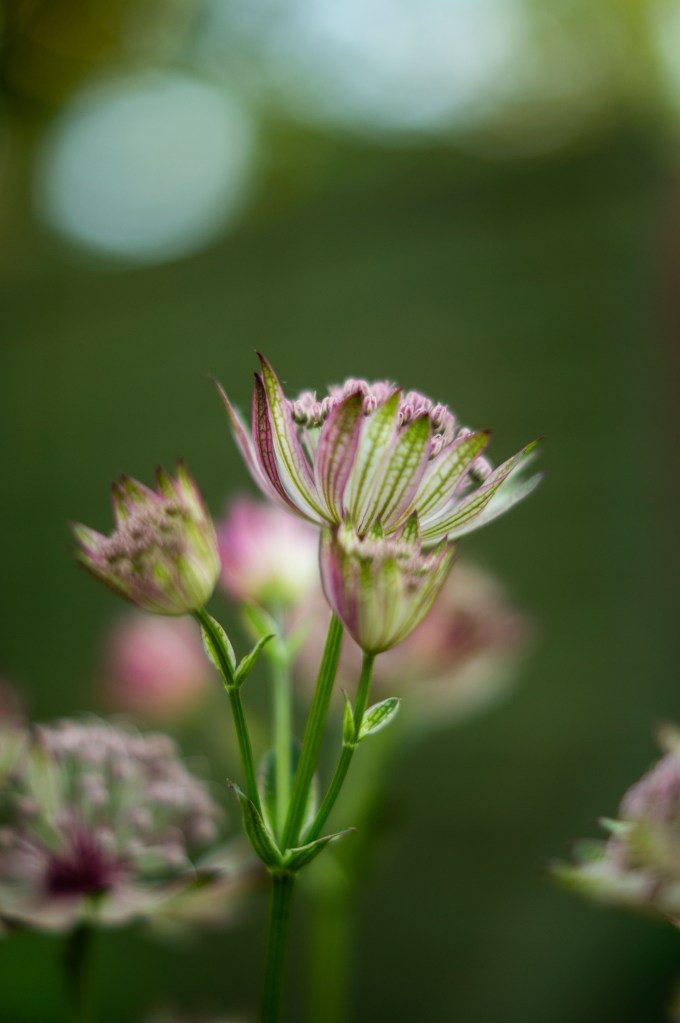
Fig. 3. Homage 1 (2021) 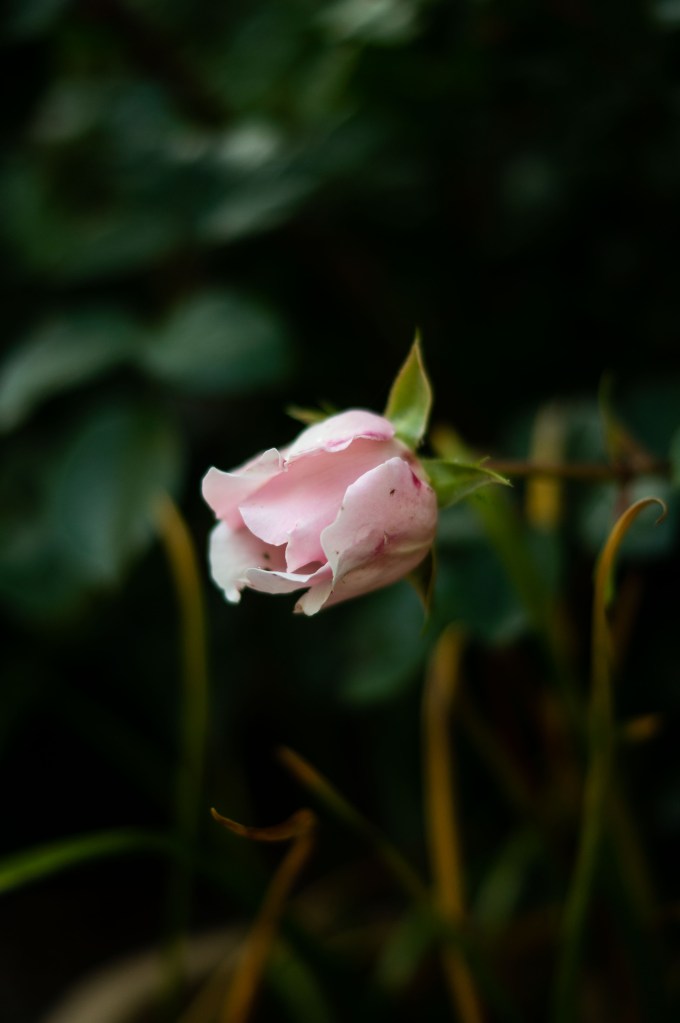
Fig. 4. Homage 5 (2021)
Homage example from past archive:
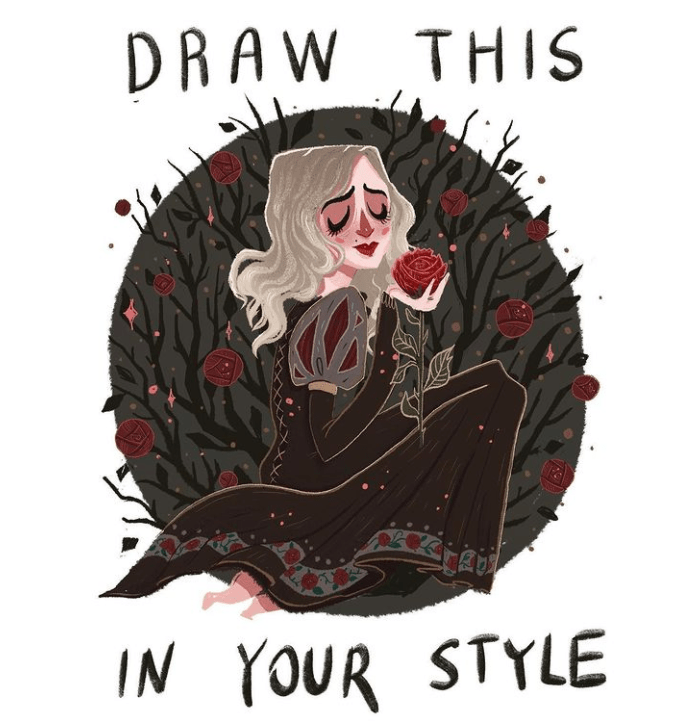
Fig. 5. Draw this in your style (2019) 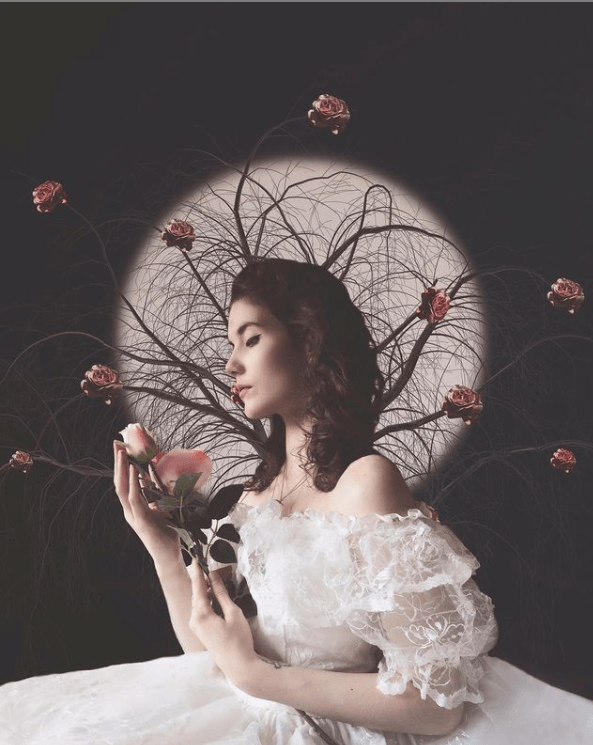
Fig. 6. Rose (2019)
While this isn’t a homage inspired by a photographer, it was an image I created as a tribute to the Draw this in your style (2019) drawing by Ellie Goldwine on Instagram. My response to this piece was approached with intent, having complete control over the props used, outfits and makeup worn, as well as the background, pose and editing. It became a reversed image of the original piece (see Fig. 5), the dress chosen for my composition (see Fig. 6) was the opposite colour creating a juxtaposition between the two. Rather than red roses, light pink roses were used and the circular framing around the drawing in my piece represented the full moon. Everything about the photograph I created was intentional, as the brief was to create something in your style from the reference given.
The context for this piece was internal, as it was inspired by the Draw in your style title and image. Without this information, I may not have been encouraged to replicate it at all.
Reflection
This research point and exercise helped me understand the importance of context, the different types and how the portrayal of images original intent can be influenced. An images original message can be changed through the way it is displayed, the environment in which it’s found, the title and other such information. The original context is a type that features heavily in my work when given the chance, as personality and background mean a lot to me when it comes to creating a piece of work.
References:
Barrett, T., 1985. Photographs and Contexts. [pdf] pp. 110-116. Available at: http://terrybarrettosu.com/wp-content/uploads/2017/08/B_PhotAndCont_97.pdf [Accessed 13 June 2021].
Bloomfield, R., 2018. Photography 1: Expressing your Vision. 4th ed. [pdf] Barnsley: OCA, p. 106. Available at: https://www.oca-student.com/course/photography-1-expressing-your-vision [Accessed 13 June 2021].
Elliegoldwine. (2019) Draw this in your own style [online] Available at: https://www.instagram.com/elliegoldwine/ [Accessed 13 June 2021).
Sanders, A. (1978) ‘Photography as a Universal Language’ In: Photographs and Contexts. [pdf] p. 114. Available at: http://terrybarrettosu.com/wp-content/uploads/2017/08/B_PhotAndCont_97.pdf [Accessed 13 June 2021].
Sharp, C. (n.d.). Biography – Carol Sharp [online] Available at: https://www.carolsharp.co.uk/biography [Accessed 13 June 2021].
Sharp, C. (n.d.). Plant portraits – Carol Sharp [image] Available at: https://www.carolsharp.co.uk/biography [Accessed 13 June 2021].
List of images:
Figure. 1. Sharp, C. (n.d.) Plant portraits [Carol Sharp, screenshot] Available at: https://www.carolsharp.co.uk/plant-portraits [Accessed 13 June 2021).
Figure. 2. Powell, L. (2021) Homage 3 [image] In possession of: Lauren Powell: Eastleigh.
Figure. 3. Powell, L. (2021) Homage 1 [image] In possession of: Lauren Powell: Eastleigh.
Figure. 4. Powell, L. (2021) Homage 5 [image] In possession of: Lauren Powell: Eastleigh.
Figure. 5. Elliegoldwine. (2019) Draw this in your own style [Instagram, screenshot] Available at: https://www.instagram.com/elliegoldwine/ [Accessed 13 June 2021].
Figure. 6. Powell, L. (2019) Rose [image] In possession of: Lauren Powell: Eastleigh.
 Lauren Powell OCA
One thought on “Exercise 5.2 Homage – Research point”