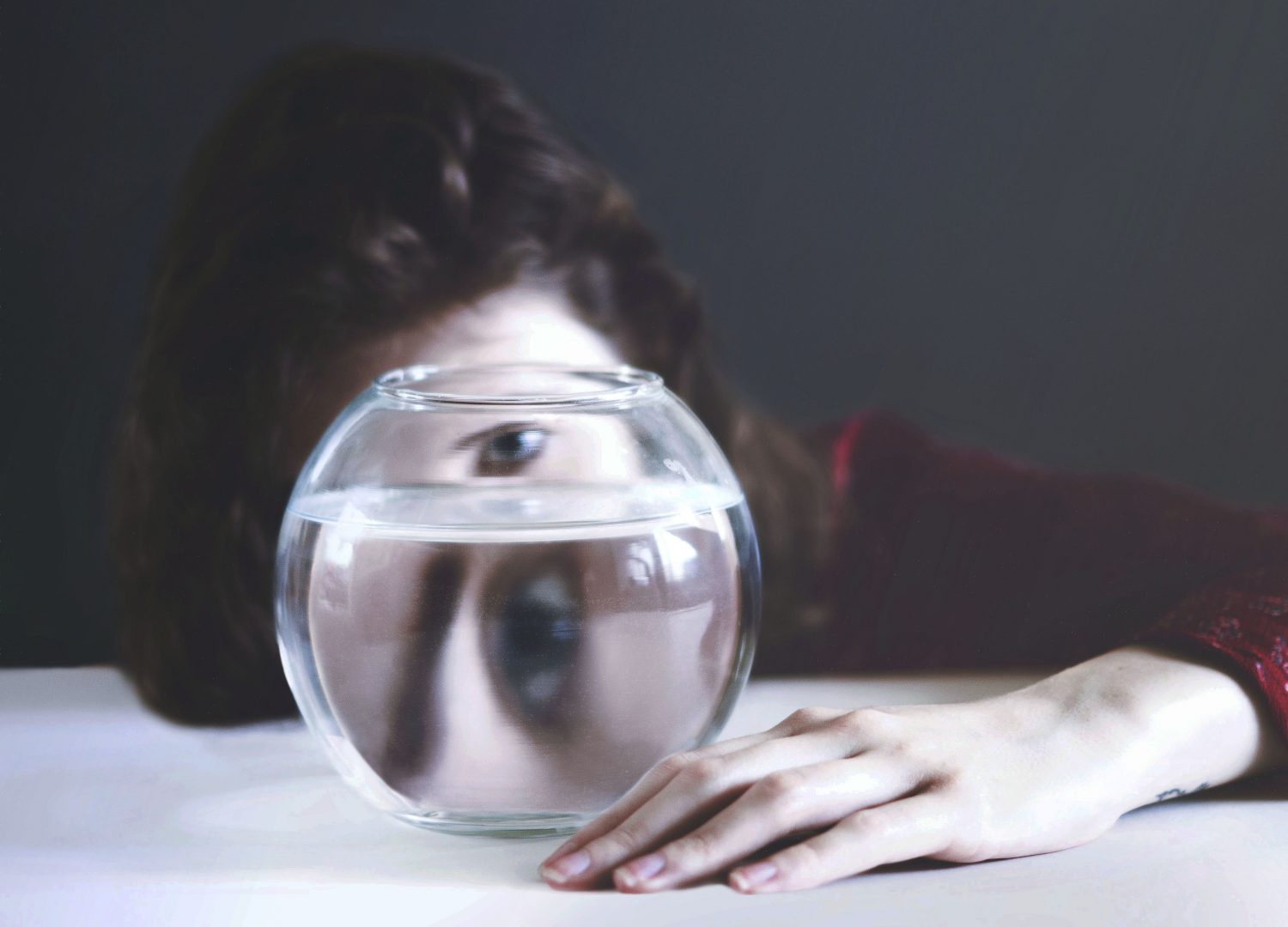
The indecisive moment challenges the belief that a singular extraordinary moment is the most important and unique to capture, by recording periods of chaos and uncertainty, in turn, allows the viewer to explore multiple paths within an image. The decisive moment requires patience to document that once in a lifetime shot, showing balance and well thought out composition.
The unpredictability that took place during this assignment; pushed me to explore the indecisive moment. The in-decisive felt like the most fitting approach to pursue, despite my initial interest in the decisive.
Lockdown restrictions meant that plans had to change due to social distancing and the inability to travel far from home. Shooting in a domestic environment, where I could control what was happening, seemed like the most logical and achievable. Formulating a mindmap allowed me to figure out the best and most achievable photoshoot to explore within the home. Ideas such as, but not limited to, capturing the ordinary, invisible, empty moments, or documenting people within the home, while removing expression and gesture to reflect on Thomas Ruffs ‘Dead Pan’ approach, to ‘confound our expectations of discovering a person’s character through their appearance’ (Cotton, 2014, p. 106). Face masks remove facial expressions, forcing us to come up with a conclusion about the person beneath with very little information.
Nick Waplington perfectly captured the reality of life and the sporadic moments that occur from day to day by taking snapshots of families during their most intimate and personal periods using his film camera. Removing the context within his images allows the mind to create theories about what is taking place. ‘Living Room’ (1991) is a perfect example of this and one that I analysed well to understand what an indecisive moment could be. ‘A time full of uncertainty and disorganisation, mixed emotions and lack of stability in the area. Waplington’s use of a fast shutter speed has frozen at least eight different moments in time, if not more that we cannot see directly’ (Powell, 2021).
However, living in a small household made these sporadic and busy moments more unlikely to achieve. As a result, I took the idea of ‘isolation’ and capturing invisible moments, as Michael Wesely did by capturing double exposures of flowers and fruits decaying over time, as discussed in my Durational Space (Powell, 2020) research earlier on in the assignment. Life and death are inevitable but is not something we physically see happening unless we slow time down. Keeping the camera open while things continue to decay is one way of achieving this.
Martin Dietrich’s black and white double exposures of people in the project The Ghosts That Carried Us Away (2014) are both abstract and minimalist in nature. The ghostly figures of movement that occurred while the shutter was open paint a path of indecision and lack of freezing one moment as it happened. The removal of colour and location allows the audience to decide the story, mood and context of the image.
Nigel Shafran took snapshots of the same kitchen across various time frames, showing indecisiveness and proving that each moment is just as important as the last as it shows life.
Combining the discussed techniques and approaches, along with Shafran’s interest in the mundane and every day, encouraged me to do a test shoot and follow the life/death of perishable goods.
A quick test shoot using my Sony A57 allowed me to decide whether this was the type of project I wanted to do and what to change if anything. Direct sunlight caused my images to have vignettes due to the harsh shadows surrounding the subject and blowing out the exposure. As a result, I decided to set my final image items up in a location where the sunlight would not be too strong and ruin the compositions. I felt as if the decaying would be more visible if the items were upright and shot from the front rather than from above, allowing gravity to help with the wilting process.
Reflecting on my final images, I believe that I have understood the indecisive moment well. Hand-picking the items, organising the setup and photography timeframes; helped me to create unique and extraordinary moments of my own. I caught moments that usually go unseen, such as the movement and appearance changes during the decaying process, before overlapping the multiple images in Photoshop to create ‘double exposures’ like Wesely and Dietrich. Post-processing allowed me to enhance the shadows, textures and shapes within each layered image, formulating photographs full of movement, colour and grain similar to Waplington’s film photography. Examples of this are the most prominent in images Four, Six, Eight and Twelve, where the colours are highly saturated and dark compared to 4, 8 and 12 (Powell, 2021). The ordinary and every day is beautiful, as is the natural process of life and death, which isn’t the same for everyone, making each cycle just as valuable and unique.
This assignment has taught me the importance of composition, the beauty of the mundane, helping me ‘understand both the decisive and (in)decisive moment in a much clearer way and the differences between the two, albeit it is small’ (Powell, 2021).
References:
Cotton, C. (2014) The Photograph as Contemporary Art. 3rd ed. London: Thames & Hudson.
Dietrich. M. (2014) The Ghosts That Carried Us Away [image] Available at: https://www.behance.net/gallery/14029499/The-ghosts-that-carried-us-away (Accessed 30 March 2021).
Powell, L. (2020) Project 2 – Durational Space – Research [online] Available at: https://laurenpowelloca.photo.blog/page/2/ (Accessed 30 March 2021).
Powell, L. (2021) (In)decisive moment practitioner research [online] Available at: https://laurenpowelloca.photo.blog/2021/03/28/indecisive-moment-practitioner-research/ (Accessed 30 March 2021).
Powell, L. (2021) Contact sheet and final image selection [online] Available at: https://laurenpowelloca.photo.blog/2021/03/28/contact-sheet-and-final-image-selection-2/ (Accessed 30 March 2021).
Waplington. N. (1991) Living Room [image] Available at: https://loeildelaphotographie.com/en/nick-waplington-living-room-bb/ (Accessed 30 March 2021).
 Lauren Powell OCA