Summary:
In this post I will be
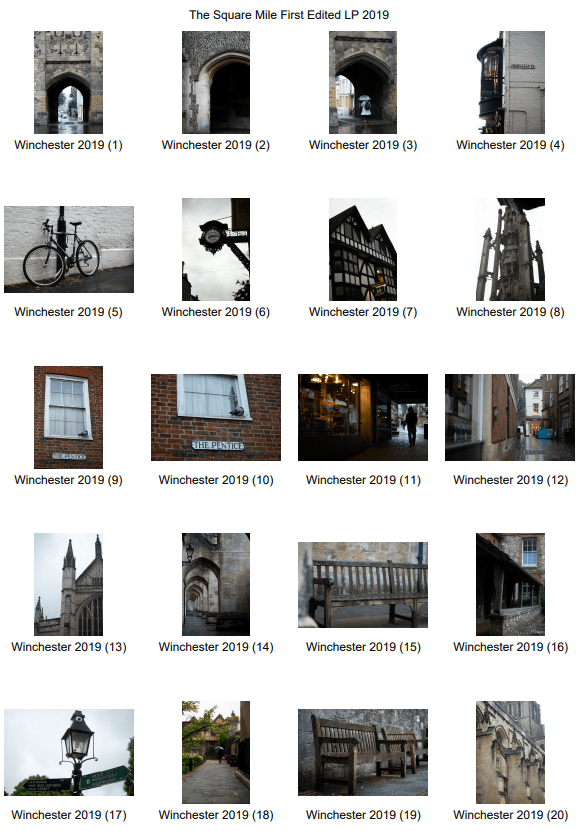
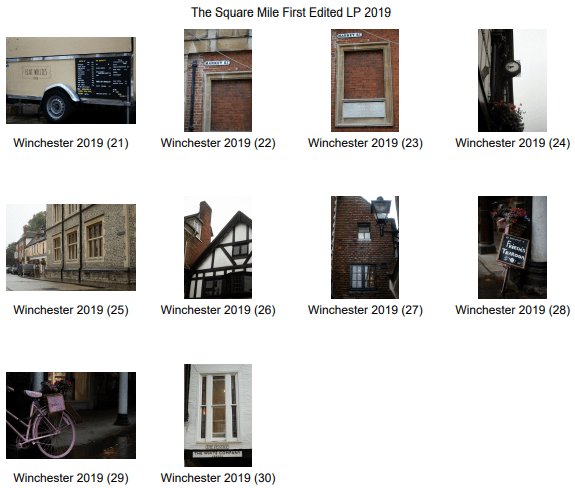
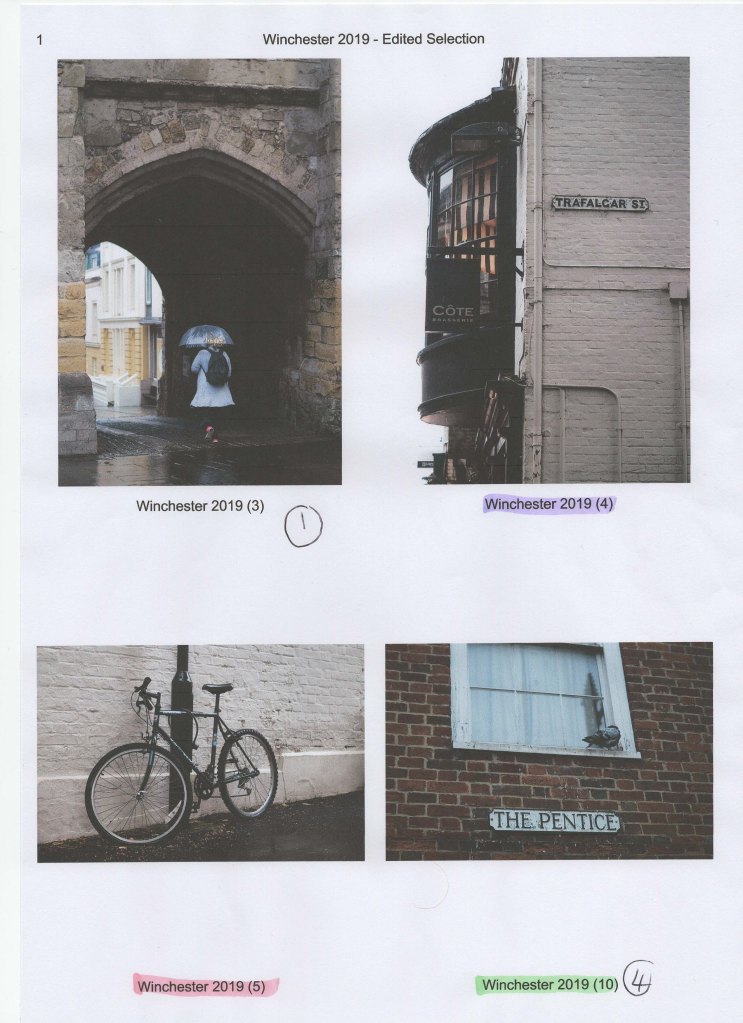
– Analysing the 8 images I have chosen for my final set
– Explaining why they were paired together, visually, technically and conceptually if applicable
– Sharing my overall thoughts on how the assignment has evolved, the visual techniques I enjoyed using such as colour, shapes and texture
– As well as my understanding of the importance of looking around you, to find something new.
Pair #1
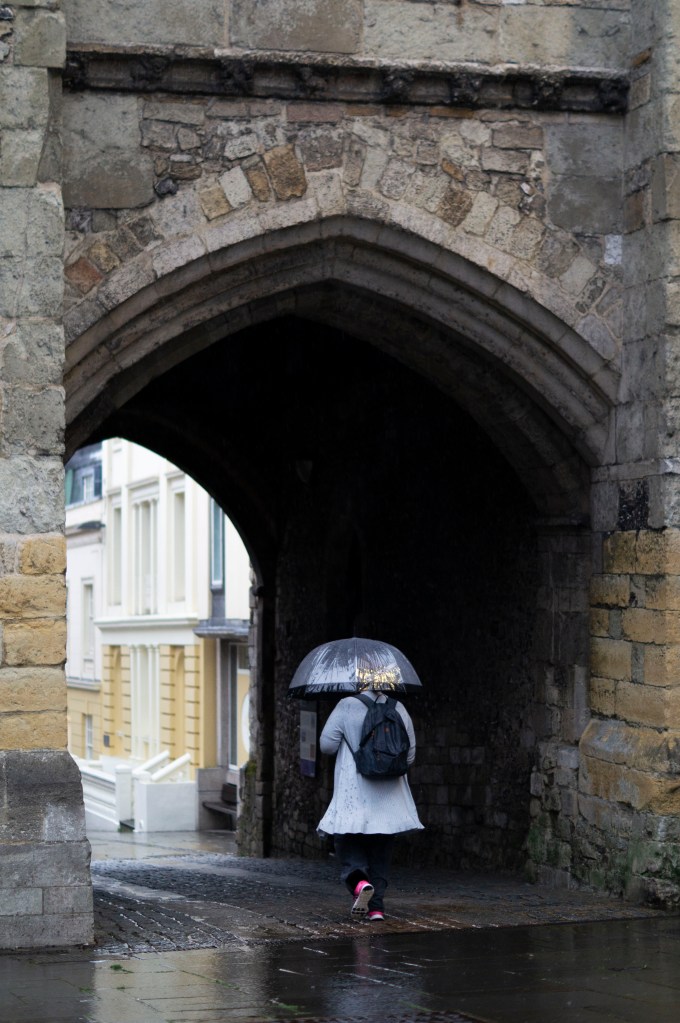
Fig. 1. Winchester 2019 03 (2019)
1/250 sec; f/1.8; ISO 400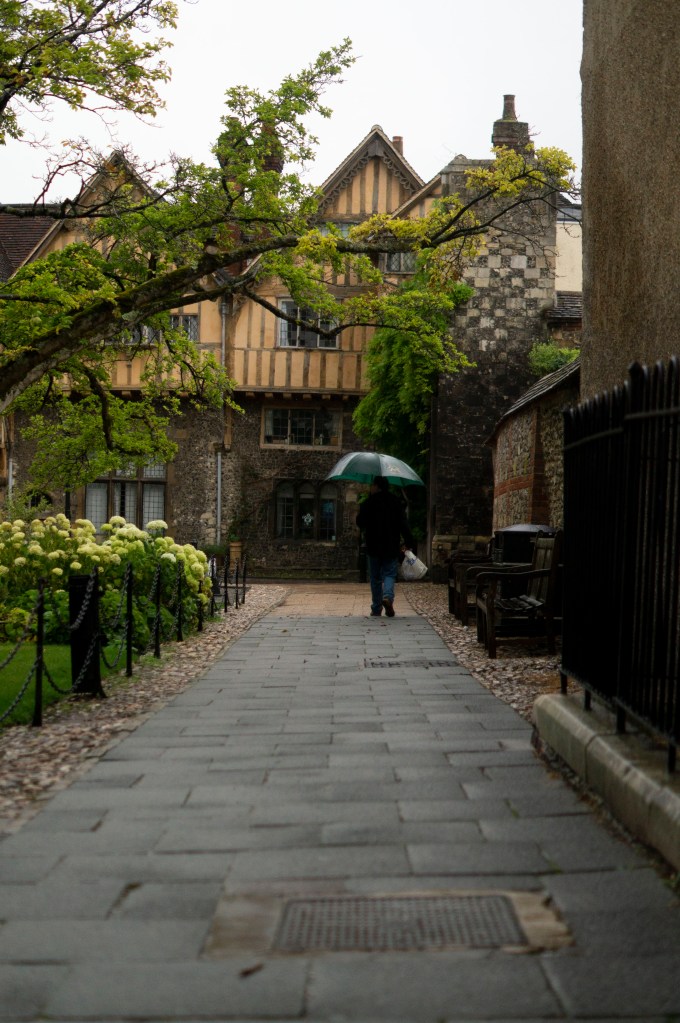
Fig. 2. Winchester 2019 18 (2019)
1/2500 sec; f/1.8; ISO 400
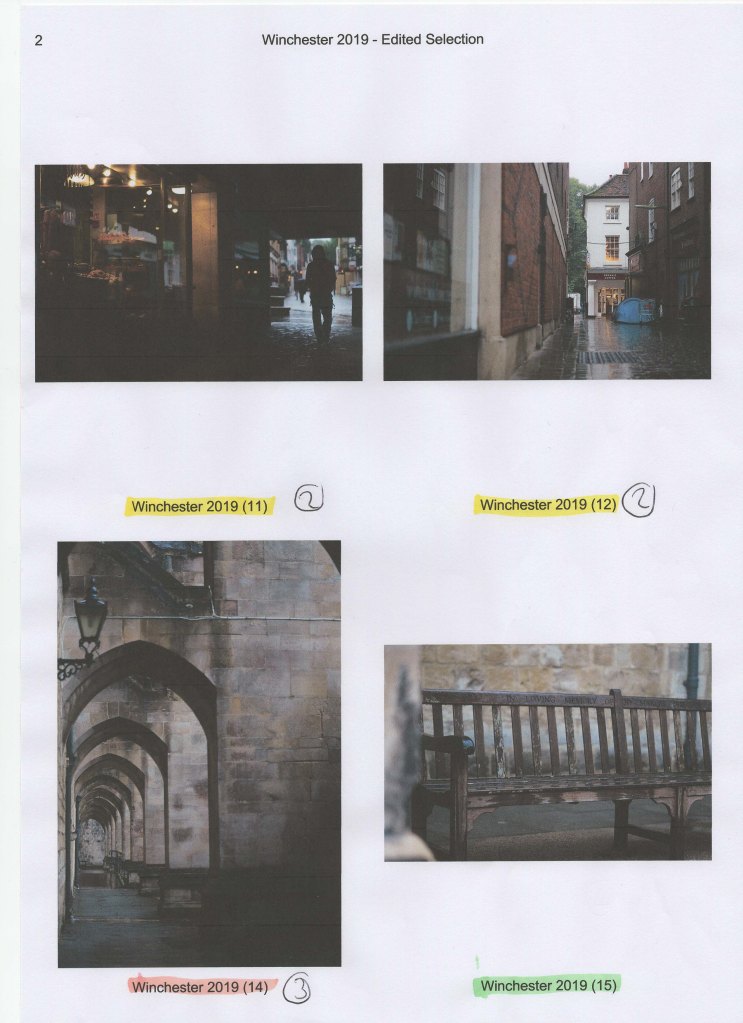
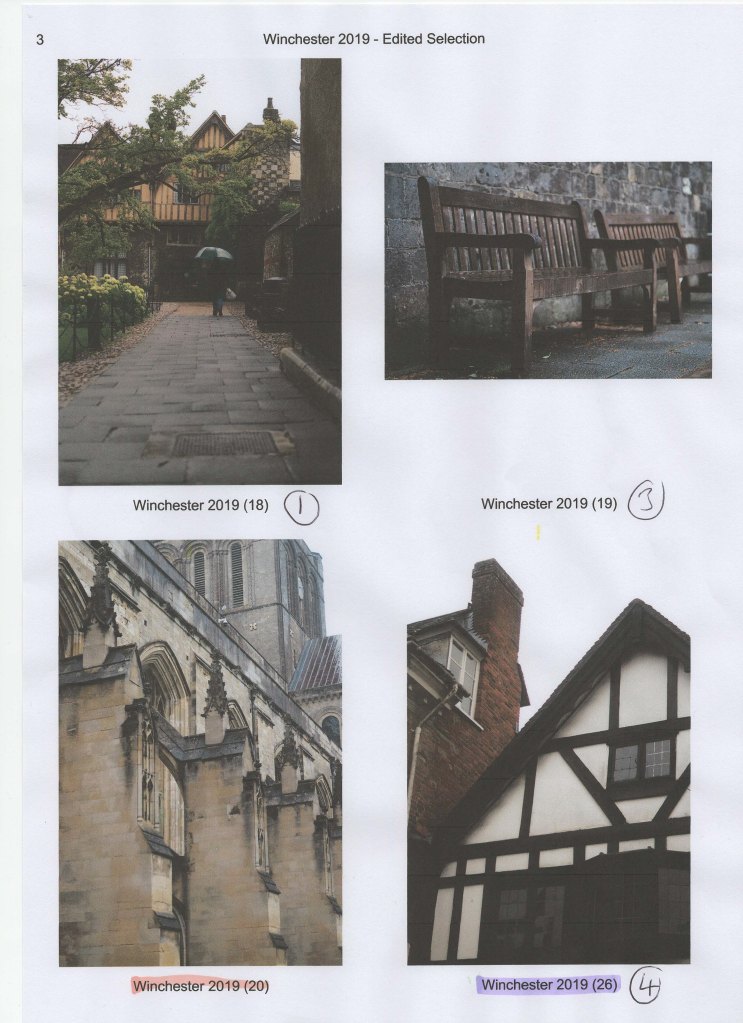
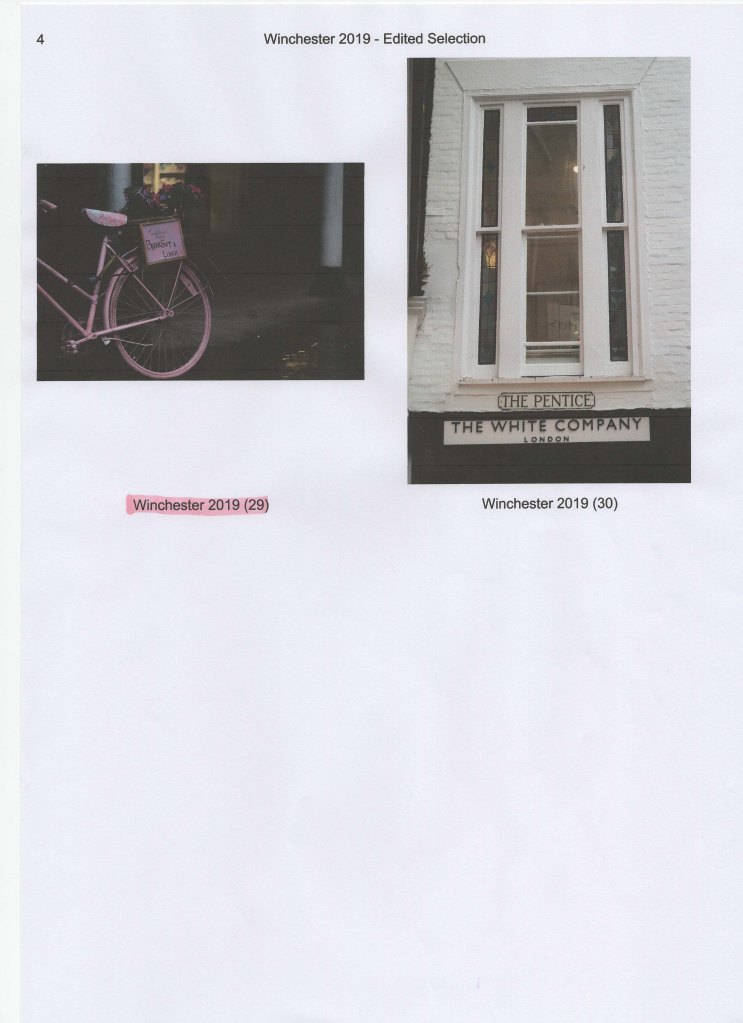
This pair contrast in tonality, colour, and space. While ‘Winchester 2019 18‘ (see Fig. 2) shares the cool and gloomy tones of ‘Winchester 2019 03‘ (see Fig. 1), the colours are much more saturated and warm due to the tanned wooden architecture in the background and vibrancy of the leaves framing the person in the shot. There is plenty of negative space in ‘Winchester 2019 18‘, displaying how open and free the surrounding area is, unlike the claustrophobic composition of its partner. The use of daylight, emphasises the highlights and shadows bouncing off the wet paths and textured areas in a much more natural way, preventing too many harsh lines and shapes. In terms of the subject, they are almost identical, both include umbrellas, bags, and coats, however, the focal points are the complete opposite. One person is positioned in the foreground at the top of a path, the shallow depth of field appearing in the background and the other is located in the background at the end of a path, the shallow depth of field creating a much softer foreground. Their positions in frame and the clear differences in location could symbolise the start and the end of a journey.
Pair #2
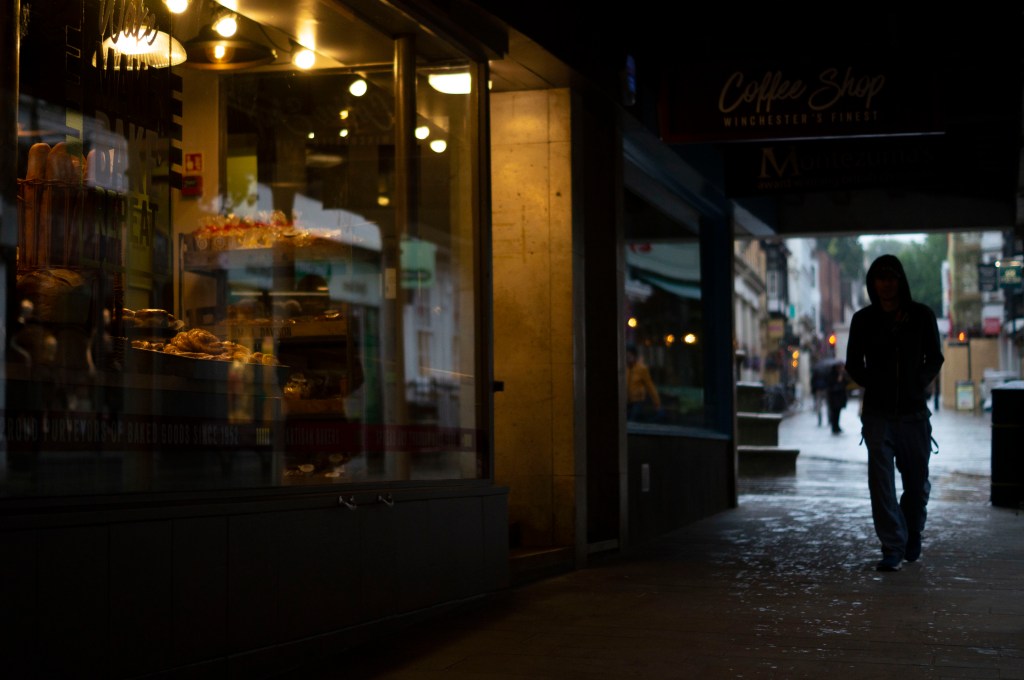
Fig. 3. Winchester 2019 11 (2019)
1/400 sec; f/1.8; ISO 400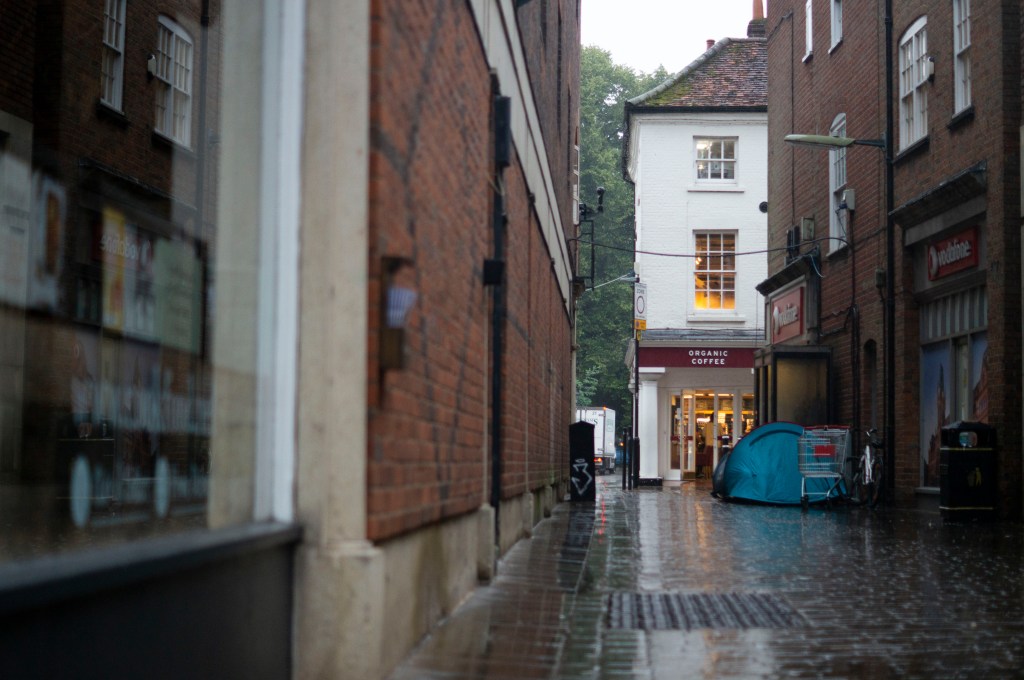
Fig. 4. Winchester 2019 12 (2019)
1/400 sec; f/1.8; ISO 400
This pair share a lot of similarities. The composition is exact which provides a repetition of the geometric buildings, the leading lines are heavier on the left-hand side, drawing the eye from the left and across to the right which in turn naturally follows the paths in the shots. The artificial lights mixing with natural light, add warmth and tension between man-made inventions and the nature of weather affecting light and temperature levels. Even though the shutter speed, aperture, and ISO were the same for each shot, the highlights and shadows completely contradict one another. Silhouettes, reflections, and intense blacks are more dominant in ‘Winchester 2019 11‘(see Fig. 3), whereas textures, colours and bright whites stand out in ‘Winchester 2019 12‘ (see Fig. 4). Signs of life are featured throughout the two via full high street shop windows, members of the public, temporary shelters and graffiti, all of which portray different elements of modern life and how certain issues such as homelessness continue to exist in the 21st century.
Pair #3
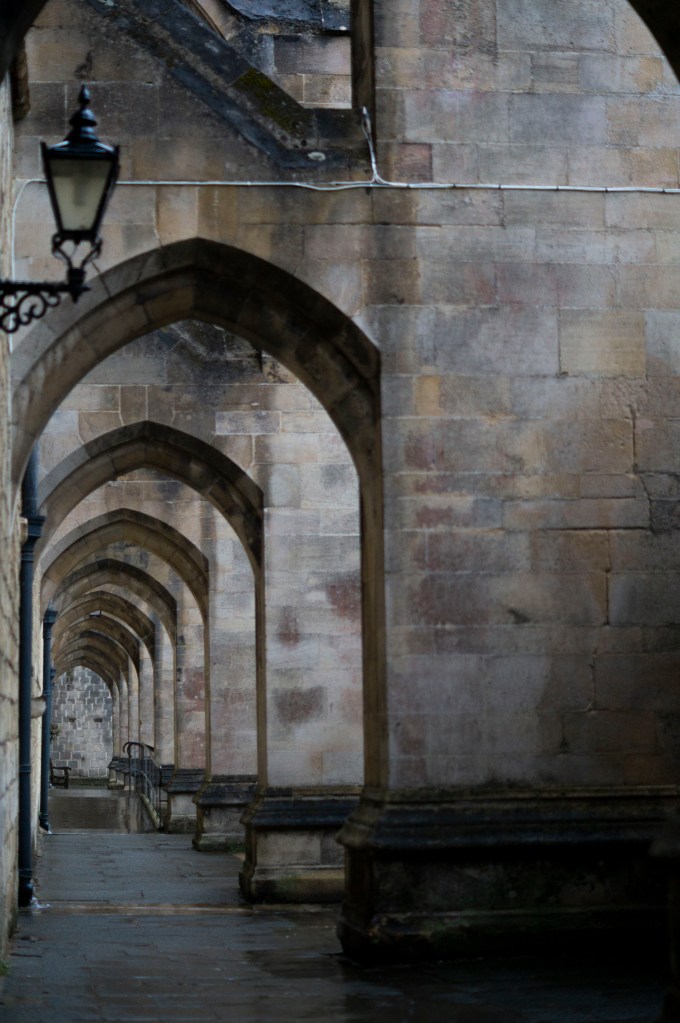
Fig. 5. Winchester 2019 14 (2019)
1/500 sec; f/1.8; ISO 400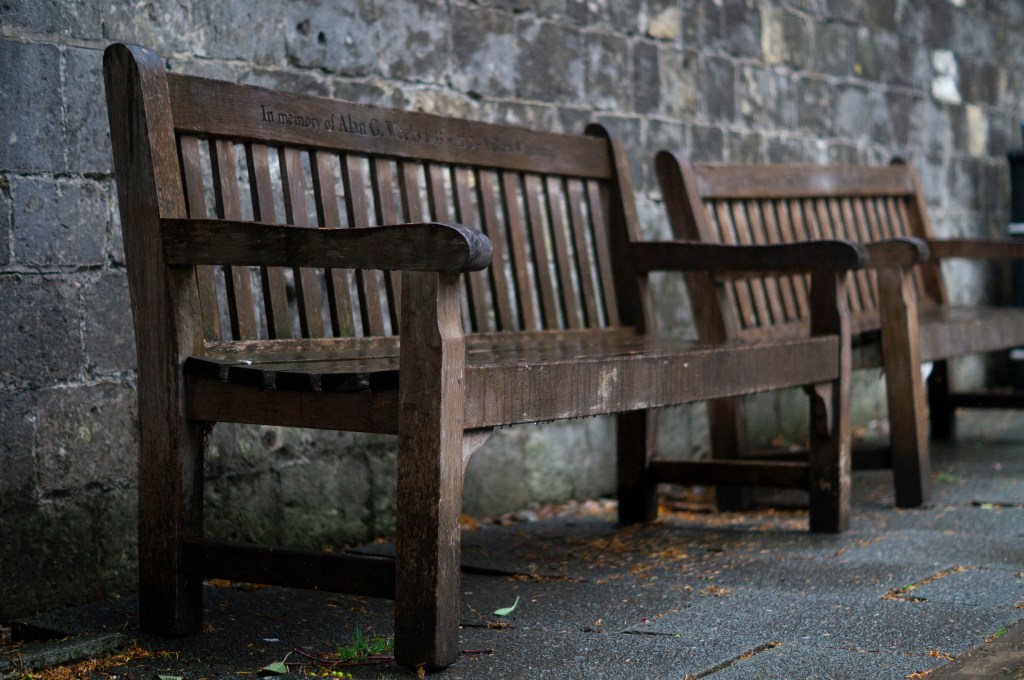
Fig. 6. Winchester 2019 19 (2019)
1/640 sec; f/1.8; ISO 400
Visually this pair works best in terms of the similarities in tones and textures. The smooth grey brickwork of the cathedral and surrounding areas create a very cold and gloomy atmosphere with the help of the wet floor and raindrops on the bench. However, the daylight bouncing off the lighter areas of the stone brightens up the image, drawing out and accentuating the natural shadows created by the archways and cracks in the walls. While repetition is very obvious in ‘Winchester 2019 14‘ (see Fig. 5) due to the archways over the path, if you follow the natural line of the walkway and look closely, you can see the wooden bench featured in ‘Winchester 2019 19‘ (see Fig. 6). So, while it may seem that these two images don’t link together beyond the fact they are similar due to location, temperature, and tones, if more time is spent looking into the image, more connections may be found than at first glance. The emptiness of the walkway and bench forms a very lonely feeling as if what was once there many times, has vanished since.
Pair #4
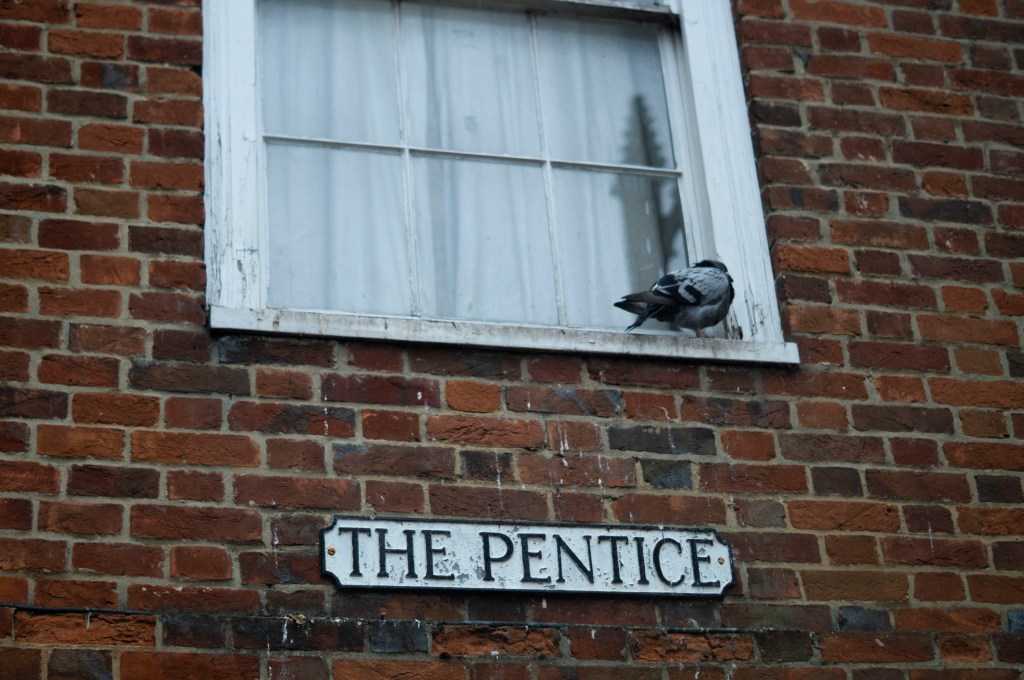
Fig. 7 Winchester 2019 10 (2019)
1/400 sec; f/1.8; ISO 400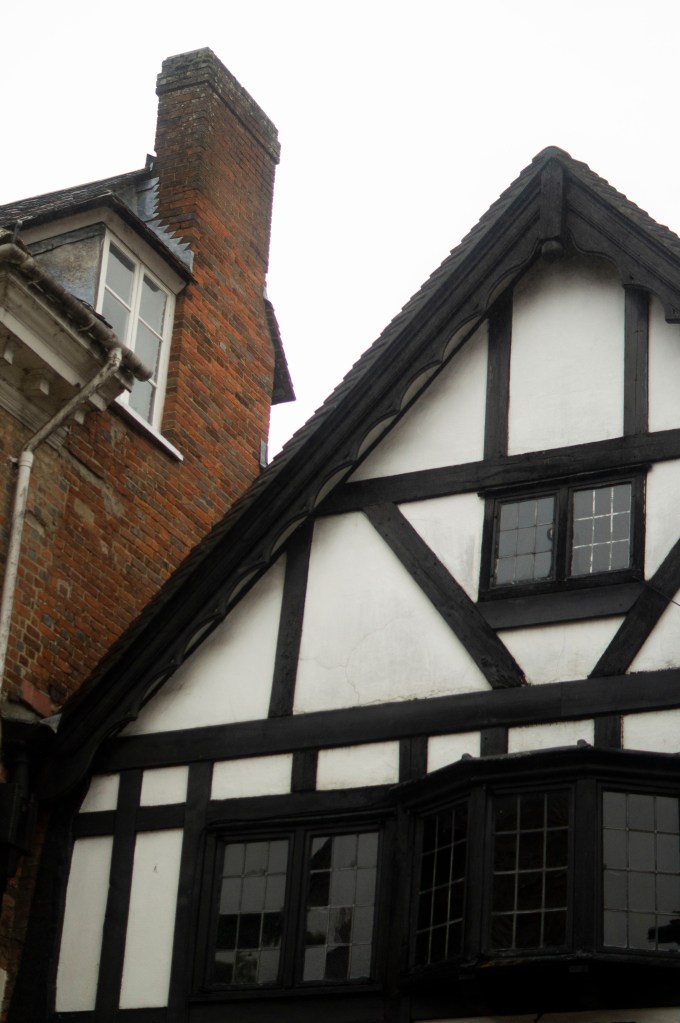
Fig. 8. Winchester 2019 26 (2019)
1/2500 sec; f/1.8; ISO 400
While the two images juxtapose in terms of the architectural elements in question, the colours, window styles, and dirty marks from nature, pull the pair together. Black and Whites are more prominent in ‘Winchester 2019 26‘ (see Fig. 8), with the geometric wooden beams, painted stone walls, and dark-tinted windows, only appearing very subtly on the road sign in ‘Winchester 2019 10‘ (see Fig. 7). However, the rusty colours and textured bricks stand out more at The Pentice than it does in the other shot, creating an even balance between the two. The framing is cropped in both, in turn helping the viewer focus on the details in the image, rather than the surroundings. Viewpoint wise, they are both shots from below and are at a slight angle, implying that the subjects weren’t at eye level or as easy to photograph due to the height of the building. While the aperture was wide, the shallow depth of field cannot be seen as clearly or at all due to how close the camera was to the buildings, creating a very sharp focus that works beautifully with the precise angles of the beams and grouting in the brickwork. Animals unfortunately now have to find their place, around what man has built over time, so the appearance of the pigeon atop a windowsill sheltering from the rain may communicate the impact humans have on nature.
Overall, I am pleased with these images as it pushed me to view this town in a more detailed and clear way, rather than focusing purely on the personal connections it holds. While I was initially driven by a personal view when I first read the brief, being able to explore the architecture, shapes, colours, textures and how places have changed over time, really helped me understand that we need to look at our surroundings much closer. You may think you know a place like the back of your hand, but a bit more time and a different perspective can help you explore in more depth and find a whole new area within.
List of images:
Figure. 1. Powell, L. (2019) Winchester 2019 03 [image] In possession of: Lauren Powell: Eastleigh.
Figure. 2. Powell, L. (2019) Winchester 2019 18 [image] In possession of: Lauren Powell: Eastleigh.
Figure. 3. Powell, L. (2019) Winchester 2019 11 [image] In possession of: Lauren Powell: Eastleigh.
Figure. 4. Powell, L. (2019) Winchester 2019 12 [image] In possession of: Lauren Powell: Eastleigh.
Figure. 5. Powell, L. (2019) Winchester 2019 14 [image] In possession of: Lauren Powell: Eastleigh.
Figure. 6. Powell, L. (2019) Winchester 2019 19 [image] In possession of: Lauren Powell: Eastleigh.
Figure. 7. Powell, L. (2019) Winchester 2019 10 [image] In possession of: Lauren Powell: Eastleigh.
Figure. 8. Powell, L. (2019) Winchester 2019 26 [image] In possession of: Lauren Powell: Eastleigh.
 Lauren Powell OCA